India’s industrial output grew by 4.1 per cent in March 2026, slightly lower than 5.2 per cent recorded in February, according to data released by the Ministry of Statistics and Programme Implementation on Tuesday, 28 April.
The Index of Industrial Production (IIP), which tracks the performance of key sectors such as manufacturing, mining and electricity, stood at 173.2 in March 2026, compared to 166.3 in March 2025, reflecting year-on-year growth.
Manufacturing and mining drive growth
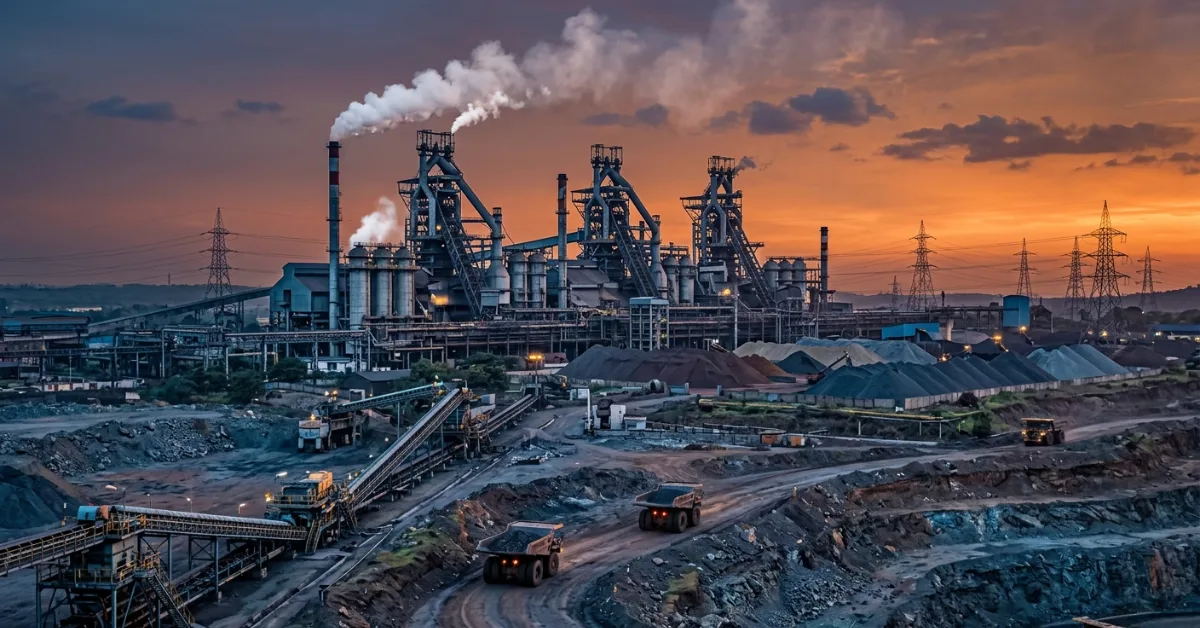
The growth in March was primarily supported by the manufacturing sector, which expanded by 4.3 per cent, and mining, which grew by 5.5 per cent.
In contrast, the electricity sector recorded slower growth of 0.8 per cent, which weighed on the overall industrial performance.
Within manufacturing, 14 out of 23 industry groups recorded positive growth, indicating broad-based expansion across sectors.
Key sectors showing strong performance
Among individual industries, motor vehicles, trailers and semi-trailers registered growth of 18.1 per cent, while machinery and equipment grew by 11.2 per cent.
The basic metals sector also saw a rise of 8.6 per cent, supported by increased production of steel-related products.
Investment-linked sectors show momentum
Data based on use-based classification points to strong investment activity during the month.
Capital goods, which indicate investment in machinery and infrastructure, recorded the highest growth of 14.6 per cent.
Infrastructure and construction goods grew by 6.7 per cent, while consumer durables rose by 5.3 per cent.
Modest growth in consumer goods
Primary goods grew by 2.2 per cent, while intermediate goods recorded growth of 3.3 per cent.
Consumer non-durables, which include daily-use items, saw relatively slower growth of 1.1 per cent.
Overall, the data indicates that while industrial activity remains on a growth path, the pace has moderated compared to the previous month.
Reas also: India-New Zealand FTA explained: What the pact means for trade, jobs, investment and mobility