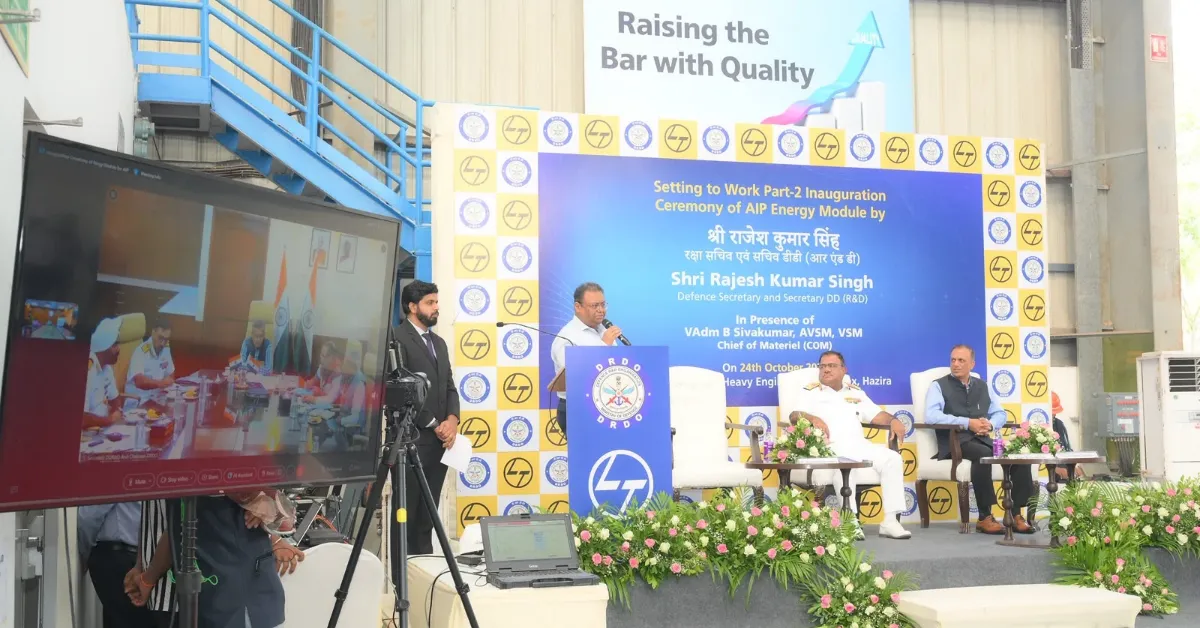
New Delhi, October 25, 2026: The Defence Research and Development Organisation (DRDO) has reached another milestone in developing an indigenous Air Independent Propulsion (AIP) system designed to help conventional Indian Navy submarines remain submerged for longer periods. The system’s energy module has reached its second setting-to-work phase, ahead of planned integration into a Kalvari-class submarine in early 2027.
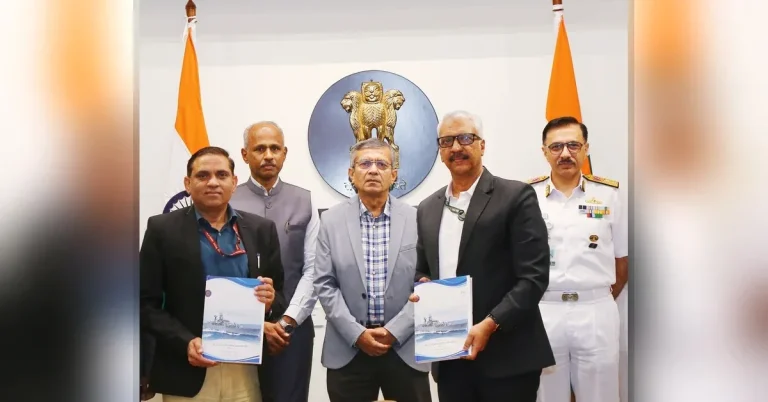
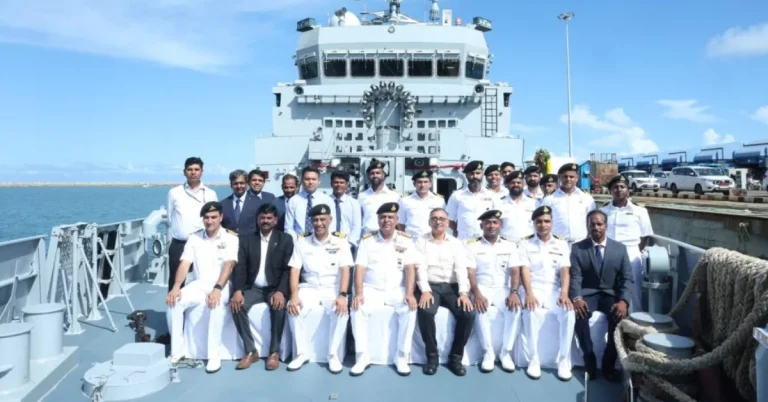
The milestone was marked on October 24 at Larsen & Toubro’s (L&T) AM Naik Heavy Engineering Complex in Hazira, Gujarat, where the Setting to Work Phase-2 activity of the AIP Energy Module was inaugurated.
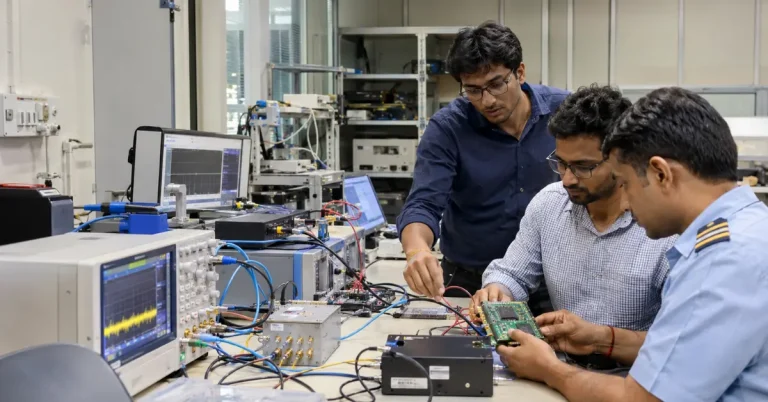
Developed by DRDO’s Naval Materials Research Laboratory (NMRL), the technology aims to improve the underwater endurance of diesel-electric submarines by reducing their dependence on atmospheric oxygen.
Conventional diesel-electric submarines generally require access to outside air when operating their diesel engines to recharge batteries. This means they must periodically surface or use a snorkel, potentially increasing the risk of detection.
AIP technology addresses this limitation by enabling submarines to generate electricity underwater without drawing oxygen from the surrounding atmosphere. This could allow them to remain submerged for longer periods while reducing activities that might reveal their position.
According to the Ministry of Defence, the AIP Energy Module will next be energised for power production and undergo rigorous testing in accordance with Indian Navy protocols.
Following these trials, the module is expected to be handed over to Mazagon Dock Shipbuilders Limited for integration into a Kalvari-class submarine. The integration process is planned for early 2027.
However, the announcement does not confirm that the module has completed power-generation testing or been installed aboard an operational submarine.
Defence Secretary Rajesh Kumar Singh, who also serves as Secretary of the Department of Defence Research and Development and Chairman of DRDO, attended the inauguration virtually as the chief guest.
Vice Admiral B. Sivakumar, Chief of Materiel of the Indian Navy, and Dr R. Balamuralikrishnan, DRDO’s Director General of Naval Systems and Materials, attended the ceremony at L&T’s Hazira facility.
Singh acknowledged the contributions of DRDO, its industry partners and the Indian Navy to the development and validation of the indigenous AIP system.
He also emphasised the importance of meeting the Navy’s induction requirements while maintaining strict safety standards associated with hydrogen and fuel-cell technologies.
The programme involves cooperation between DRDO, Indian industry and the Navy in technology development, testing and validation.
For the Indian Navy, the proposed system could improve the operational endurance of Kalvari-class submarines by allowing them to spend longer periods underwater without relying on atmospheric oxygen.
The ministry has not disclosed how many additional days the technology could allow a submarine to remain submerged, the programme’s total cost or a confirmed date for operational deployment.
The inauguration of Setting to Work Phase-2 marks progress towards integrating the indigenous AIP capability into a Kalvari-class submarine. Power-generation trials, naval testing and subsequent integration activities are still required before the system can enter operational service.