New Delhi, November 9: The Indian Navy has taken delivery of Amini, an indigenously built anti-submarine warfare vessel equipped with torpedoes, rocket launchers and sonar systems to detect and counter underwater threats. The warship contains more than 80% indigenous content, reflecting India’s efforts to strengthen domestic defence manufacturing.
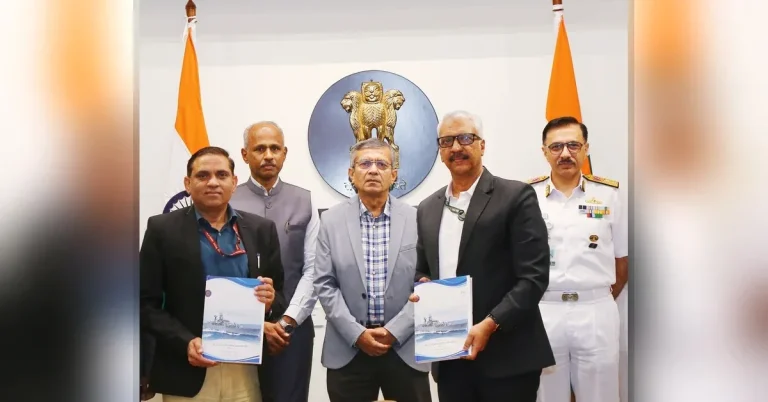
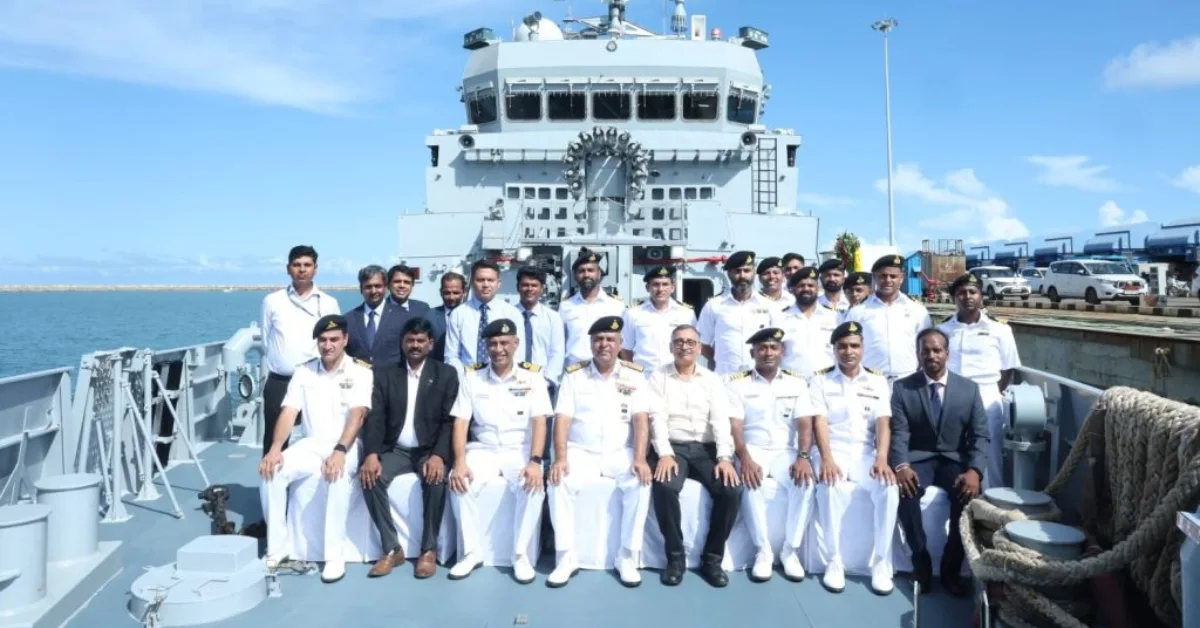
The vessel was handed over by Garden Reach Shipbuilders and Engineers (GRSE), Kolkata, at Kattupalli in Tamil Nadu on November 5. The Ministry of Defence announced the delivery on November 6.
Amini is the fifth of eight Anti-Submarine Warfare Shallow Water Craft (ASW SWC) vessels being built by GRSE for the Indian Navy.
The vessels are designed to operate in shallow coastal waters, where detecting submarines and other underwater threats is an important part of maritime security.
According to the Ministry of Defence, Amini is equipped with lightweight torpedoes, indigenous rocket launchers and sonar systems.
Sonar technology uses sound waves to detect objects underwater, helping naval vessels identify potential threats that may not be visible from the surface.
The torpedoes and rocket launchers are intended to engage underwater targets.
Apart from anti-submarine warfare, the vessel is designed to support coastal surveillance and mine-laying operations.
These capabilities are expected to strengthen the Navy’s ability to monitor and protect India’s coastal waters.
Amini also features a waterjet propulsion system, which generates thrust by directing water through propulsion units rather than relying on conventional exposed propellers.
The Ministry of Defence described the ASW SWC class as being among the largest Indian naval warships powered by waterjets.
According to details reported by PTI, citing GRSE, the vessel is approximately 77.6 metres long and has a draught of around 2.7 metres.
The ship was designed and built by GRSE in accordance with the classification rules of the Indian Register of Shipping (IRS).
The ministry said the vessel has more than 80% indigenous content, indicating substantial participation by Indian manufacturers and suppliers.
However, the announcement did not provide a component-wise breakdown of the domestically sourced equipment.
Amini takes its name from Amini Island in Lakshadweep and carries forward the legacy of the former INS Amini, a Petya III-class anti-submarine warfare corvette that was decommissioned in 2002.
The delivery is part of the Navy’s wider effort to strengthen indigenous shipbuilding capabilities under the government’s Aatmanirbhar Bharat initiative.
For GRSE, Amini’s delivery marks further progress in its eight-vessel shallow-water anti-submarine warfare programme.
The specialised vessels are intended to support the Navy’s operations in coastal areas, where surveillance, underwater detection and maritime security remain important requirements.
However, the November 5 handover does not mean that Amini has been formally commissioned into operational service.
Delivery marks the transfer of the vessel from the shipbuilder to the Navy, while commissioning is a separate stage through which the ship formally enters naval service.
The Ministry of Defence has not announced a commissioning date or identified the vessel’s future deployment location.
The delivery of Amini therefore represents another milestone in India’s indigenous naval shipbuilding programme. Once commissioned, the vessel is expected to strengthen the Navy’s anti-submarine warfare and coastal security capabilities.
Read also: Defence minister Rajnath Singh warns of cyberattacks, drone swarms and misinformation, calls for greater military readiness
Read also: IAF, IIT Madras join hands to develop indigenous secure communication system for aircraft