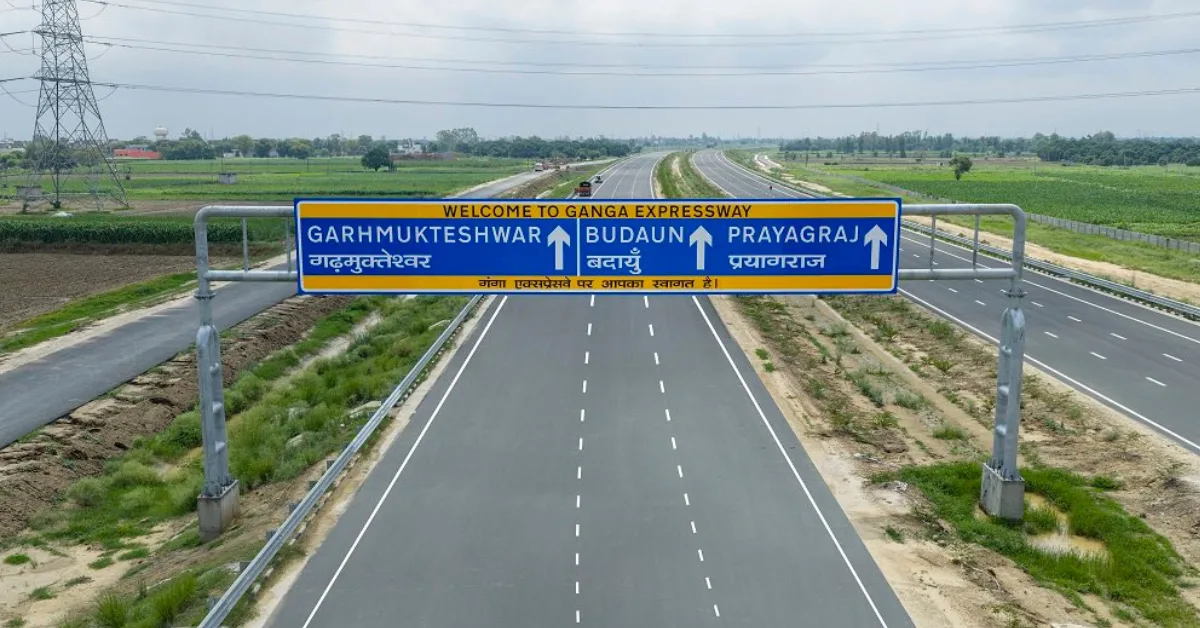
Prime Minister Narendra Modi on Wednesday, 29 April, inaugurated the 594 Km-long Ganga Expressway connecting Meerut to Prayagraj, marking one of India’s longest access-controlled expressway projects and a major boost to Uttar Pradesh’s infrastructure network.
The expressway, developed at an estimated cost of around ₹36,230 crore, is designed as a 6-lane corridor, expandable to 8 lanes in the future. It passes through 12 districts, including Meerut, Bulandshahr, Hapur, Amroha, Sambhal, Badaun, Shahjahanpur, Hardoi, Unnao, Raebareli, Pratapgarh, and Prayagraj.
With its commissioning, travel time between Meerut and Prayagraj is expected to reduce significantly to around 6 hours, improving connectivity across western, central, and eastern Uttar Pradesh.
The project also includes a 3.5 Km-long Emergency Landing Facility in Shahjahanpur, enabling the expressway to be used for Indian Air Force operations during emergencies, adding a strategic dimension to the corridor.
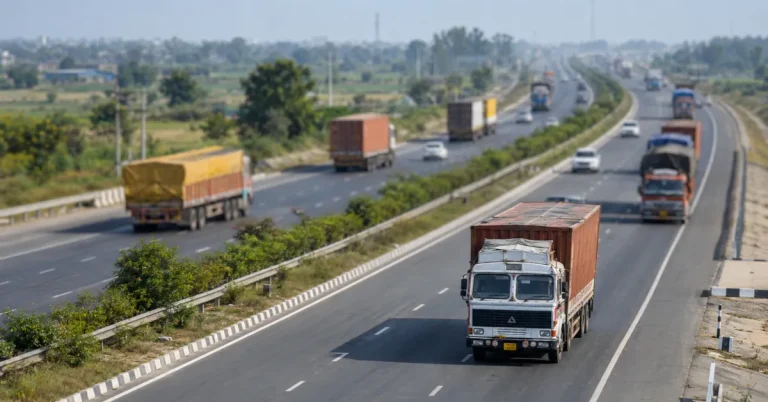
The Ganga Expressway is positioned as a key industrial and economic corridor, expected to facilitate faster movement of goods, improve logistics efficiency, and support industrial development along its route.
Officials indicated that the expressway will enhance regional connectivity, promote investment, and create employment opportunities across multiple districts, while also strengthening linkages between agricultural markets and urban centres.
The inauguration of the Ganga Expressway forms part of the broader push to expand India’s high-speed road infrastructure and improve seamless connectivity across major economic zones.