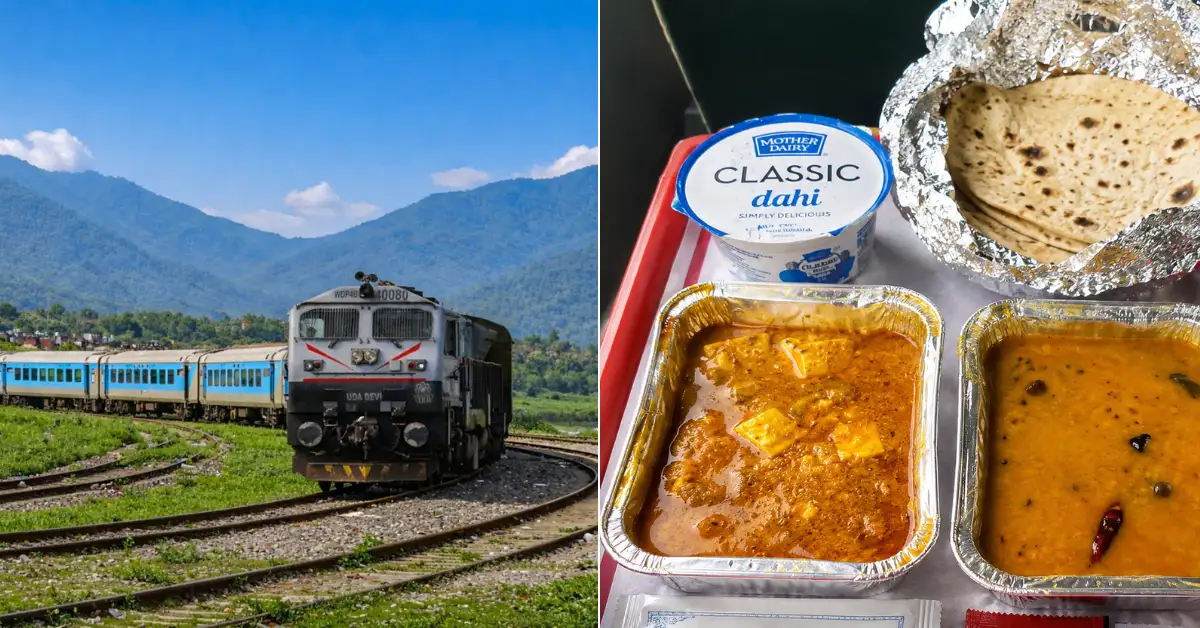
New Delhi: Catering contractors found falling short of prescribed food quality and hygiene standards on Indian Railways have faced fines, notices, debarment and termination of contracts over the past three years, the government has told Parliament.
The Indian Railway Catering and Tourism Corporation (IRCTC) imposed fines amounting to ₹5.13 crore, issued 54 show-cause notices and terminated six contracts during the period, Railway Minister Ashwini Vaishnaw informed the Rajya Sabha on 7 August.
The action was taken based on complaints related to food quality and hygiene. Defaulting licensees were also debarred, and the list of such entities has been published on the IRCTC website.
The figures come against the scale of catering operations across the railway network. Indian Railways serves around 58 crore meals every year on average, while food quality-related complaints received on average account for about 0.0008%, according to the ministry.
Railway and IRCTC officials, including Food Safety Officers, conduct regular and surprise inspections to monitor food quality, hygiene, safety and compliance with prescribed standards.
These inspections cover food safety practices, deployment of staff, maintenance of equipment and cleanliness, along with compliance with standards governing the handling, storage and preparation of food.
Indian Railways has also put in place a series of measures aimed at strengthening monitoring at the point where meals are prepared and supplied.
Meals are supplied from designated base kitchens, while modern base kitchens have been commissioned at identified locations. CCTV cameras have been installed at base kitchens for real-time monitoring of food preparation.
Food Safety Supervisors are deployed at base kitchens to monitor food safety and hygiene practices, while IRCTC supervisors are deployed aboard trains.
The Railways has also prescribed the shortlisting and use of popular and branded raw materials for food production. Base kitchens and pantry cars undergo regular deep cleaning and periodic pest-control exercises.
FSSAI certification has been made mandatory to ensure compliance with food safety norms, while regular food sampling forms part of the monitoring mechanism used to check the quality of food supplied aboard trains.
Passengers have also been given access to information about packaged meals through QR codes introduced on meal packets supplied on trains.
Scanning the QR code provides details including the date of packing, the name of the licensee and the licensee’s FSSAI licence number. The measure is intended to improve food safety, transparency and passenger awareness.
IRCTC also conducts regular training for catering staff in areas including communication, courteous behaviour, service standards, personal grooming and hygiene.
Third-party audits are carried out to examine the quality and hygiene of food in pantry cars and base kitchens, while customer satisfaction surveys are also conducted as part of the monitoring system.
Read also: Indian Railways clears single all-India licence framework for container train operators
Read also: Kavach 4.0 commissioned on 2,633 route km as Railways spends ₹1.15 lakh crore by July