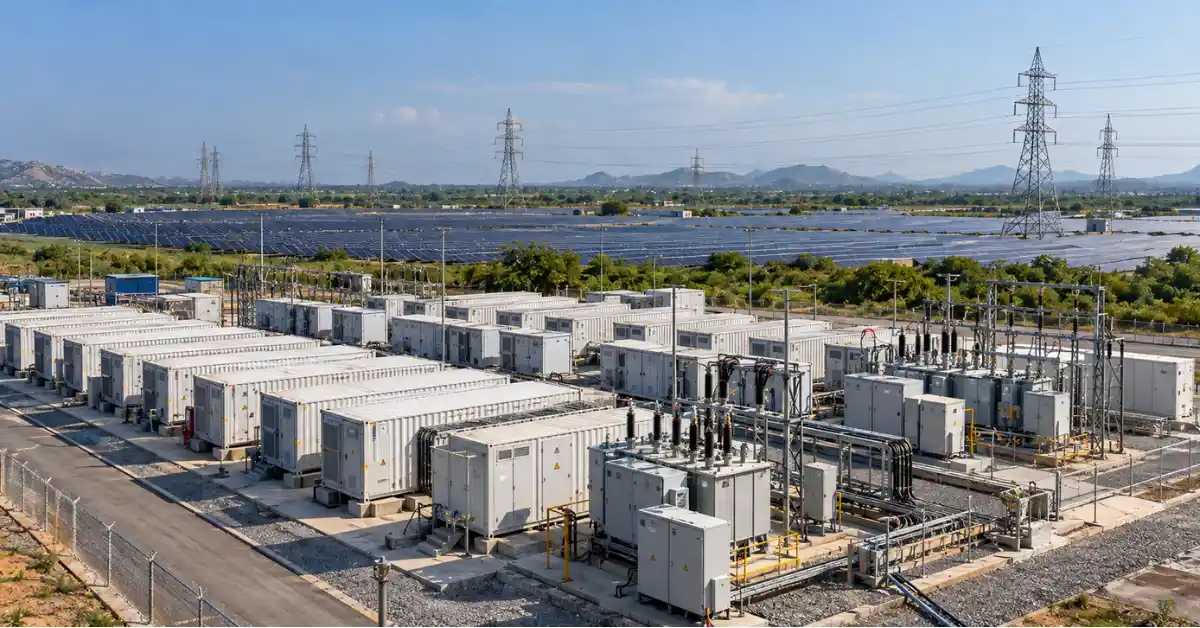
New Delhi, September 30: The Union Cabinet has approved a ₹1,86,405-crore plan to strengthen state-level power transmission networks and deploy 50 gigawatt-hours (GWh) of battery storage to support the integration of renewable energy across India.
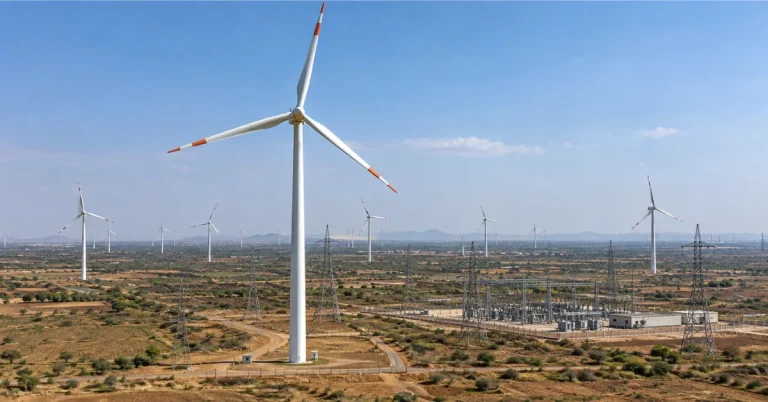
The Green Energy Corridor Phase-III scheme will strengthen intra-state transmission systems to enable the evacuation of up to 135 gigawatts (GW) of renewable energy across states and Union Territories. The scheme is targeted for completion by FY2032-33.
Of the total outlay, ₹1,36,378 crore has been earmarked for intra-state transmission systems and ₹50,000 crore for 50 GWh of battery energy storage systems. The Centre will provide ₹54,082 crore in financial support, which the government said will help offset intra-state transmission charges and keep power costs down.
The battery storage component is designed to address challenges associated with renewable power generation, including intermittency, transmission congestion, peak-hour curtailment and demand during non-solar hours. The government said the storage systems will provide greater flexibility for integrating renewable energy into state grids.
The new transmission capacity comes as India’s renewable-energy base continues to expand. According to Ministry of Power data, around 263 GW of renewable-energy capacity had been commissioned by January 2026. Earlier phases of the Green Energy Corridor were designed to evacuate 44 GW of renewable energy across 10 states, with about 26 GW already integrated.
The government has also planned transmission systems to integrate more than 500 GW of renewable-energy capacity by 2030 and over 600 GW by 2032, placing the new intra-state network expansion within a wider effort to strengthen the grid for rising non-fossil power capacity.
Under GEC-III, greenfield intra-state transmission projects will be implemented through Tariff Based Competitive Bidding, while brownfield upgrades and network-strengthening works will be carried out on a Cost Plus Basis. State Transmission Utilities will serve as the overall implementing agencies, while Transmission Service Providers will participate in competitively bid projects under a Build-Own-Operate-Maintain model.
The Cabinet release said the scheme will also contribute to the target of 900 GW of installed non-fossil capacity by 2035. The GEC-III programme is targeted for completion by FY2032-33.
Read also: NTPC Green Energy Group Crosses 11 GW Installed Capacity as First 81.34 MW of Kalasar Solar Project Goes Live
Read also: West Bengal allots 54.2 acres to Websol for 4 GW solar cell, 4 GW module manufacturing facility