
Indian scientists have developed a biodegradable nanomedicine platform that can silence key cancer-driving genes in breast cancer, the Ministry of Science and Technology said in a statement on Wednesday, 3 June.
The research was conducted by scientists from the Nanobioscience Group at the Agharkar Research Institute (ARI), Pune, an autonomous institute under the Department of Science and Technology.
The ministry said the study, recently published in Advanced Healthcare Materials, presents a targeted gene therapy strategy designed to suppress tumour survival pathways in breast cancer.
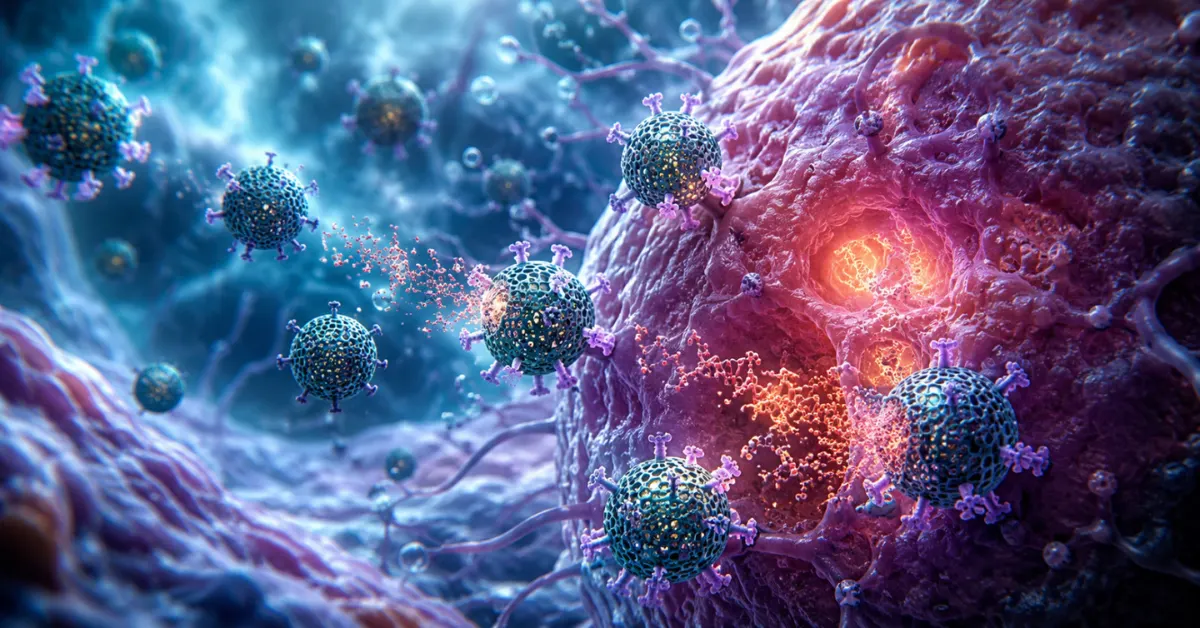
The platform uses biodegradable mesoporous silica nanoparticles to deliver small interfering RNA, or siRNA, molecules into breast cancer cells. These nanoparticles are known for their high loading capacity and tunable surface chemistry.
To improve targeting, the researchers functionalised the nanocarrier with a protamine biopolymer and an MUC1-specific aptamer. This helps the system target MUC1 receptors, which are overexpressed on breast cancer cells.
According to the ministry statement, this targeting strategy enhances cellular uptake while reducing off-target effects, a key limitation in conventional therapies.
A major feature of the study is its dual gene-silencing approach.
The nanocarrier simultaneously delivers siRNAs against two anti-apoptotic genes, MCL-1 and Survivin, both of which are linked to tumour survival and resistance to therapy.
Once inside the tumour microenvironment, the glutathione-responsive design enables controlled release of the therapeutic payload, allowing efficient intracellular delivery and activity.
Biological evaluations in MCF-7 breast cancer models showed strong gene knockdown, increased apoptosis and substantial tumour growth inhibition.
In vivo studies in Severe Combined Immunodeficiency mice showed that the nanocarrier accumulated effectively at tumour sites and exhibited minimal systemic toxicity, supported by favourable histological outcomes.
The research team included Niladri Haldar, Rajkumar Samanta, Surajit Patra, Devyani Sengar, Sachin Jadhav and Virendra Gajbhiye.
According to the ministry statement, the work combines targeted delivery, stimuli-responsive release and combinatorial gene silencing within a single biodegradable platform.
The ministry said the study provides a framework for next-generation RNAi-based cancer therapies and precision oncology applications.
Read also: Centre launches ₹200 crore MAHA Water Mission to support startups and MSMEs in water sector