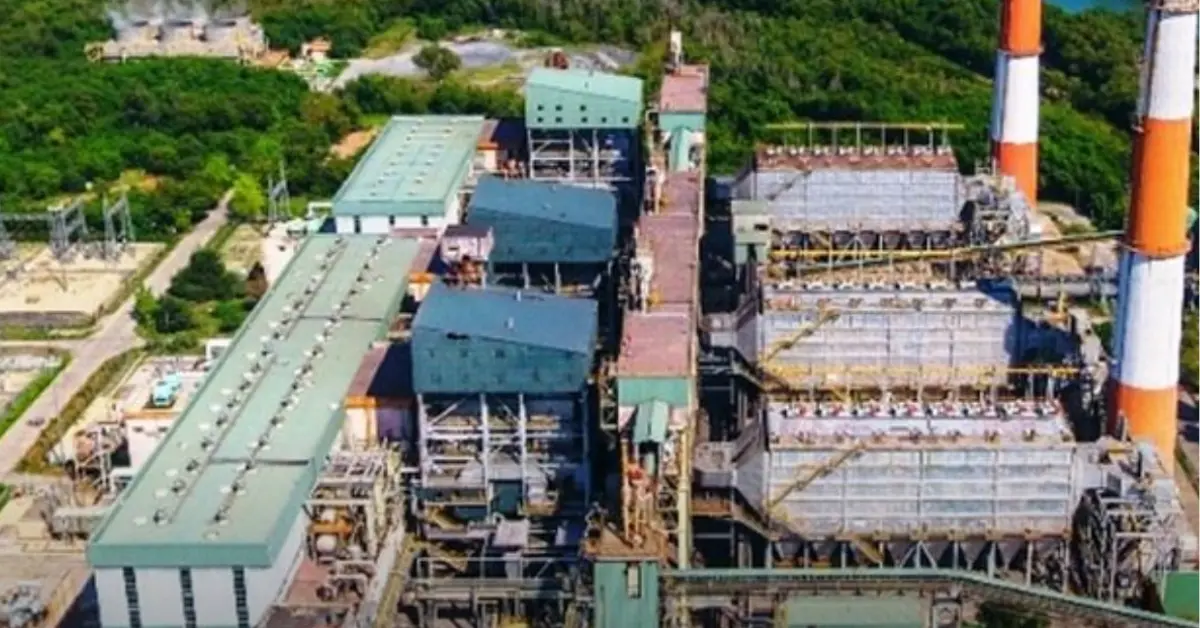
Hindustan Zinc has signed a Memorandum of Understanding (MoU) with The Energy and Resources Institute (TERI) to develop a 250-hectare ecological restoration project at its Chanderiya Lead Zinc Smelter Complex in Rajasthan’s Chittorgarh district.
In a statement, the company said the initiative is set to become world’s largest green cover area within industrial premises.
According to the company, the project aims to transform industrial land into a self-sustaining natural ecosystem while enhancing biodiversity and climate resilience.
The restoration programme forms part of Hindustan Zinc’s Sustainability Goal 2030, which focuses on halting and reversing biodiversity loss and delivering a Net Positive Impact through measurable environmental improvements.
“This collaboration plays a critical role in advancing Hindustan Zinc’s Sustainability Goal 2030 on halting and reversing biodiversity loss through measurable improvements and to progressively work towards delivering a Net Positive Impact (NPI), supporting nature-positive outcomes over the long term,” the company said.
The ecological restoration plan will follow a scientific and multi-layered approach involving the plantation of native trees, shrubs, herbs and grasses suited to the local landscape.
The initiative will also include invasive species management, support for water bodies and aquatic ecosystems, and the development of long-term maintenance and protection protocols.
“TERI will also support the identification of suitable native and adaptive plant species and bring in subject matter experts across the planning, design and implementation phases,” the company said.
The new project builds on an existing collaboration between Hindustan Zinc and TERI at the Chanderiya complex.
Restoration work covering 22.25 hectares has already been completed at the Jarofix Yard, converting degraded industrial land into green cover.
“At the Jarofix Yard (an area where residue generated during the zinc smelting process is safely stored and managed), restoration activities covering 22.25 hectares have already been completed in two phases, transforming degraded industrial land into ecologically functional and biodiverse green cover,” the company said.
Read also: AirTrunk plans ₹3 lakh crore investment in India to build 5 GW data centre capacity by 2030
The company is also developing a 6-hectare biodiversity park atop a secured landfill within the complex.
Using TERI’s Mycorrhiza technology, nearly 56,400 native trees have been planted as part of these efforts.
Commenting on the initiative, Hindustan Zinc Chief Executive Officer Arun Misra said the partnership reflects the company’s commitment to sustainability, biodiversity conservation and ecological restoration.
He added that the company continues to align its operations with global sustainability benchmarks while creating long-term environmental and community value.
The company said the project aligns with its wider Environmental, Social and Governance (ESG) roadmap, which includes land restoration, biodiversity conservation, water stewardship, decarbonisation and responsible resource management.
Hindustan Zinc stated that it has secured a 530 MW round-the-clock renewable energy agreement that is expected to meet more than 70% of its power requirement.
The company also reported a water recycling rate of 49% and a green mobility fleet of 232 electric and LNG-powered vehicles.
Hindustan Zinc, a Vedanta Group company, said it was ranked as the world’s most sustainable metals and mining company for the third consecutive year in the S&P Global Corporate Sustainability Assessment 2025.
The company stated that the proposed restoration project would further support regenerative landscapes, climate resilience and biodiversity conservation within industrial operations.
Read also: India’s steel demand continues strong run with consumption reaching 14.33 million tonnes in May