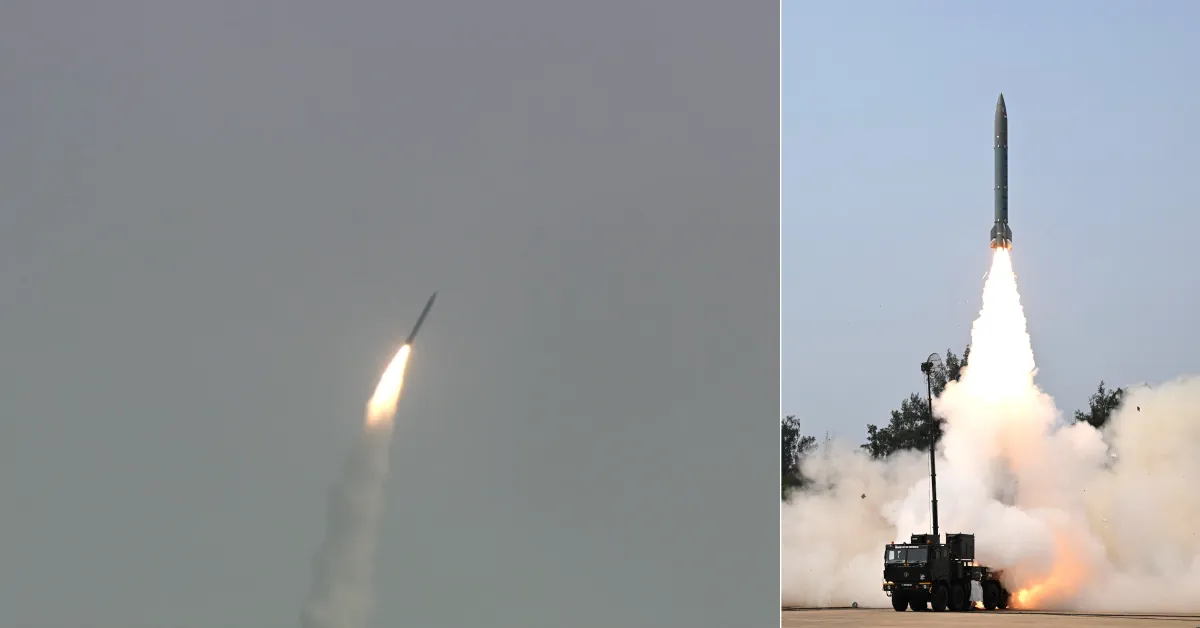
New Delhi, November 6: India’s Defence Research and Development Organisation (DRDO) has successfully flight-tested the indigenously developed Pralay quasi-ballistic missile from an island off the Odisha coast, bringing the weapon system closer to induction into the armed forces.
The missile was launched from Dr APJ Abdul Kalam Island at approximately 11:10 am on November 5, 2026. According to the Ministry of Defence, the missile met all its test objectives, with data collected by tracking and monitoring instruments confirming the successful flight.
The test was conducted as part of user evaluation trials, during which the armed forces assess a weapon system’s performance against their requirements. Senior DRDO officials, defence industry representatives and armed forces personnel attended the trial.
Following the successful test, the Defence Ministry stated that the missile’s induction was imminent. However, the announcement did not provide a specific date for its entry into military service or confirm that operational deployment had begun.
Pralay is an indigenously developed quasi-ballistic missile. Such missiles can manoeuvre during flight rather than following a purely ballistic path, potentially making interception more difficult.
The missile was developed by Research Centre Imarat in Hyderabad in collaboration with other DRDO laboratories. Bharat Dynamics Limited (BDL), a public sector defence manufacturer and one of the project’s development-cum-production partners, produced the system.
The latest test marks another step towards making the domestically developed missile available to India’s armed forces. Its successful performance during user evaluation is significant because these trials help determine whether a weapon system meets the requirements of the forces expected to operate it.
According to the ministry, the missile’s performance was verified using test data recorded by various range instruments deployed by the Integrated Test Range at Chandipur in Odisha.
These instruments monitor missile flights and collect information needed to evaluate performance against the objectives established for each trial.
Defence Minister Rajnath Singh congratulated DRDO, the armed forces and industry partners on the successful test. He said the missile’s advanced technologies would strengthen India’s defence capabilities and improve the military’s operational preparedness against emerging threats.
Defence Secretary Rajesh Kumar Singh, who also serves as Secretary of the Department of Defence Research and Development and Chairman of DRDO, congratulated the teams involved in the programme.
The test also highlights the role of Indian defence research institutions and manufacturers in developing and producing missile systems domestically. While DRDO laboratories led the development, Bharat Dynamics Limited participated as a development-cum-production partner.
The Ministry of Defence did not disclose the missile’s flight distance, the target used during the trial or detailed technical performance data in its November 5 announcement.
It also did not specify how many Pralay missiles would initially be inducted into service or which military formations would receive them.
The successful November 5 flight test has therefore brought Pralay closer to military induction, according to the ministry, although the timing and scale of its operational deployment remain unannounced.
Read also: CISF changes how India’s power plants, ports and coal mines are guarded; here’s what’s new