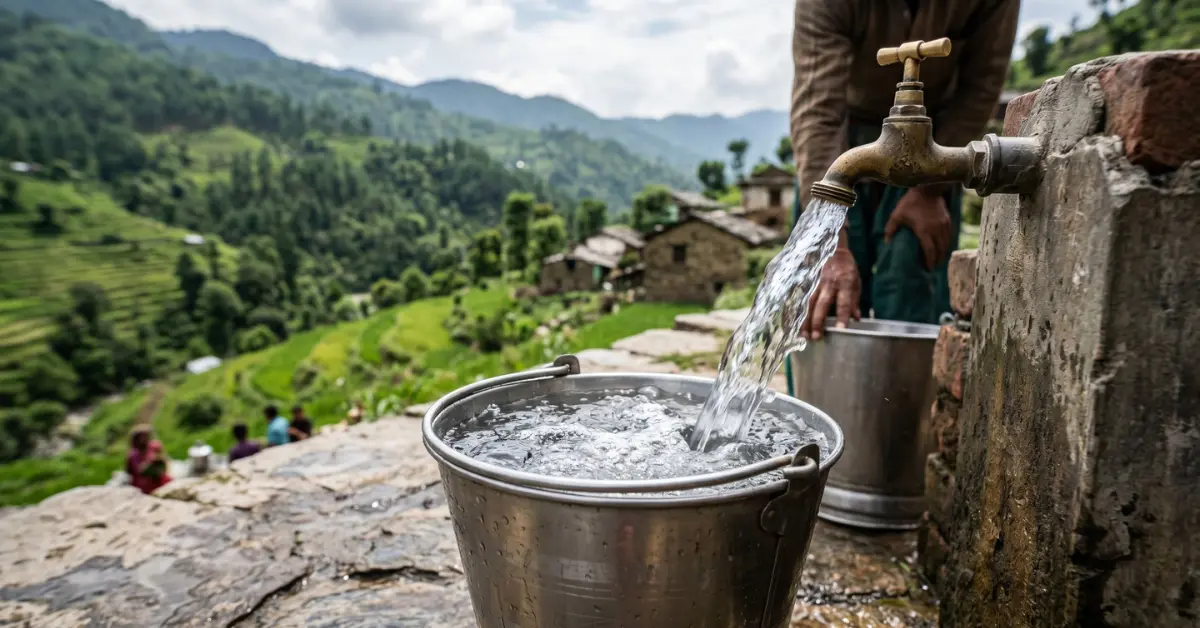
The Centre has signed reform-linked Memorandums of Understanding (MoUs) with the Union Territory of Andaman and Nicobar Islands and the State of West Bengal under Jal Jeevan Mission 2.0, marking a step towards a Gram Panchayat-led model for rural water supply management.
In a statement on Monday, 18 May, the Ministry of Jal Shakti said the MoUs are part of the nationwide rollout of reform-linked implementation under Jal Jeevan Mission 2.0.
The ministry said the agreements aim to advance a transparent, accountable and community-centred model of rural water supply management aligned with the vision of Viksit Bharat @2047.
According to the statement, the reform-linked MoU mandates a Gram Panchayat-led, service-based and community-centred model of rural water governance under Jal Jeevan Mission 2.0.
The MoUs were signed during separate scheduled meetings in the presence of Union Jal Shakti Minister C R Patil, Minister of State for Jal Shakti V Somanna, Secretary, Department of Drinking Water and Sanitation (DDWS), Ashok K K Meena, and senior officials from the department.
For Andaman and Nicobar Islands, the MoU was signed between Swati Meena Naik, Joint Secretary (Water), DDWS, and Sachin Shinde, Secretary, Commissioner-cum-Secretary, Union Territory of Andaman and Nicobar Islands.
The MoU was exchanged between Vinod Kumar Yadav, Resident Commissioner of Andaman and Nicobar Islands, and Arun Kumar, Under Secretary, Jal Jeevan Mission, at the DDWS office in New Delhi.
The exchange took place in the virtual presence of Lieutenant Governor of Andaman and Nicobar Islands Admiral D K Joshi, Chief Secretary Chandra Bhushan Kumar and senior officials from the Union Territory.
The MoU with West Bengal was signed at the Chief Minister’s office in the presence of Chief Minister Suvendu Adhikari, Chief Secretary Manoj Kr Agarwal and senior officials from the state government, the ministry said.
Dushyant Nariala, Principal Resident Commissioner of West Bengal, was present at the DDWS office during the process.
The MoU was signed and exchanged between Swati Meena Naik and Narayan Swaroop Nigam, Principal Secretary, PHE Department, West Bengal, at the Chief Minister’s office in West Bengal.
Addressing the gathering, Patil said Jal Jeevan Mission has reached extensively at the rural level and has emerged as a people-centric movement aimed at improving dignity, health and empowerment in rural areas.
He said the original deadline of the mission was May 2024, but it has been extended till December 2028 with the aim of achieving 100 per cent tap water coverage and sanitation across the country.
Patil commended Andaman and Nicobar Islands for achieving 100 per cent rural tap water coverage and obtaining Har Ghar Jal certification across its blocks.
He also lauded the Union Territory administration for fully funding 100 per cent of the financial outlays required for 40 per cent of its remaining balance works.
The Union Territory administration was urged to quickly complete financial reconciliation of all ongoing water infrastructure schemes to maintain accounting transparency.
For West Bengal, Patil urged the West Bengal Chief Minister to review the issues related to water within the state and take corrective measures to speed up JJM 2.0 implementation.
The minister requested immediate physical reviews in the historically lagging districts of Darjeeling, Kalimpong and Purulia.
He also called for implementation of Jal Sanchay Jan Bhagidari, or community participation, along with active focus on the Karmabhoomi se Matrubhoomi campaign.
Read also : Delhi aims to flatten Bhalswa and Okhla garbage mountains this year, Ghazipur by 2027-end