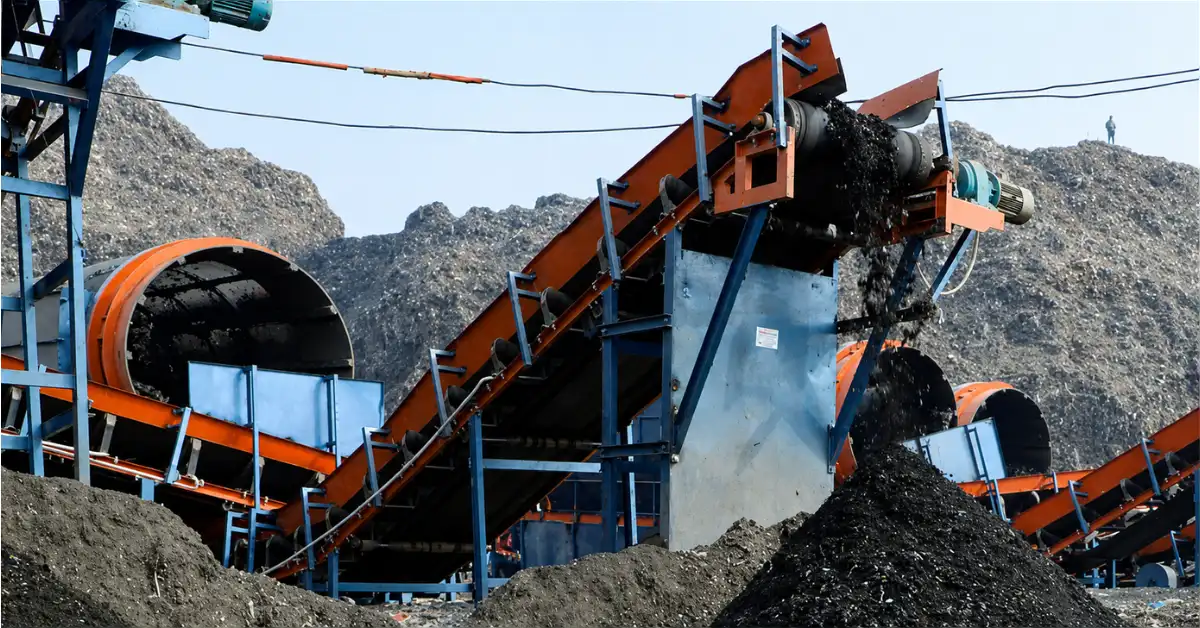
Delhi’s long-running battle with its three major garbage mountains has entered another deadline-driven phase, with the Municipal Corporation of Delhi targeting the complete flattening of the Bhalswa and Okhla landfill sites by the end of 2026 and the full remediation of the Ghazipur landfill by the end of 2027.
Delhi Mayor Pravesh Wahi said on Saturday, 16 May, that the civic body is continuing biomining and remediation work at the three legacy waste sites, which have shaped the capital’s waste-management crisis for decades.
“Our target is to finish Bhalswa and Okhla by the end of this year. Work on Ghazipur is also progressing and our target is to complete it by end of 2027,” Wahi said in an interview with news agency PTI.
The mayor said machinery was being installed at the landfill sites and the pace of work would increase once installation is completed. The latest timeline broadly matches Delhi’s Air Pollution Mitigation Action Plan 2026, which fixed July 2026 for Okhla, December 2026 for Bhalswa and December 2027 for Ghazipur.
The three landfill sites – Ghazipur, Bhalswa and Okhla – remain among Delhi’s most visible civic and environmental challenges. According to the Delhi government’s Environment Department, Bhalswa was commissioned in 1994, Ghazipur in 1984 and Okhla in 1996.
Delhi’s existing waste-to-energy network also underlines the pressure on the city’s waste system. The capital has four operational plants at Timarpur-Okhla, Ghazipur, Narela-Bawana and Tehkhand, with operational processing capacities of 1,950 metric tonnes per day, 1,300 metric tonnes per day, 3,000 metric tonnes per day and 2,000 metric tonnes per day, respectively.
The scale of the task remains steep. At Okhla, around 23.04 lakh metric tonnes of legacy waste and 3.34 lakh metric tonnes of fresh waste remained by December-end, taking the total load to 26.38 lakh metric tonnes.
Bhalswa had 36.52 lakh metric tonnes of legacy waste and 11.45 lakh metric tonnes of fresh accumulation, taking its total to 47.97 lakh metric tonnes. Ghazipur remained the heaviest site, with 77.29 lakh metric tonnes to be cleared.
Read also : GMDA floats ₹32 crore tender for 900-metre, 4-lane flyover at Ambedkar Chowk in Gurugram
The MCD’s larger challenge is not only to process old waste but also to prevent fresh dumping from undoing progress. Delhi generates thousands of tonnes of municipal solid waste every day, and the gap between daily generation and processing capacity has kept pressure on the landfill sites.
One recent report, citing the Economic Survey 2025-26, said Delhi had daily waste generation of 11,862 tonnes against a processing capacity of 7,641 tonnes, leaving a gap of about 4,200 tonnes.
The issue is particularly acute at Ghazipur and Bhalswa, where fresh waste continues to arrive even as biomining work goes on. According to a media report in January, about 4,000 metric tonnes of fresh waste continued to be dumped daily at the two sites.
To reduce the fresh-waste load at Ghazipur, the MCD has secured a 10-acre plot near the Integrated Freight Complex from the Delhi Development Authority for a new processing facility.
According to a Hindustan Times report, five acres will be used for fresh waste processing and the remaining land for compressed biogas production from wet waste. The proposed facility is expected to process at least 800 metric tonnes of waste per day.
The MCD has reportedly also sought three acres in each of Delhi’s 12 administrative zones for decentralised waste processing and larger material recovery centres. Civic officials said four fresh-waste processing plants at Singhola, Ghazipur, Bhalswa and Okhla are expected to create capacity for up to 5,900 metric tonnes per day.
If the 2026 and 2027 timelines are met, Delhi could see the first full-scale removal of its three most prominent garbage mountains after decades of accumulation.