The Ministry of Road Transport and Highways (MoRTH) has issued a new Urban Decongestion Policy that establishes a framework for developing National Highway ring roads and bypasses around urban areas while promoting planned urban development, mobility management and value capture mechanisms in partnership with state governments.
The ministry said rapid economic growth, urbanisation and increasing vehicular traffic have led to congestion on National Highways passing through cities and towns.
According to the ministry, such congestion affects the efficient movement of goods and passengers and contributes to higher fuel consumption, travel delays, logistics costs and pollution.
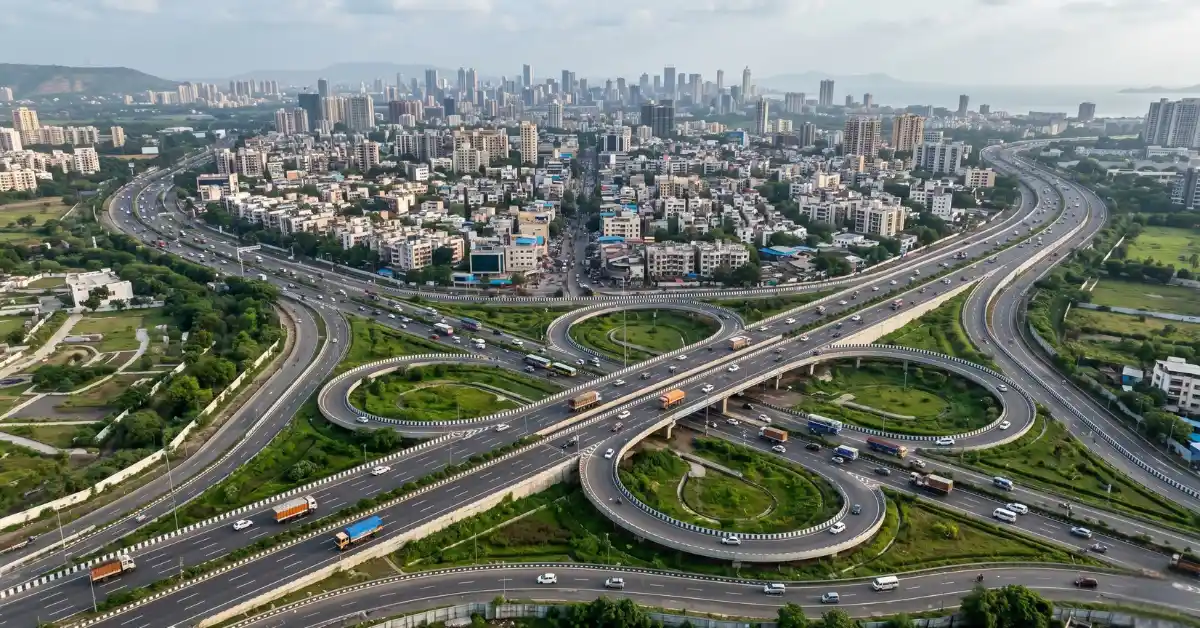
To address these issues, the policy provides for the development of ring roads, bypasses and elevated corridors on National Highways.
The ministry noted that 191 towns and cities with populations above one lakh had previously been identified under Bharatmala Pariyojana as congestion points on major National Highway corridors.
Under the new framework, all projects for urban decongestion on National Highways will be developed as fully access-controlled corridors with a minimum four-lane configuration and closed tolling facilities.
The policy states that this will enable design speeds of 100-120 Kmph for freight and passenger vehicles.
The policy also seeks to address unregulated ribbon development along bypasses and ring roads.
According to the ministry, such development can impede traffic flow and reduce the benefits of investments made in urban decongestion projects.
State governments will be required to notify a 15-metre development control zone on either side of new bypasses and ring roads where development will be prohibited except for specified public infrastructure and utility purposes.
Beyond this zone, states may establish regulated development zones extending up to 2 Km on either side of the corridor for planned residential, commercial, industrial and institutional development.
The policy introduces four models for state government participation in project implementation.
These include sharing up to 50% of land acquisition costs, sharing land acquisition costs along with reimbursement of state GST and mineral royalties, contributing land through land pooling mechanisms, and implementing value capture financing systems.
According to the policy, value capture financing may include mechanisms such as development charges, additional stamp duties, land value taxes and other charges levied on development that benefits from improved connectivity created by bypasses and ring roads.
All urban decongestion projects under the policy will be integrated with the notified master plans of cities and towns.
The policy also encourages development of mass transit systems, multimodal transport centres, logistics hubs and urban mobility infrastructure alongside new highway corridors.
Projects will be prioritised based on factors including urban population, traffic congestion, freight movement, urban expansion and economic importance.
State capitals, cities with populations above five lakh and major economic, tourism and transport centres will receive priority under the framework.
The ministry said the policy aims to decongest roads and highways around urban agglomerations, improve logistics efficiency, reduce transportation costs, support industrial and economic growth, and improve the quality of life for urban residents.
Read also : NHAI warns against number plate tampering after toll evasion case; FIR registered