New Delhi, November 16: India’s government health expenditure reached ₹4.14 lakh crore in the financial year 2023–24, while households continued to pay approximately ₹4.06 lakh crore directly for medical treatment and other healthcare services, according to the latest National Health Accounts (NHA) estimates released by the Union Ministry of Health and Family Welfare on November 15.
The report shows that India’s total health expenditure stood at ₹9.52 lakh crore during FY2023–24, with government spending accounting for 43.5% of the total and households’ out-of-pocket payments representing 42.7%.
Although the share of healthcare expenditure paid directly by households declined from 43.4% in FY2022–23, the latest figures indicate that families continued to bear a substantial portion of the country’s medical costs.
The estimates cover expenditure incurred between April 2023 and March 2024 and do not represent spending undertaken or newly allocated in November 2026.
According to the ministry, total health expenditure reached ₹9,52,122 crore in FY2023–24, equivalent to 3.29% of India’s gross domestic product (GDP).
On a per capita basis, total health expenditure was estimated at ₹6,801 during the financial year.
Government health expenditure stood at ₹4,14,196 crore, representing 43.5% of total health spending and 1.43% of GDP.
The government expenditure figure includes both current and capital spending by the Union and state governments, rather than expenditure by the Union Health Ministry alone.
Of the total government health expenditure, state governments accounted for approximately 68%, while the Union government contributed about 32%.
The figures highlight the substantial role of state governments in financing public healthcare services, including hospitals, primary healthcare facilities and other medical programmes.
According to the report, government health expenditure increased from ₹1,29,778 crore in FY2013–14 to ₹4,14,196 crore in FY2023–24, representing more than a threefold increase in nominal terms over the decade.
Government health expenditure per person also increased from ₹1,042 in FY2013–14 to approximately ₹2,959 in FY2023–24.
However, public health expenditure remained below the National Health Policy 2017 target of raising government health spending to 2.5% of GDP by 2025.
The latest National Health Accounts estimates put government health expenditure at 1.43% of GDP in FY2023–24, highlighting the difference between the recorded spending level and the policy target.
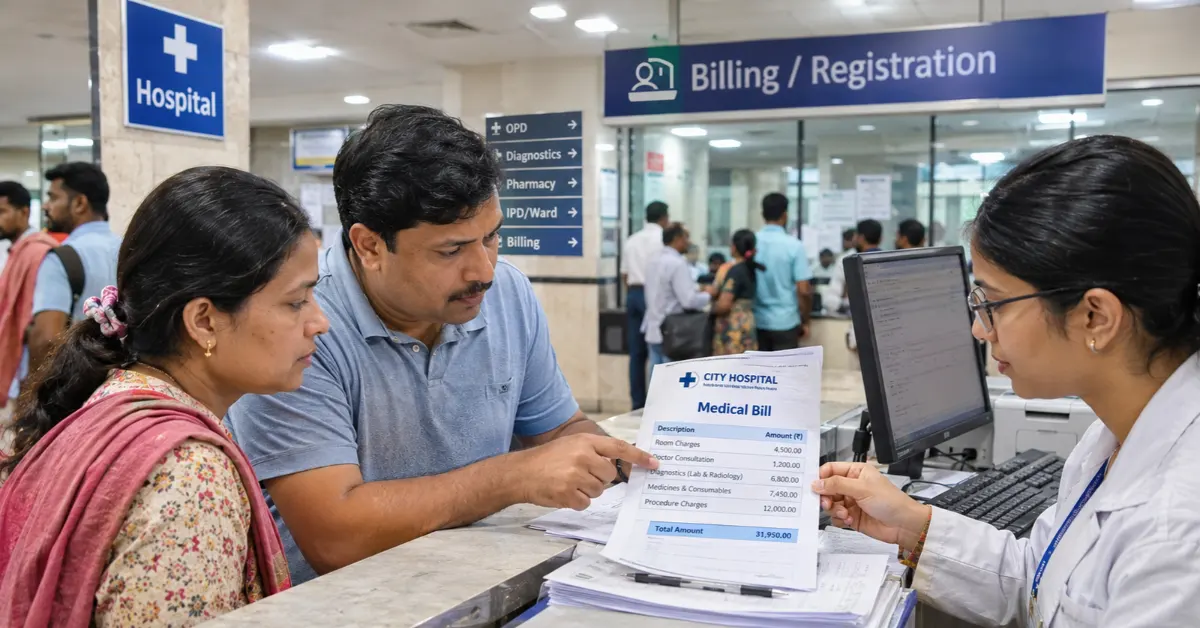
Households’ out-of-pocket expenditure stood at ₹4,06,197 crore during FY2023–24, accounting for 42.7% of total health spending.
This represented a decline of 0.7 percentage points from the 43.4% share recorded in FY2022–23.
Over the longer period, the share of direct household payments fell from 64.2% in FY2013–14 to 42.7% in FY2023–24, a reduction of 21.5 percentage points.
The Ministry of Health and Family Welfare described the declining share as an indication of the government’s growing role in healthcare financing and improved financial protection for households.
However, the reduction in the share of out-of-pocket expenditure does not necessarily mean that every household is paying less for healthcare in absolute terms.
The ₹4.06-lakh-crore figure represents aggregate payments made directly by households across India rather than the average expenditure of an individual family.
Such payments include money spent on healthcare services, medicines, diagnostic tests, consultations and treatment that is not covered by other financing arrangements.
For families requiring hospitalisation, repeated medical consultations or long-term treatment, direct healthcare expenditure can remain a significant financial burden.
The report also highlights increased public spending on primary healthcare.
According to the ministry, government expenditure on primary healthcare reached approximately ₹1.53 lakh crore in FY2023–24.
The spending reflects the government’s emphasis on strengthening essential healthcare services, particularly at the community and primary care levels.
However, the National Health Accounts primarily track financial expenditure and do not independently establish the resulting improvements in treatment outcomes or reductions in medical costs for individual households.
The ministry highlighted initiatives such as Ayushman Bharat, free medicines and diagnostic services, and the Pradhan Mantri Bhartiya Janaushadhi Pariyojana as part of efforts to improve access to affordable healthcare.
Health insurance and social security arrangements also accounted for a growing share of healthcare financing.
According to the National Health Accounts, private health insurance expenditure represented 10.2% of total health expenditure in FY2023–24, compared with 3.4% in FY2013–14.
Social security expenditure on health increased from 6% to 11% of total health spending over the same period.
Together, government-supported health schemes and private health insurance accounted for approximately 21.2% of total health expenditure in FY2023–24, according to reporting based on the latest estimates.
These financing mechanisms can help reduce the need for patients to pay directly for certain healthcare services, although the extent of financial protection depends on coverage, eligibility and the services included.
Despite the expansion of public spending and insurance-related financing, the latest figures show that direct household payments remain a major component of India’s healthcare expenditure.
The National Health Accounts estimates are prepared by the National Health Accounts Technical Secretariat at the National Health Systems Resource Centre under the Ministry of Health and Family Welfare.
The report uses the internationally recognised System of Health Accounts 2011 framework to track healthcare spending across government, household, insurance and other financing sources.
The latest publication represents the eleventh round of National Health Accounts estimates for India and provides a detailed assessment of the country’s healthcare financing during FY2023–24.
For policymakers, the findings highlight the expansion of public healthcare financing alongside the continuing challenge of making medical treatment affordable for households.
While government health expenditure has more than tripled in nominal terms over the decade and the share of out-of-pocket payments has declined, households still directly financed approximately ₹4.06 lakh crore of India’s ₹9.52-lakh-crore total health expenditure in FY2023–24.
The figures underline the importance of continued investment in public healthcare, wider financial protection and improved access to affordable medical services.
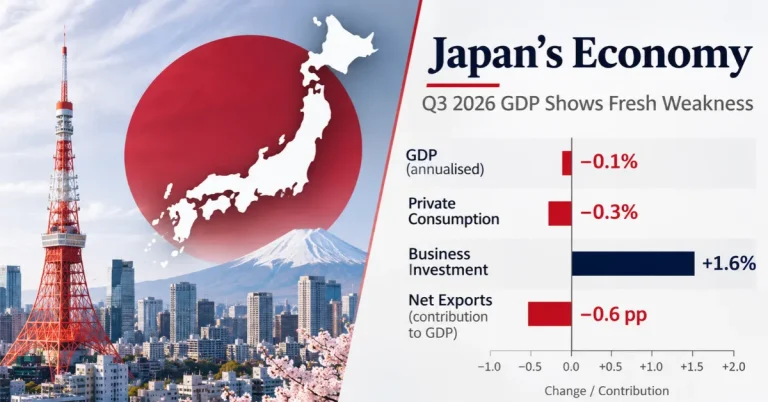
Read also: Japan’s GDP slips 0.1% annualised as falling consumption and trade weigh on growth
Read also: ADB and ASEAN sign five-year partnership, target $13 billion for water security and digital economy