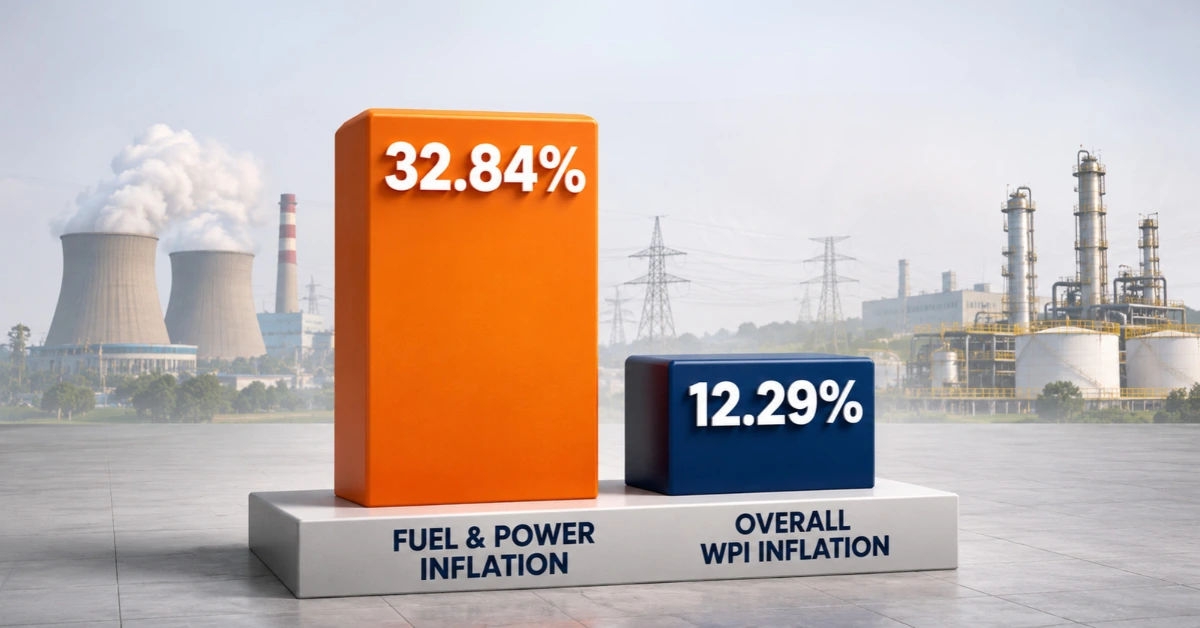
New Delhi, November 17: India’s wholesale inflation rose to 12.29% in October 2026 from 11.39% in September, driven by a sharp increase in fuel and power prices, according to provisional data released by the Ministry of Commerce and Industry on November 16.
Fuel and power inflation surged to 32.84% from 25.85% in September, raising concerns over rising input costs for manufacturers and infrastructure developers.
The October Wholesale Price Index (WPI) reading was the highest since the revised 2022–23 base-year series was introduced in June 2026. It also exceeded the 12.1% increase expected by economists surveyed by Reuters.
According to the ministry, inflation in primary articles increased to 9.24% from 8.67%, while manufactured-products inflation eased slightly to 9.54% from 9.76%.
The all-commodities WPI rose to 113.3 in October from 112.5 in September, marking a month-on-month increase of approximately 0.7%.
Energy-related commodities recorded particularly sharp price increases. Wholesale inflation in crude petroleum and natural gas reached 70.80%, while mineral oils registered 45.57% and electricity recorded 8.06%.
Price pressures also remained elevated across several industrial categories. Basic metals recorded inflation of 17.21%, chemicals and chemical products 17.53%, rubber and plastic products 13.90%, and textiles 13.67%.
The rise in energy and industrial input prices could increase costs for sectors such as steel, cement, manufacturing and infrastructure construction.
Road, railway and industrial projects may face higher expenditure on fuel, transportation and construction materials, although the actual impact will depend on procurement arrangements and contract terms.
Despite elevated annual price pressures, the manufactured-products index remained unchanged at 110.2 between September and October, indicating broadly stable prices during the month.
Food-related wholesale inflation eased marginally, with the WPI Food Index declining to 8.58% from 8.66% in September.
The latest figures also highlight a substantial gap between wholesale and retail inflation.
India’s retail inflation, measured by the Consumer Price Index (CPI), increased to 6.09% in October from 5.54% in September, according to data released on November 12.
The retail inflation rate exceeded the Reserve Bank of India’s upper tolerance threshold of 6%.
However, WPI and CPI measure different baskets of goods and services, meaning their inflation rates are not directly comparable.
The sharp rise in wholesale energy prices could eventually influence consumer prices if businesses pass higher production and transportation costs on to customers.
The data may also influence expectations surrounding the Reserve Bank of India’s monetary policy, although no new interest-rate decision has been announced in response to the WPI figures.
The October WPI estimates remain provisional and may be revised as additional information becomes available.
The next wholesale inflation release, covering November 2026, is scheduled for December 14.
For Indian manufacturers and infrastructure businesses, the key concern is whether elevated fuel, energy and raw material prices persist, potentially putting further pressure on production costs, project budgets and profit margins.
Read also: Government healthcare spending triples in a decade, but families still face heavy medical bills
Read also: Government healthcare spending triples in a decade, but families still face heavy medical bills