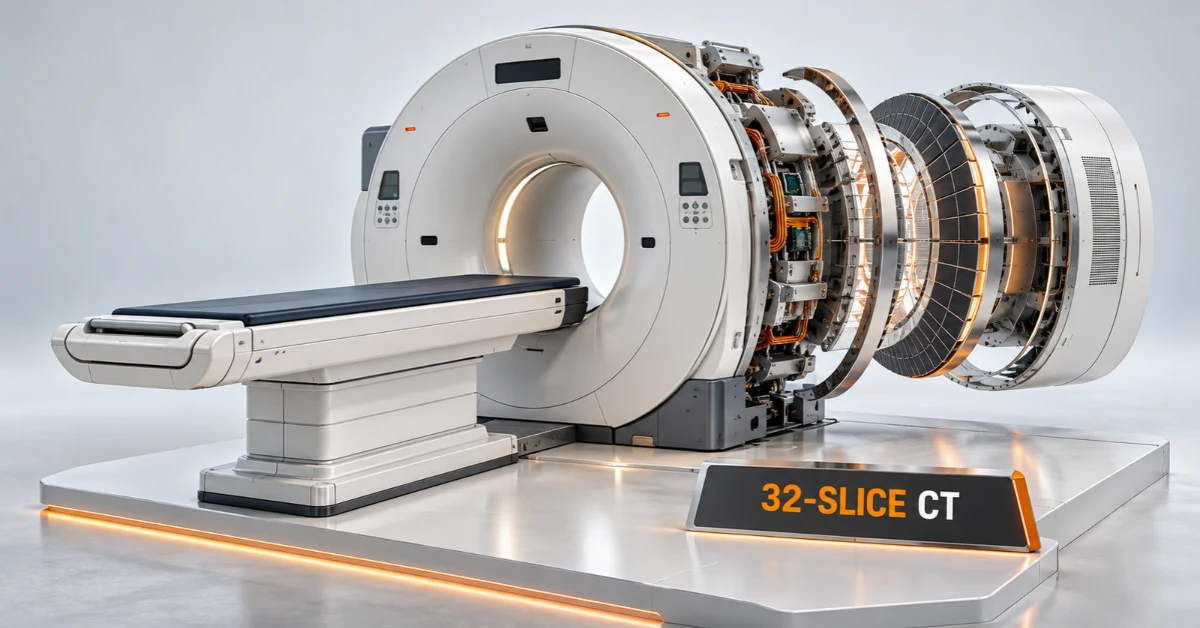
New Delhi, October 16, 2026: The government has signed an agreement with Karnataka-based Panacea Medical Technologies to support the development and commercialisation of an indigenous 32-slice CT scanner, a medical imaging machine used to help diagnose diseases. The project aims to strengthen India’s domestic manufacturing capabilities in advanced medical equipment and support wider access to diagnostic technology.
The agreement was signed between the Technology Development Board (TDB), under the Department of Science and Technology, and Panacea Medical Technologies Pvt. Ltd., based in Malur, Karnataka.
According to an announcement by the Ministry of Science and Technology on October 15, the project involves developing a domestically designed CT scanner for diagnostic imaging across various medical specialities. However, the government has not announced when the machine will be available for use in hospitals.
A CT scanner uses X-rays and computer processing to produce detailed images of structures inside the body. Unlike conventional X-ray imaging, CT technology generates cross-sectional images that help doctors examine organs, bones and tissues during diagnosis.
The proposed 32-slice system is intended to expand Panacea Medical Technologies’ capabilities in diagnostic imaging. The company already works in radiotherapy and radiology technologies, including equipment used in cancer treatment and medical imaging.
Developing such equipment requires expertise in imaging technology, precision engineering, system integration and calibration. These processes are essential for producing reliable diagnostic images while meeting medical equipment safety requirements.
The government said the project comes amid growing demand for advanced diagnostic imaging equipment as India’s healthcare infrastructure expands and the need for timely disease detection increases.
Domestic development of CT scanning technology could help Indian manufacturers strengthen their expertise in advanced medical devices and support efforts to reduce dependence on imported equipment. However, the announcement does not establish whether the proposed scanner will be cheaper than imported alternatives.
The project aligns with the government’s Make in India initiative, which aims to strengthen domestic manufacturing across strategically important industries, including medical devices.
Rajesh Kumar Pathak, Secretary of the Technology Development Board, said the initiative supports efforts to strengthen India’s advanced medical equipment manufacturing capabilities. He also highlighted the potential for domestically developed technologies to meet India’s healthcare needs and reach international markets.
A promoter of Panacea Medical Technologies said the support would help accelerate the company’s work on indigenous diagnostic imaging technology and contribute to improving access to advanced CT imaging.
The official announcement does not disclose the financial value or terms of TDB’s support, the project’s expected completion date, the scanner’s proposed selling price or its anticipated commercial launch.
The agreement marks a development-stage initiative rather than the introduction of a commercially available scanner. If successfully developed and commercialised, Panacea’s 32-slice CT system could expand India’s domestic capabilities in medical imaging equipment and provide another locally developed option for healthcare providers.