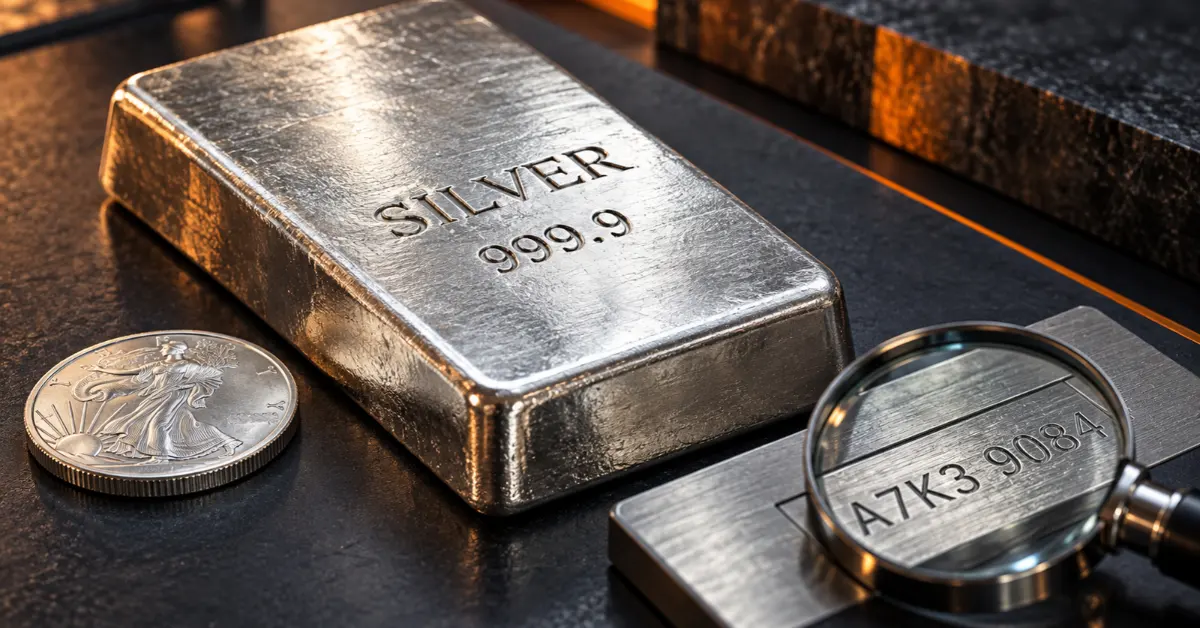
New Delhi, October 15, 2026: The Bureau of Indian Standards (BIS) has introduced a hallmarking and certification scheme for silver bars and coins to help buyers verify their purity and identify their manufacturers. The national standards body has also released seven new Indian Standards covering electric vehicle (EV) charging cables, electric bicycles, healthcare equipment and building materials.
The announcements were made at the World Standards Day 2026 event in New Delhi on October 14, attended by Union Minister for Consumer Affairs, Food and Public Distribution Pralhad Joshi and senior government officials.
Under the new Silver Refinery Scheme, eligible silver refineries and mints can obtain BIS certification after an assessment of their manufacturing processes, technical capabilities and testing facilities. Licensed operators will be authorised to hallmark silver bars and coins that meet the prescribed purity requirements.
The scheme covers three high-purity silver grades: 999.9, 999.5 and 999.0 parts per thousand, corresponding to purity levels of 99.99%, 99.95% and 99.9%, respectively.
Hallmarked silver bars and coins will carry the BIS Standard Mark, the word ‘SILVER’, the purity grade, the manufacturer’s identification mark and a unique serial number. These markings are intended to help buyers identify certified products and trace their origin.
According to BIS, the scheme aims to improve confidence in silver purity and establish a standardised quality assurance system for silver bullion and coins. However, the announcement does not make hallmarking compulsory for all silver bars and coins sold in India.
Alongside the silver certification scheme, BIS released seven new standards covering safety, performance and quality requirements for products used in transport, healthcare and construction.
The standard for EV charging cables specifies requirements relating to insulation, heat resistance, construction and testing. It covers cables used in electric vehicle charging systems with voltage ratings of up to 1,100 volts alternating current (AC) or 1,500 volts direct current (DC).
Another standard applies to electrically assisted bicycles, setting requirements for electrical safety, protection against overheating and measures to prevent tampering. It covers pedal-assisted bicycles with a continuous rated motor power of up to 0.25 kilowatts, with motor assistance designed to stop when the bicycle reaches 25 km/h.
The remaining standards cover lower-limb assistive robots, therapeutic footwear for people with diabetic and nerve-related conditions, treatment tables used in paediatric Panchakarma procedures, flexible plywood and insect screens made from PVC-coated fibreglass.
BIS also launched a Digital Standard Reader, an online tool intended to make Indian Standards easier to access and understand. It allows users to search technical documents, follow references, consult a built-in dictionary and translate content into Indian languages using computers and mobile devices.
Speaking at the event, Joshi highlighted the importance of quality standards in supporting India’s transition towards cleaner and more affordable energy. The event focused on the United Nations Sustainable Development Goal of affordable and clean energy.
The standards body also released national roadmaps for sustainable agriculture and manufacturing. The agriculture roadmap identifies 15 areas for future standard development, including soil management, water use, agricultural inputs and climate-related services.
The manufacturing roadmap focuses on low-carbon technologies, efficient resource use, recycling, sustainable product design and supply-chain management.
BIS also entered into partnerships with six additional academic institutions, bringing its total number of institutional partners to 98. The collaborations are intended to support education, research and training related to Indian Standards.
The new hallmarking scheme provides a certification framework for silver bars and coins, while the seven product standards establish technical requirements across emerging technologies and other industries. The release of these standards does not automatically make compliance mandatory for every manufacturer.