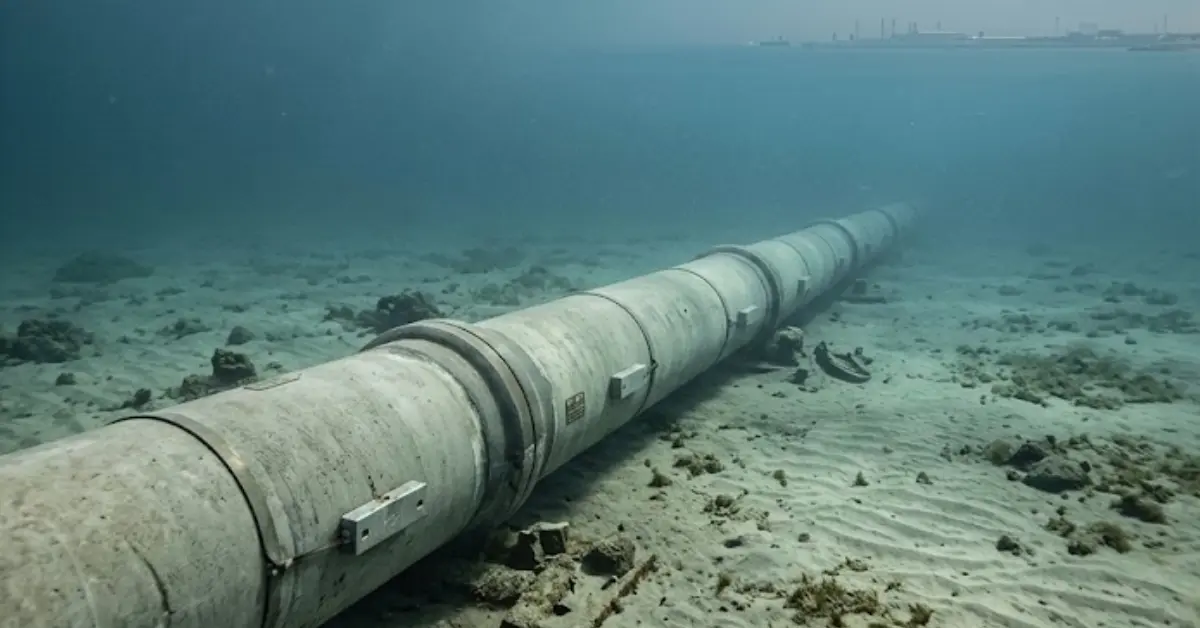
The Centre has rejected speculation that India is pursuing a deep-sea energy pipeline connecting Gujarat with Oman and other Gulf countries.
The Ministry of Petroleum and Natural Gas, in a clarification issued on Tuesday (16 June), said no such proposal is currently under consideration.
It also said there are no active discussions or negotiations with Oman or any other Gulf country on the proposed project at any level in the ministry.
“The Ministry of Petroleum and Natural Gas wishes to categorically clarify that no such proposal is currently under consideration by this Ministry. There are no active discussions or negotiations with Oman or any other Gulf countries on this project at any level in this Ministry,” the ministry said in a statement.
The clarification came after media reports claimed that India was working on a subsea gas pipeline project through Oman to reduce risks linked to possible disruptions around the Strait of Hormuz.
The project, referred to as the Middle East-India Deepwater Pipeline, or MEIDP, was proposed as a direct undersea gas corridor between Oman and India’s western coast.
The reported plan pegged the project at around ₹40,000 crore and said it could take five to seven years to build if cleared.
It envisaged a nearly 2,000 km subsea pipeline under the Arabian Sea, with a possible capacity of around 31 million standard cubic metres per day of natural gas.
Gujarat was seen as the likely landing point because of its existing energy and industrial infrastructure.
Read also : Government caps diesel sale at retail outlets to curb black marketing, says no fuel shortage in country
The reports also said that state-run companies such as GAIL, Engineers India and Indian Oil Corporation could be asked to prepare a detailed feasibility report.
The pipeline idea drew attention because it was projected as a possible alternative supply route at a time when India’s energy security debate has been shaped by risks around West Asian maritime routes.
The Strait of Hormuz remains one of the world’s most sensitive energy transit corridors, and any disruption in the region can affect shipping costs, fuel prices and supply stability for energy-importing countries.
However, the ministry’s clarification makes the government’s current position clear.
It has said the Oman–Gujarat deep-sea pipeline proposal is not under consideration, and no negotiations are taking place with Oman or any other Gulf country.
With this, the government has sought to put speculation around the proposed Middle East-India Deepwater Pipeline to rest.