India has proposed a phased rollout of Flex-Fuel Vehicles (FFV) ready retail outlets as part of the government’s roadmap to create a nationwide flex-fuel ecosystem, Petroleum and Natural Gas Minister Hardeep Singh Puri said on Thursday, 4 June.
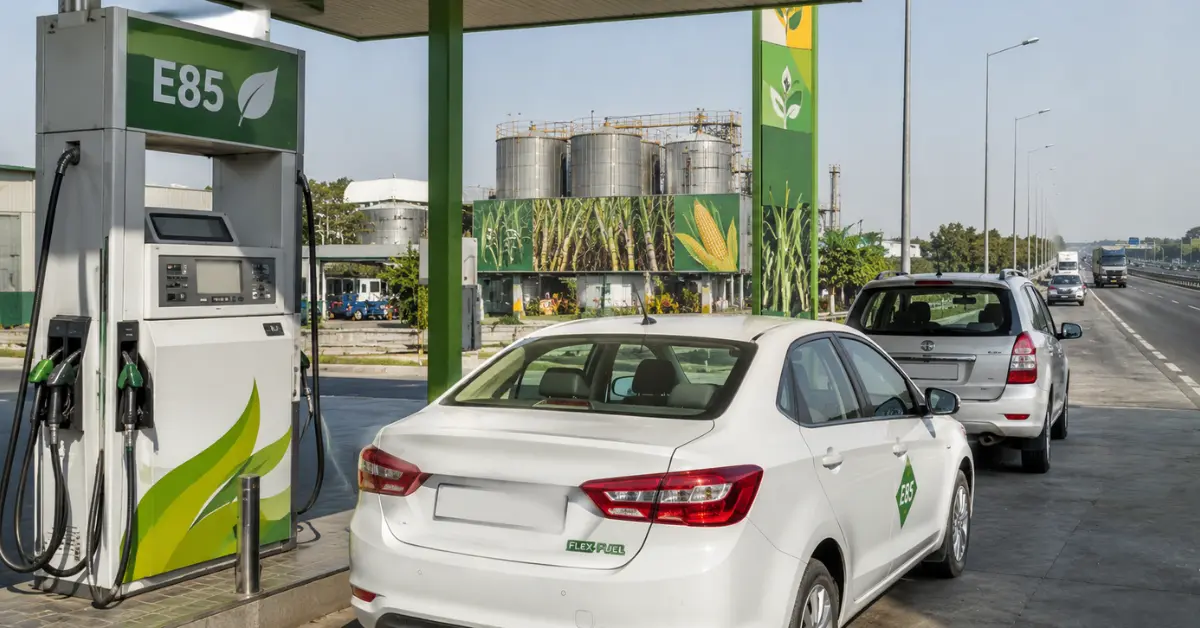
Under the proposed roadmap, E85 has been identified as the mono-fuel standard for Flex-Fuel Vehicles under Bureau of Indian Standards (BIS) specifications.
The plan proposes an initial rollout of 50 to 100 FFV ready fuel retail outlets in the Delhi-NCR and Mumbai-Pune-Nagpur corridors.
This is expected to expand to nearly 500 outlets by December 2026 and around 5,000 outlets across major cities by the end of 2027.
The roadmap also includes supportive measures such as pricing support, road tax concessions, availability of E85 testing fuel, special identifiers for flex-fuel vehicles and retail outlets, consumer awareness initiatives, and development of storage and dispensing infrastructure.
Puri said the launch of India’s first flex-fuel passenger vehicle by Maruti Suzuki marks the beginning of a new chapter in the country’s energy transition.
The launch took place in New Delhi in the presence of Puri and Road Transport and Highways Minister Nitin Gadkari.
Flex-fuel vehicles can operate on ethanol-petrol blends ranging from E20 to E100.
The minister said wider adoption of this technology in the passenger vehicle segment could multiply the impact of ethanol-based mobility.
Puri said India’s ethanol blending programme has become one of the country’s most successful energy transition initiatives, supported by farmers, ethanol producers, oil marketing companies, vehicle manufacturers, scientists and financial institutions.
Ethanol blending has increased from less than 1.5% in 2013-14 to 20% in 2025-26, achieving the target five years ahead of schedule.
Ethanol procurement has risen from about 38 crore litres in ethanol supply year 2013-14 to more than 1,040 crore litres, while ethanol production capacity has expanded from 421 crore litres in 2014 to around 2,000 crore litres in 2026.
According to Puri, if 50% of new two-wheeler and four-wheeler sales eventually shift to flex-fuel compliant vehicles, it could create additional demand for 311.8 crore litres of ethanol, provide ₹12,403 crore in additional income for farmers and reduce carbon dioxide emissions by 66.4 lakh metric tonnes.
The minister said NITI Aayog officially classifies ethanol-based flex-fuel vehicles, including vehicles running on high ethanol blends such as E85, as Zero-Emission Vehicles.
He added that E85 fuel produces near-zero particulate matter emissions.
Puri said the shift is not merely a fuel transition but the creation of a complete ecosystem for cleaner mobility, stronger energy security and greater self-reliance.
He urged automobile manufacturers to accelerate the introduction of flex-fuel models across vehicle segments and oil marketing companies to rapidly expand E85 availability across the country.
Read also : Haryana to begin smart metering works from 31 August as Union Minister reviews state power sector issues