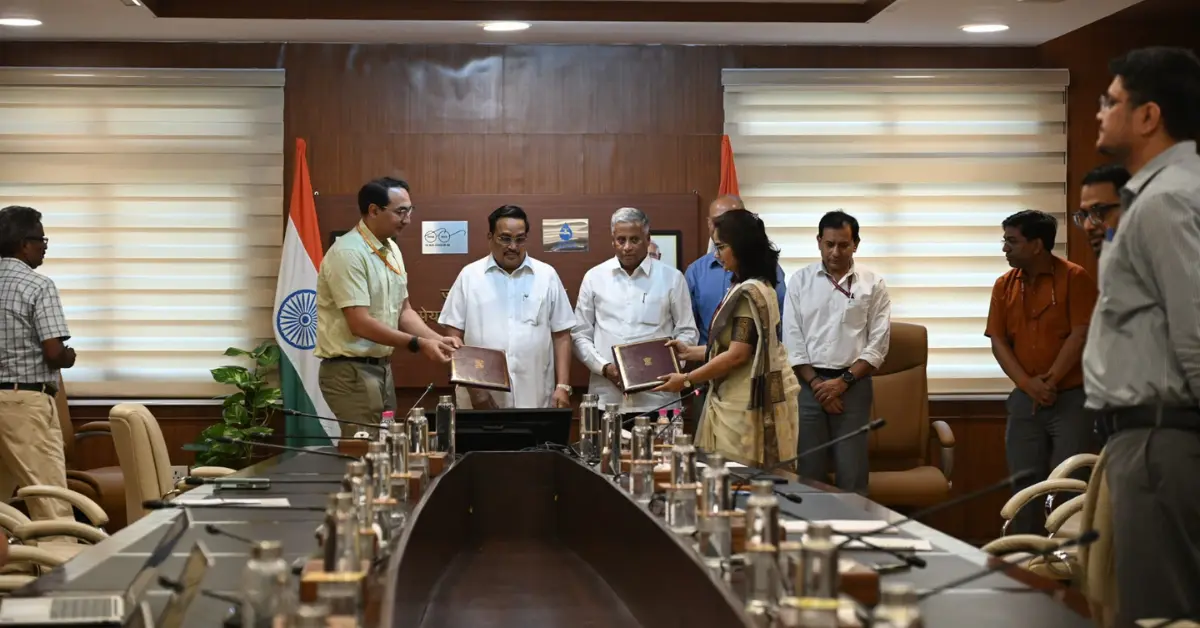
The Centre has signed reform-linked Memoranda of Understanding (MoUs) with Arunachal Pradesh, Jharkhand, Tamil Nadu, Nagaland and the Union Territory of Puducherry under Jal Jeevan Mission (JJM) 2.0, marking a new phase focused on sustainable operation and management of rural drinking water systems.
In a statement on Tuesday, 2 June, the Ministry of Jal Shakti said the agreements seek to establish a Gram Panchayat-led, service-based and community-centred model of rural water governance to ensure regular access to safe drinking water in adequate quantity and prescribed quality across rural India.
The MoUs were signed in the presence of Union Jal Shakti Minister C.R. Patil, Minister of State V. Somanna and the chief ministers of the participating states and UT through separate video conferencing sessions held on Tuesday, 2 June.
According to the ministry, JJM 2.0 places emphasis on sustaining the infrastructure created under the original mission through stronger community participation, improved operation and maintenance practices, source sustainability, water quality monitoring and institutional reforms.
Addressing the meetings, Patil said Jal Jeevan Mission has transformed rural drinking water supply across the country and significantly reduced the burden of fetching water, particularly for women and girls.
He said the next phase of the mission would focus on functionality of tap connections, community ownership, regular monitoring and long-term sustainability of water supply systems.
The minister also stressed the importance of water conservation, rainwater harvesting, groundwater recharge, greywater management, catchment protection and community-based water quality monitoring.
He said Gram Panchayats, District Water and Sanitation Missions, State Water and Sanitation Missions and local communities must work together to ensure reliable drinking water services.
Patil issued state-specific directions during the meetings.
For Arunachal Pradesh, Patil stressed early notification of the O&M policy, regular District Water and Sanitation Mission meetings, faster NABL accreditation of laboratories and the conduct of ‘Jal Arpan Diwas’ to formally hand over assets to Gram Panchayats.
For Jharkhand, Patil called for proper operation and maintenance, source sustainability and water conservation. He also urged faster completion of ongoing works so that remaining rural households receive safe drinking water.
For Tamil Nadu, Patil commended the state’s progress under JJM and expressed confidence that the remaining work would be completed soon.
He urged the state to focus on community-level rainwater harvesting, source sustainability, water conservation and greywater management by effectively using Finance Commission grants and VBRAM-G funds.
For Puducherry, Patil commended the Union Territory for achieving Har Ghar Jal certification in 2021.
He said the focus should now be on regular, reliable and sustainable water services, public awareness, community ownership, Gram Panchayat-level service delivery, Sujal Gaon ID creation and notification of the revised O&M policy.
For Nagaland, Patil expressed confidence that the state would provide tap connections to the remaining households this year, ensuring that communities, particularly women and children, continue to benefit from safe and reliable drinking water.
Department of Drinking Water and Sanitation Secretary Ashok K.K. Meena said the MoUs are designed to move beyond infrastructure creation and strengthen sustainable service delivery at the grassroots level.
He said Gram Panchayats and Village Water and Sanitation Committees would be empowered to manage and operate village-level water supply systems, in line with the mission’s objective of ensuring safe, secure and sustainable drinking water for rural households.
The ministry said the reform-linked agreements support the vision of “Har Ghar Nirantar Nal Se Jal” and aim to build accountable, community-driven rural water governance systems as part of the broader Viksit Bharat 2047 agenda.