The Mumbai Metropolitan Region Development Authority (MMRDA) has deployed India’s first AI-powered Automated Pantograph Condition Monitoring System on the Maha Mumbai Metro network, introducing real-time predictive maintenance for one of the most critical components of metro train operations.
The deployment makes Maha Mumbai Metro the first metro network in the country to move from periodic manual inspections to continuous AI-driven monitoring of pantographs, the roof-mounted equipment that collects power from overhead electrification systems.
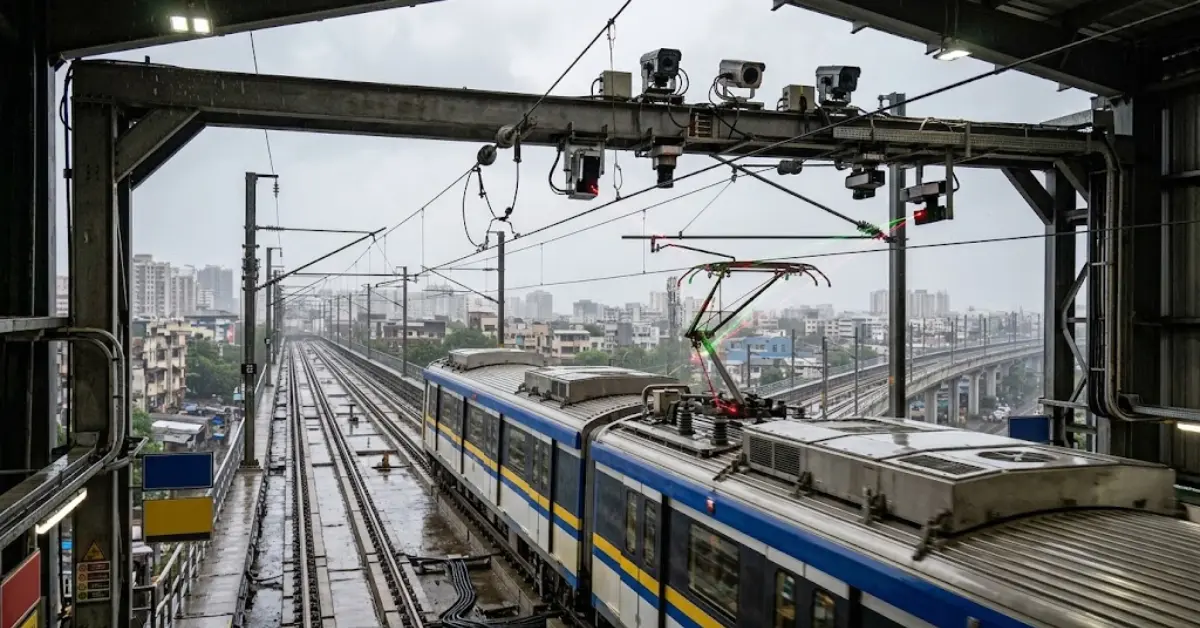
According to a statement by the MMRDA, the fully automated and non-intrusive system uses artificial intelligence, machine learning, high-speed laser scanners, precision imaging and 3D triangulation technology to inspect pantographs on every passing train at full operational speed.
The authority said inspection time has been reduced from around 30 minutes to just a few seconds, allowing every train movement to be monitored without disrupting metro operations.
Pantographs play a critical role in power collection for metro trains.
Damage, wear or misalignment can lead to service disruptions, costly repairs and operational failures.
The new monitoring system continuously scans pantograph components and analyses their condition in real time.
It assesses carbon strip health by detecting cracks, chips, abnormal wear, missing sections and remaining carbon thickness, helping maintenance teams plan component replacement before failures occur.
The technology also measures pantograph uplift behaviour, including uplift distance, contact force and interaction quality with overhead catenary systems.
Read also: GMDA to complete green makeover of key Gurugram junctions by 15 June
In addition, it monitors structural integrity through alignment analysis, deformation detection and inspection of critical contact components.
MMRDA said artificial intelligence and machine learning algorithms continuously analyse inspection data to identify abnormalities, parameter deviations and early signs of deterioration.
When faults or unusual conditions are detected, automated alerts are generated for maintenance teams and operations control centres.
The authority said the system supports all-weather, day-and-night operation and remains effective during rain and changing light conditions.
It can capture full roof images of every train, detect foreign objects and identify missing components while trains continue operating at normal service speeds.
According to MMRDA, the deployment is expected to improve fleet availability, reduce maintenance costs, lower train downtime and strengthen the reliability of power collection systems across the metro network.
The authority described the initiative as a new benchmark for urban rail safety, operational reliability and intelligent infrastructure management in India.
MMRDA said the technology reflects its broader strategy of adopting advanced digital systems to improve passenger safety, maintenance efficiency and service reliability across the Maha Mumbai Metro network.