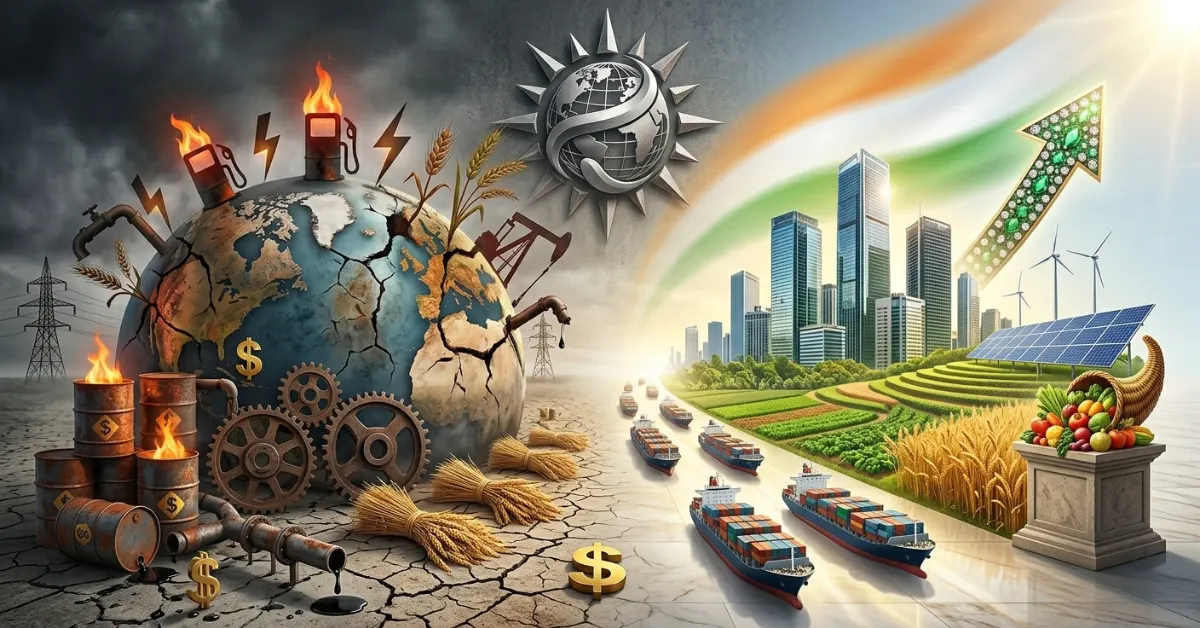
India has emerged as the strongest growth prospect among major regions in the latest World Economic Forum Chief Economists’ Outlook, even as the global economic outlook has sharply weakened due to the Middle East conflict, energy supply disruption and rising inflation risks.
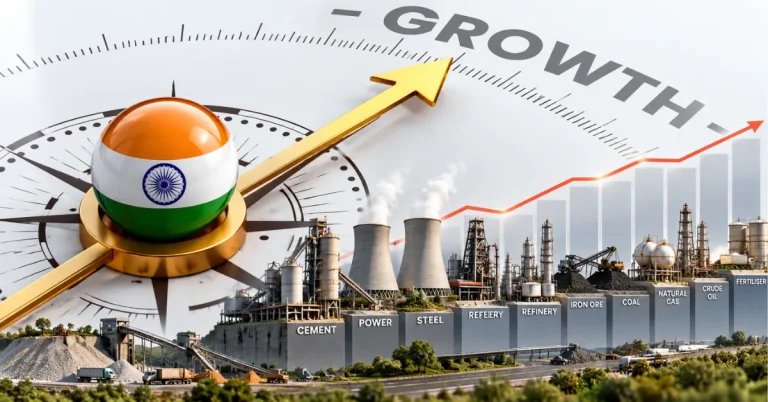
According to the May 2026 outlook, 52 per cent of surveyed chief economists expect India to record strong or very strong growth over the next 12 months.
This makes India the geography with the strongest growth expectations in the survey.
The report said India’s outlook continues to stand out at a time when 89 per cent of chief economists expect global growth to weaken over the next year.
It said the global mood has darkened considerably after the escalation of conflict in the Middle East and the closure of the Strait of Hormuz disrupted supply chains and increased uncertainty.
While India remains resilient, the report noted that the economy faces rising risks from the Middle East conflict.
It said India’s growth for 2026-27 is projected at 6.5 per cent, supported by infrastructure, technology, domestic capacity-building and a broader opening in trade policy.
Inflation, however, has become the key concern for India.
Reas also: India, Canada aim to conclude free trade pact talks by 2026-end as trade relations regain momentum
The survey found that 61 per cent of chief economists expect high or very high inflation in India over the next 12 months.
The report said consumer price inflation in India was still 3.4 per cent in March, up from 3.21 per cent in February, but a wider inflation shock from the Middle East conflict had yet to fully appear.
Energy prices remain a major risk. According to the survey, 41 per cent of chief economists expect India to see a significant increase in energy prices over the next 12 months, while another 51 per cent expect prices to increase.
Food prices are also expected to rise. The survey showed that 64 per cent of chief economists expect food prices in India to increase, while 33 per cent expect them to increase significantly.
The report linked the food-price risk to disruption in fertilizer-related shipments through the Strait of Hormuz.
It said the closure of the route has reduced the globally available supply of fertilizer, which could raise farm-input costs and affect future harvests.
On employment, India’s outlook remains comparatively stronger. The survey found that 70 per cent of chief economists expect moderate or stronger employment growth in India over the next 12 months.
However, the report noted that recent labour data showed a mixed picture, with the unemployment rate rising to 5.1 per cent in March from 4.9 per cent in February.
India is also viewed as one of the most attractive business environments for multinational companies.
The survey placed India second after the United States, with 56 per cent of respondents including it among their top three business environments for the year ahead.
The report said India offers a clear blend of scale, growth and potential among large emerging markets.
It also pointed to India’s active economic policy stance, expanding market access and trade-opening measures as factors supporting its attractiveness.
Globally, the outlook remains fragile. The report said 94 per cent of chief economists expect global inflation to rise over the next 12 months.
It added that energy and food prices are likely to be the main drivers of this inflationary pressure.
Despite the weak global outlook, most chief economists do not yet expect a global recession.
The survey found that 58 per cent disagreed or strongly disagreed that a global recession would occur within the next 12 months.
The World Economic Forum said the current crisis has changed the risk landscape for governments and businesses. For India, the report points to a mixed picture: strong relative growth and business attractiveness, but rising vulnerability to imported inflation through energy, food and fertilizer channels.