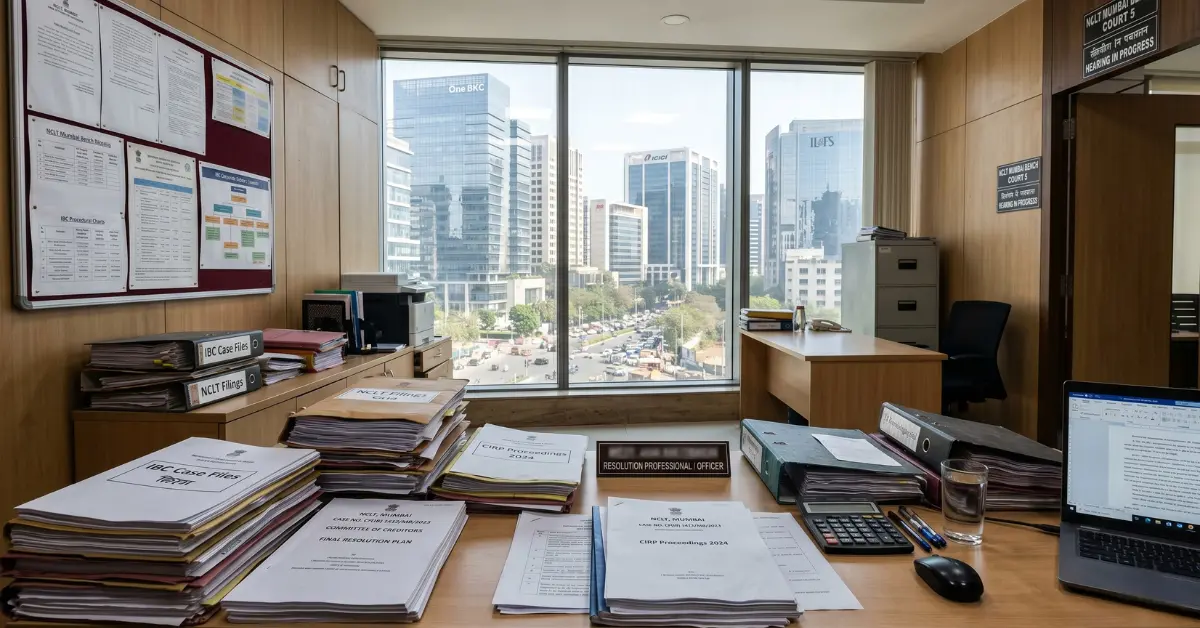
The Insolvency and Bankruptcy Code (IBC) has completed 10 years since coming into force in 2016, with the resolution process helping creditors realise more than ₹4 lakh crore during the period, according to the Ministry of Corporate Affairs.
In a statement on Thursday, 28 May, the ministry said the Code has evolved into a major institutional reform with wide-ranging impact on India’s credit markets, corporate behaviour, investor confidence and overall economic efficiency.
As of March 2026, a total of 1,419 cases had yielded resolution plans under the IBC framework.
The recovery realised by creditors stood at 95% of fair value and 167% of liquidation value.
According to the ministry, 8,987 cases had been admitted under the Code till March 2026, of which 7,102 cases had reached closure.
Among these closed cases, 4,099 companies, or around 58%, were successfully rescued, while 3,003 cases ended in liquidation.
The ministry said 1,388 rescued entities were closed through appeal, review or settlement, while another 1,292 cases were withdrawn.
It added that nearly 42% of the cases resolved through approved resolution plans were earlier with the Board for Industrial and Financial Reconstruction or had already become defunct, highlighting the role of the IBC in reviving financially distressed businesses.
The ministry also pointed to the deterrent effect created by the insolvency framework.
More than 30,000 cases filed before the National Company Law Tribunal (NCLAT) were resolved at the pre-admission stage through settlements and withdrawals involving nearly ₹14 lakh crore.
According to the ministry, these settlements demonstrate how the Code has altered debtor-creditor behaviour and encouraged faster resolution of financial stress outside formal insolvency proceedings.
The ministry cited the Reserve Bank of India’s Report on Trend and Progress of Banking in India, which noted that the gross non-performing asset ratio of the banking sector declined to 2.1% as of September 2025, compared with nearly 11.8% in 2017.
The ministry said India’s insolvency framework has also seen improvements in recovery rates, timelines and creditor empowerment.
S&P Global Ratings upgraded India’s insolvency framework from Group C to Group B, recognising improvements in the country’s recovery and resolution ecosystem.
Average recovery rates have increased from nearly 15-20 % in the pre-IBC period to around 30% after implementation of the Code.
Resolution timelines have also reduced from nearly 6-8 years earlier to around 2 years under the present framework.
The RBI’s Report on Trends and Progress of Banking in India 2024-25 identified IBC as the most effective channel for stressed asset recovery.
According to the report, Scheduled Commercial Banks recovered ₹1.04 lakh crore through different channels, of which nearly ₹0.54 lakh crore, or around 52.4%, came through the IBC process.
Recovery rates under the IBC improved to 36.6% in 2024-25 from 28.3% in the previous year.
The ministry also referred to an IIM Bangalore study, which found significant improvement in borrower discipline after implementation of the Code.
The study observed that the movement of loan accounts from the “Overdue” category to the “Normal” category steadily increased between 2018 and 2024.
The average number of days for which accounts remained overdue also declined sharply from 248-344 days earlier to 30-87 days.
An IIM Ahmedabad study on firms resolved under the IBC framework highlighted improvements in operational and financial performance during the five years following resolution.
Average sales of resolved firms increased by nearly 89%, while asset turnover ratios improved by around 131%.
The study also noted that average capital expenditure increased by around 106% during the five-year period after resolution.
The aggregate market valuation of resolved listed entities rose from nearly ₹2.8 lakh crore to about ₹9 lakh crore over five years, indicating stronger investor confidence and business revival.
The ministry said the 10-year milestone provides an opportunity to assess the transformation brought by the insolvency framework and its role in strengthening India’s financial and institutional ecosystem.
It added that a resilient and efficient insolvency system would remain important for entrepreneurship, productive capital, financial stability and responsible economic growth as India moves towards the goal of Viksit Bharat 2047.
Read also : India-US trade pact talks to resume in Delhi from 1 June as both sides push to finalise interim deal