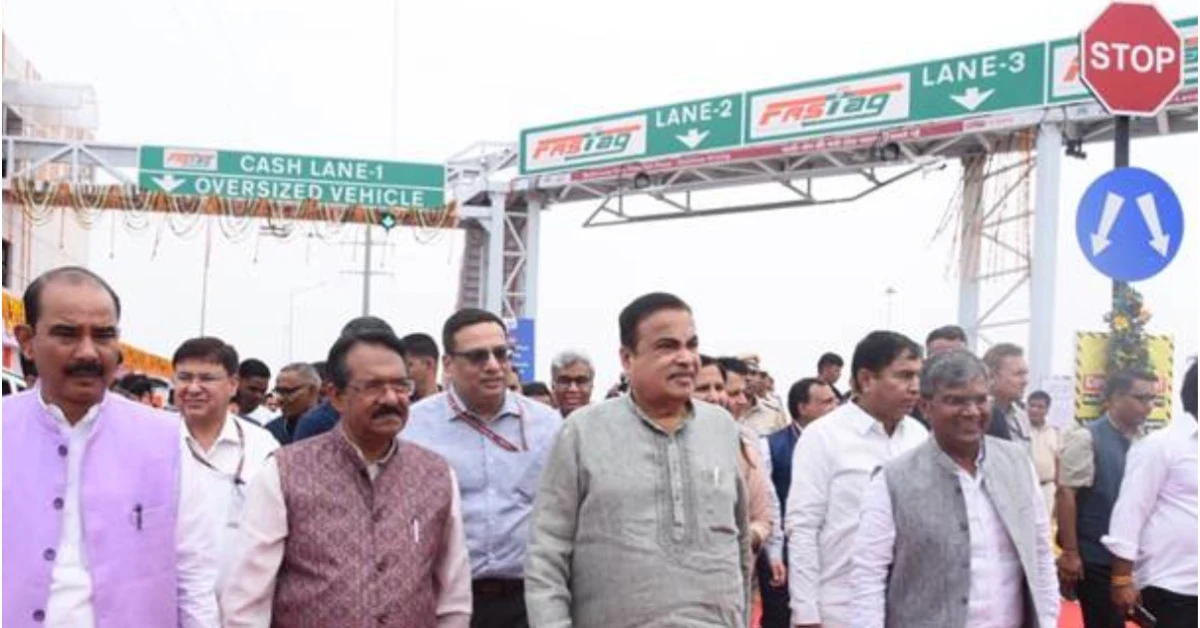
A barrier-less Multi-Lane Free Flow tolling system has been rolled out at the Mundka-Bakkarwala toll plaza on UER-II in the National Capital Region, marking a major step towards contactless and seamless toll collection on national highways.
Union Minister for Road Transport and Highways Nitin Gadkari launched the first-of-its-kind barrier-less toll plaza at Mundka-Bakkarwala on Monday, 11 May.
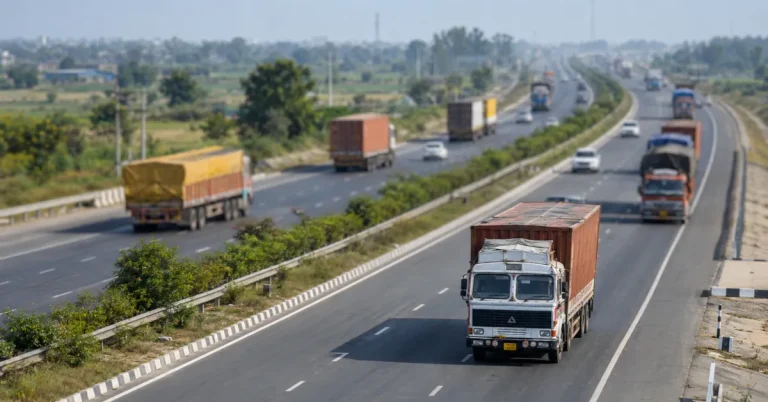
In a statement, the Ministry of Road Transport and Highways said the Multi-Lane Free Flow system will allow vehicles to pass through tolling points without stopping, reducing waiting time, fuel consumption, congestion and emissions.
The system integrates Automatic Number Plate Recognition technology with FASTag-based Electronic Toll Collection to enable automated user fee collection with minimal human intervention.
According to the ministry, the MLFF system is aimed at improving travel efficiency for National Highway users by enabling uninterrupted vehicle movement at toll locations.
Gadkari said India is moving towards world-class highway infrastructure with the introduction of MLFF tolling, which will support seamless travel, reduce pollution, lower logistics costs and improve operational efficiency.
He said the system has been developed using advanced international-standard technology after extensive consultations with technology providers and private stakeholders.
The minister said the Government remains committed to continuously upgrading highway technology while ensuring sustainable development and greater commuter convenience.
According to the statement, the barrier-less tolling mechanism will significantly reduce waiting time at toll plazas and provide a smoother travel experience for commuters.
The system is also expected to improve traffic flow by removing the need for vehicles to stop at toll plazas.
Gadkari said earlier toll collection operations incurred expenditure of nearly 15 per cent, which is expected to come down to around 3 to 4 per cent under the MLFF system.
He said the reduction in operational costs could result in annual savings of approximately ₹5,000 crore to ₹6,000 crore.
Read also : Mumbai’s Orange Gate-Marine Drive Urban Road Tunnel completes 250 metres of underground tunnelling
The minister also said the MLFF system is expected to save nearly 250 crore litres of fuel annually and help reduce approximately 81,000 tonnes of carbon emissions.
According to the statement, these benefits are expected to contribute to pollution reduction, particularly in Delhi-NCR.
The ministry said highway users will need to maintain sufficient balance in their FASTag accounts for a seamless experience.
In cases where the FASTag has insufficient balance, is invalid or is non-functional, users will be issued an Electronic Notice for non-payment of user fee.
Such users will have to pay the normal user fee within 72 hours of receiving the E-Notice. If payment is not made within 72 hours, the user fee will be charged at twice the normal rate for the vehicle category.
The ministry said E-Notices can be accessed and paid through the designated National Highway fee notice portal. Users can also raise grievances within 72 hours of issuance of the E-Notice.
Non-payment of E-Notices may lead to blacklisting of FASTag and restriction of other vehicle-related services through the VAHAN platform.
Gadkari also highlighted the Government’s focus on waste-to-wealth practices in infrastructure development.
He said municipal waste generated in Delhi is being scientifically processed and used in highway construction projects such as the Dwarka Expressway and Delhi-Mumbai Expressway.
He also said bio-bitumen developed from crop residue and waste materials is being increasingly used in road construction to reduce import dependence and minimise environmental pollution.
The minister expressed concern over road safety and said a large number of road accidents take place in the country every year. He stressed the need for greater public awareness and responsible driving behaviour.
He said Artificial Intelligence-based technologies integrated into the MLFF system would help improve monitoring and traffic management.
Earlier this month, the National Highways Authority of India had launched an MLFF-based tolling system at the Chorayasi toll plaza on the Surat-Bharuch section of NH-48 in Gujarat.
The ministry said MLFF will strengthen the tolling ecosystem by improving transparency, reducing operational costs linked to physical toll plazas and improving overall efficiency in toll operations.
Read also : Madhya Pradesh gets ₹1,763 crore PMGSY-IV push for 973 rural roads across 987 habitations