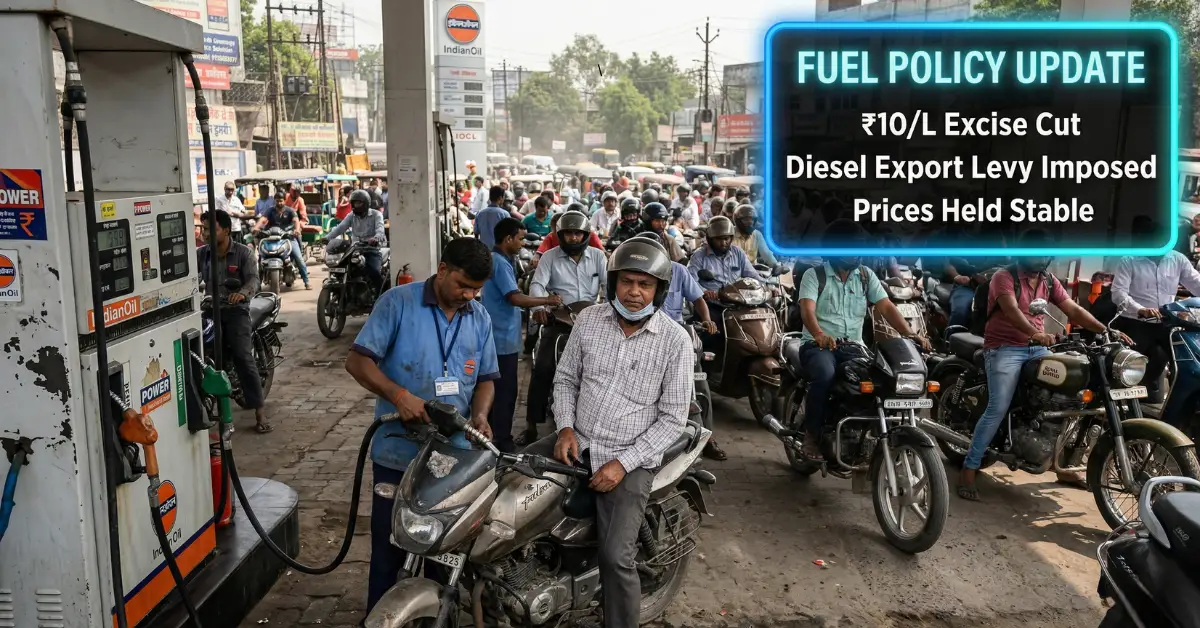
The Government has reduced excise duty by ₹10 per litre on both petrol and diesel with immediate effect, in response to a sharp surge in global crude oil prices, the Ministry of Petroleum and Natural Gas said in a statement on Friday, 27 March.
The decision comes as international crude prices have risen from around $70 per barrel to approximately $122 per barrel within a month, marking an increase of nearly 75 per cent driven by disruptions linked to the ongoing West Asia conflict.
Despite the tax cut, retail pump prices will remain unchanged.
The excise reduction will not be passed on to consumers but will instead be used to offset losses incurred by public sector oil marketing companies.
Indian Oil Corporation, Bharat Petroleum Corporation and Hindustan Petroleum Corporation have been supplying fuel at prices below their cost of procurement.
At current global prices, under-recoveries stand at around ₹26 per litre on petrol and ₹81.90 per litre on diesel, according to the ministry.
Read also : Health insurance premiums cross ₹1.2 lakh crore in 2024-25 as sector expands at around 9 per cent
The combined daily under-recovery borne by these companies is estimated at approximately ₹2,400 crore.
The excise duty cut is expected to offset ₹10 per litre of these losses, enabling uninterrupted fuel supply while maintaining price stability.
The ministry also highlighted that fuel prices have increased significantly in other regions, with rises ranging from 30 to 50% in South and South-East Asia, around 30 per cent in North America, and about 20% in Europe since the beginning of the current crisis.
Petroleum and Natural Gas Minister Hardeep Singh Puri said the government chose to absorb the financial impact rather than pass on the burden to citizens, stating that the decision aims to shield Indian consumers from global volatility.
Alongside the excise reduction, an export levy has been imposed on diesel to discourage overseas shipments and prioritise domestic availability.
The move is intended to ensure that refinery output is directed towards meeting internal demand amid elevated international prices.
The government stated that it will continue to monitor global energy developments and take necessary measures to maintain supply stability and protect domestic consumers from external price shocks.