A total of 14,674 infrastructure projects have been initiated under the National Infrastructure Pipeline (NIP) across sectors since 2019-20, the government informed the Parliament on Monday, 23 March.
In a written reply to a question in the Lok Sabha, Minister of State for Finance Pankaj Chaudhary stated that the NIP was launched as a whole-of-government initiative aimed at identifying infrastructure projects and financing requirements.
“The National Infrastructure Pipeline (NIP) was launched as a whole-of-government initiative to identify infrastructure projects and financing requirements. NIP was a dynamic pipeline in which projects and their details were added, amended, and deleted as needed by central ministries/state governments,” the minister said.
“Since 2019-20, Central ministries/departments have initiated 14,674 NIP projects across various sectors,” the minister added.
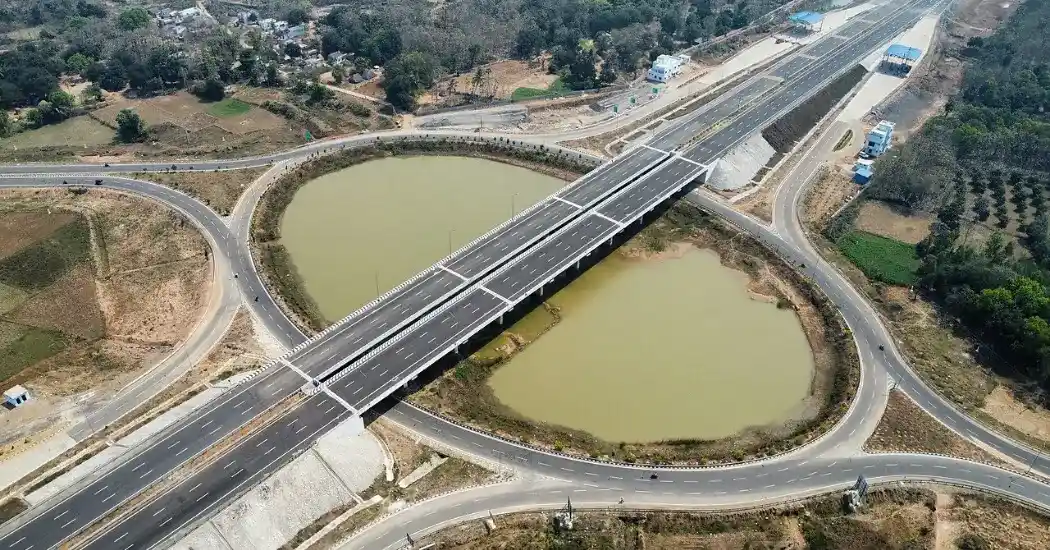
Sector-wise, the roads segment accounts for the largest share with 8,131 projects. Urban development has 1,531 projects, while the railways sector comprises 846 projects. The remaining projects are distributed across other infrastructure sectors.
Read also : India tweaks MSME Credit Guarantee Scheme, brings service MSMEs under coverage and eases project cost norm
The minister also provided details on the National Monetisation Pipeline (NMP) 1.0, under which assets with a monetisation potential of ₹6 lakh crore were identified for the period 2021-22 to 2024-25.
Against this target, approximately ₹5.3 lakh crore was achieved.
“The National Monetisation Pipeline 1.0 (NMP 1.0) included assets with monetisation potential of ₹ 6 lakh crore during the four-year period (2021- 22 to 2024-25), against which around ₹ 5.3 lakh crore was achieved,” the minister said.
Sector-wise monetisation was led by coal at ₹2 lakh crore, followed by roads at ₹1.1 lakh crore, power at ₹0.5 lakh crore, petroleum and natural gas at ₹0.4 lakh crore, mines at ₹0.4 lakh crore, railways at ₹0.3 lakh crore, shipping at ₹0.2 lakh crore, and the urban sector at ₹0.1 lakh crore, as per the data presented by the minister in the Lok Sabha reply.
Over the years, the government has significantly increased investment in the infrastructure sector, which is expected to crowd in private investment, according to the minister.
The minister further noted that increased capital expenditure by the Union Government has complemented these initiatives by creating an enabling ecosystem for infrastructure development.
“Several measures have been introduced to attract private sector participation including supporting Public-Private Partnerships (PPPs) with Viability Gap Funding (VGF), reforms for innovative financing tools like Infrastructure Investment Trusts (InvITs), Real Estate Investment Trusts (REITs), and Infrastructure Debt Funds (IDFs), and using asset recycling models to promote private investments,” the minister said.
“To ensure long-term financing for the infrastructure sector, institutions like the National Investment and Infrastructure Fund (NIIF) and National Bank for Financing Infrastructure and Development (NaBFID) have also been established,” he added.
Read also : India’s core sector growth slows to 2.3 per cent in February 2026 as oil and gas output declines