Indian Railways has announced five new reforms under its ‘Reform Express’ initiative, taking the total number of reforms introduced in 2026 to nine, with a focus on cargo efficiency, construction quality, and passenger convenience.
The reforms, announced on Tuesday, 24 March, include two measures related to cargo transport, one targeting construction processes, and two aimed at improving passenger services.
One of the key cargo-focused reforms targets salt transportation, where Indian Railways currently handles around 9.2 million tonnes annually out of nearly 35 million tonnes produced in the country.
Railways noted that modal share varies by usage – around 25 per cent for industrial salt and about 65 per cent for salt meant for human consumption. Around 62 per cent of rail-based salt traffic moves over distances of 1,000 to 2,500 Km, making it well suited for rail transport.
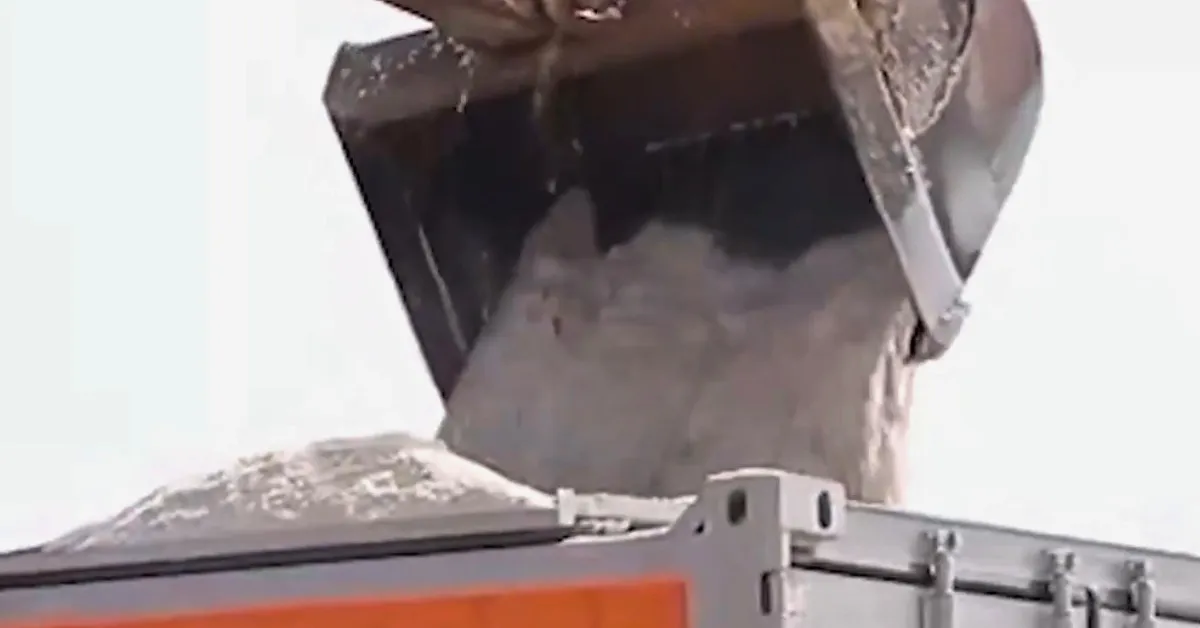
To address challenges such as wagon corrosion, water seepage in open wagons, unsuitable wagon design, and multiple handling stages, Indian Railways has developed corrosion-resistant stainless steel containers with top-loading and side-discharge mechanisms.
These containers feature top-loading flaps and hydraulic side-discharge, enabling direct loading at production sites, seamless transfer to container trains, and efficient unloading into trucks or warehouses. The system reduces handling losses, supports multimodal movement, and improves operational efficiency.
In automobile logistics, the Railways has introduced a reform allowing manufacturers to design specialised auto-carrier wagons based on specific origin-destination routes.
India produces around 31 million vehicles annually, including about 5 million passenger vehicles, but the rail share in passenger vehicle transport remains at around 24 per cent.
The reform addresses key constraints such as rigid single-stack and double-stack wagon designs, as well as infrastructure limitations due to tunnels and bridges under Schedule of Dimensions (SOD) restrictions. The new policy allows flexible, high-capacity wagon designs tailored to route-specific requirements.
On construction quality, seven structural changes have been introduced to improve accountability, transparency, and timely execution:
First, the eligibility threshold for contractors based on a single project has been increased from 35 per cent to 50 per cent of project value.
Second, at least 20 per cent of prior experience must be in railway-related work, with defined complexity levels such as signalling, overhead electrical, and track works.
Third, bid security has been fixed at 2 per cent of project value to discourage non-serious bidders.
Fourth, mandatory bid capacity assessment has been introduced for all projects above ₹10 crore.
Fifth, strict punitive provisions have been introduced to address corrupt, fraudulent, and anti-competitive practices.
Sixth, contractors must submit a detailed work plan before project commencement to improve monitoring and execution timelines.
Seventh, subcontracting limits have been reduced from 70 per cent to 40 per cent, ensuring contractors execute at least 60 per cent of work directly.
Additionally, to curb predatory bidding, bids more than 5 per cent below estimated project cost will require an additional 5 per cent performance guarantee.
In the passenger segment, Indian Railways has introduced multiple measures to curb misuse and improve ticket availability.
Nearly 3 crore fake IRCTC accounts have been removed following data analysis. Technological interventions such as bot detection systems and Aadhaar-based OTP verification have been implemented to curb fraudulent bookings, particularly in the Tatkal system.
Cancellation windows have been revised from earlier 48, 12, and 4 hours to 72, 24, and 8 hours before departure, aligned with advance chart preparation timelines of 9 to 18 hours instead of 4 hours earlier.
Refunds will now be processed automatically without requiring Ticket Deposit Receipts (TDR), and soon counter tickets can be cancelled from any railway station across the country.
Passengers will also be allowed to upgrade their travel class up to 30 minutes before departure.
Additionally, passengers can now change their boarding station digitally up to 30 minutes before departure from the train’s origin station, allowing them to board from a subsequent station without losing their confirmed seat.
The reforms build on earlier initiatives such as improved on-board services, expansion of Gati Shakti Cargo Terminals, digitisation of the Railway Claims Tribunal, and the RailTech policy, which received 123 proposals within a month, with 94 shortlisted for further evaluation.