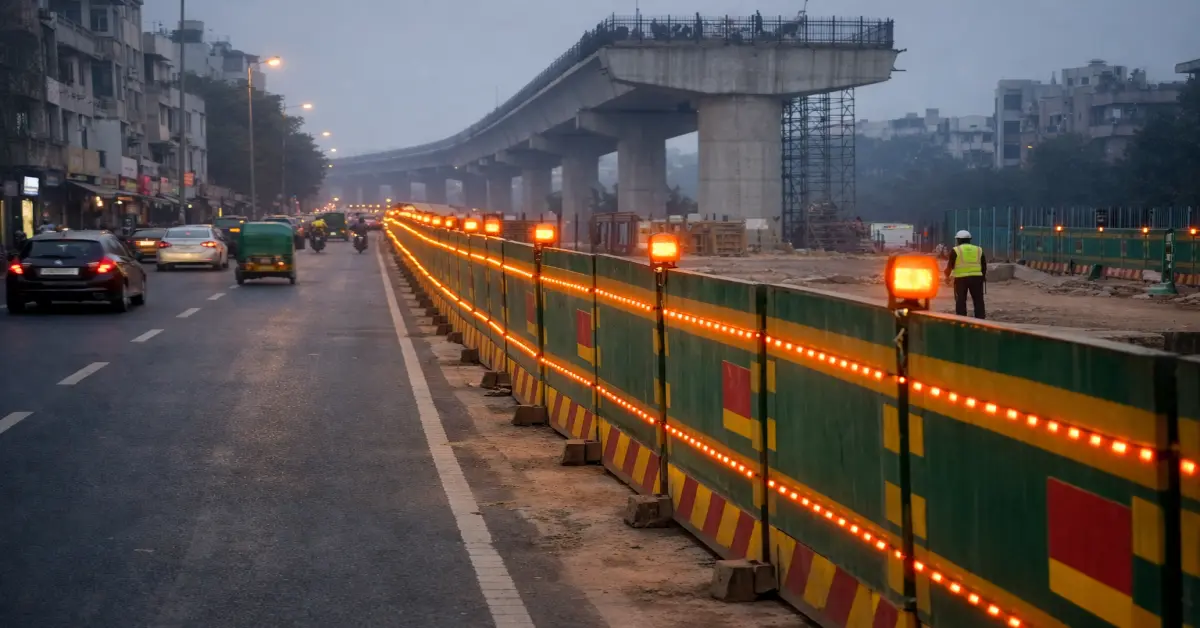
The Delhi Metro Rail Corporation has put in place extensive safety arrangements across active Metro construction corridors in the national capital, with nearly 20 kilometres of barricading currently installed along under-construction stretches.
To improve visibility during winter months, when fog significantly reduces sight distance, around 17 kilometres of LED rope lights and blinkers have been fitted to these barricades. The lighting system is aimed at making construction zones clearly visible to both motorists and pedestrians during night-time and low-visibility conditions.
More than 270 traffic marshals have been deployed in shifts to manage vehicle movement around construction sites. These personnel assist in regulating traffic flow, particularly during the movement of heavy machinery and cranes, which often takes place at night. Road studs and advance warning signages have also been placed to slow down vehicles near vulnerable points and alert commuters to diversions and ongoing work.
As part of Phase 4 construction, Impact Protection Vehicles have been introduced at select locations. These vehicles are positioned during crane placement and heavy equipment movement and are designed to absorb the impact of vehicles that may accidentally enter work zones.
Additional winter-specific measures include the installation of fog lights on barricades and the use of reflective tape on workers’ helmets, supplementing high-visibility safety jackets. Where traffic diversions are required, diversion plans are prepared in coordination with the Delhi Traffic Police, and multi-layered protection systems using plastic barriers, sand- or water-filled drums, and concrete crash barriers are deployed.
To prevent barricades from shifting during adverse weather, especially during the monsoon or high winds, they are designed to be bottom-heavy, nailed to the ground, and bolted together. Concrete crash barriers are also used at several sites to shield vehicles from heavy machinery within construction zones. These barriers are manufactured using recycled construction waste.
According to the corporation, traffic management and safety standards are embedded into contractor agreements through tender conditions, with specifications aligned to Indian Road Congress guidelines. Despite construction activity in congested urban areas, vehicular and pedestrian movement around Metro sites has largely remained incident-free so far.