New Delhi, November 7: The National Highways Authority of India (NHAI) has issued new guidelines to prepare national highways with four or more lanes for barrier-free toll collection, enabling vehicles to pass through tolling points without stopping at conventional toll booths. The move aims to reduce traffic congestion, waiting times and fuel consumption as India expands its Multi-Lane Free Flow (MLFF) tolling system.
The guidelines, announced by the Ministry of Road Transport and Highways on November 6, establish standard infrastructure requirements for upcoming and under-construction national highway projects.
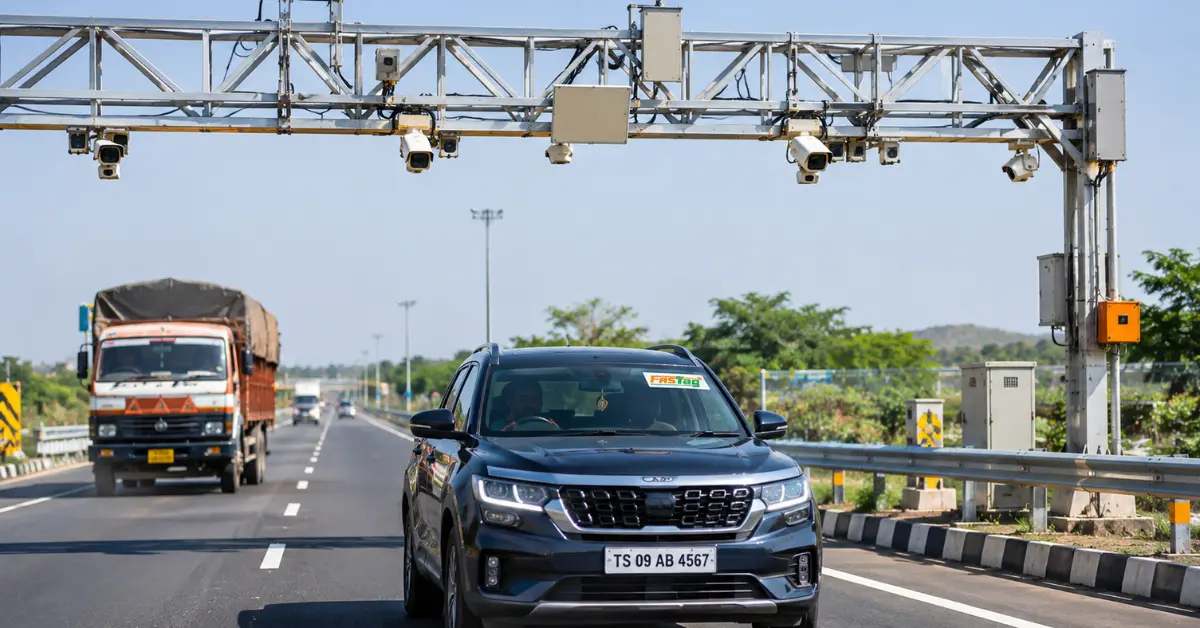
Under MLFF tolling, vehicles can pass through designated toll collection points without stopping at physical barriers. The system uses technologies such as Automatic Number Plate Recognition (ANPR) and FASTag to identify vehicles and facilitate electronic toll collection while traffic continues to move.
Unlike conventional toll plazas, where motorists often slow down or stop at barriers, MLFF is designed to allow traffic to flow through tolling areas with fewer interruptions.
According to the ministry, NHAI has prescribed standard toll plaza layouts, including lane configurations, overhead gantries, road infrastructure, lighting, signage and other supporting facilities.
The guidelines are intended to ensure that new highway projects and those under construction have infrastructure suitable for MLFF toll collection, reducing the need for major modifications when the technology is introduced.
Projects at the Detailed Project Report (DPR) stage will be required to incorporate the prescribed designs into their planning documents.
For projects that have already been awarded or are under construction, the changes will be implemented through applicable contractual provisions.
NHAI has also directed its field offices to include these requirements in upcoming projects and facilitate their adoption in ongoing highway works.
One of the key changes concerns the design and configuration of toll plaza lanes. Since MLFF does not require vehicles to stop at barriers, the new standards provide for more streamlined arrangements suited to barrier-free traffic movement.
The guidelines also cover overhead gantries, which support equipment used for electronic toll collection and vehicle identification.
Road safety requirements include adequate lighting, advance warning signs and Electronic Variable Message Signs (VMS) to inform motorists as they approach tolling areas.
These measures are intended to improve visibility, guide drivers and support safer traffic movement through barrier-free tolling zones.
The new infrastructure standards also provide for administrative buildings and facilities needed for toll plaza operations and maintenance.
Barrier-free toll collection is not entirely new to India’s national highway network. NHAI introduced the country’s first MLFF tolling system at Chorayasi Toll Plaza on NH-48 in Gujarat in May 2026.
The system was subsequently introduced at selected locations in other parts of the country, including toll plazas in Delhi-NCR, Rajasthan, Haryana and Tamil Nadu.
The latest guidelines are intended to support wider adoption by standardising the infrastructure required for MLFF tolling across future and ongoing highway projects within the specified scope.
For motorists, the expansion could eventually mean shorter queues and less time spent waiting at toll collection points, particularly on busy national highway corridors.
Allowing vehicles to move through tolling areas without repeated stopping and acceleration could also help reduce fuel consumption and congestion.
However, the ministry has not provided estimates of the time or fuel savings expected from the new guidelines.
The November 6 announcement does not specify a nationwide completion deadline, identify every toll plaza that will adopt the new standards or disclose the total cost of implementing the infrastructure changes.
It also does not announce any reduction in existing toll charges or changes to the applicable toll payment rules.
The guidelines therefore represent an expansion of India’s preparations for barrier-free tolling rather than an immediate nationwide replacement of conventional toll plazas.
With standardised designs for highways with four or more lanes, NHAI aims to make it easier to introduce MLFF systems across additional national highway projects, allowing more motorists to pay tolls electronically without stopping at physical barriers.