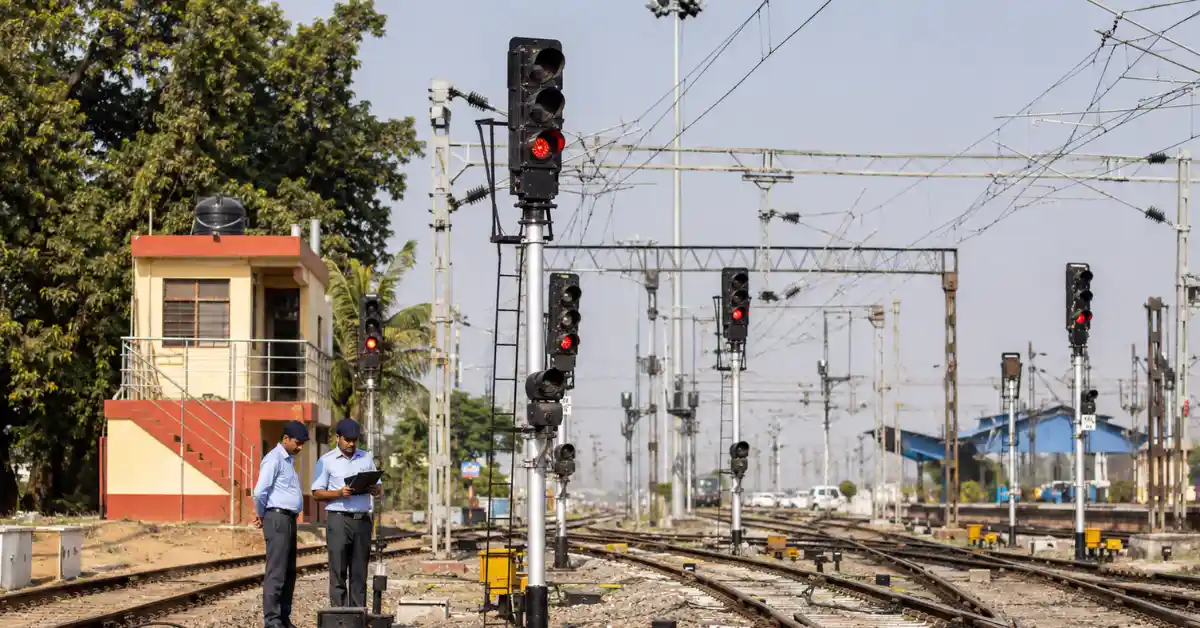
Indian Railways has approved a ₹226 crore electronic interlocking project for 13 stations on the Durg-Taroki section of Raipur Division in South East Central Railway.
In a statement on Wednesday, 1 July, the Ministry of Railways said the project will replace the existing Panel Interlocking system with Electronic Interlocking at the identified stations.
The ministry said the upgrade is aimed at modernising signalling infrastructure and improving safety, reliability and operational efficiency on the section.
Electronic Interlocking is a modern signalling system that automates route setting and signalling functions. It also includes advanced safety features that help reduce the possibility of signalling failures and support faster restoration during disruptions.
Read also : Indian Railways clears ₹1,131 crore for Bihar line doubling, Asansol electronic interlocking project and 1,696 km South Eastern Railway fibre network
The sanctioned work covers Marauda, Risama, Gundardehi, Latabor, Balod, Kusumkasa, Dalli Rajhara, Gudum, Bhanupratappur, Keoti, Antagarh, Taroki and Raipur Store Depot.
According to the ministry, the transition from Panel Interlocking to Electronic Interlocking will modernise signalling infrastructure on the Durg-Taroki section and improve operational flexibility.
The project is also expected to provide a stronger technological base for handling growing passenger and freight traffic on the South East Central Railway network.
The ministry said the upgraded system will help improve punctuality, strengthen train safety and make operations more reliable.
The approval is part of Indian Railways’ ongoing programme to modernise signalling systems across the national network through advanced technologies.
Read also : India’s first bullet train project reaches 61% progress, over ₹90,966 crore spent so far