India has inaugurated the world’s first hydrogen production facility based on the Copper-Chlorine thermochemical cycle using nuclear process heat, marking a major step in the country’s clean energy and advanced nuclear technology programme.
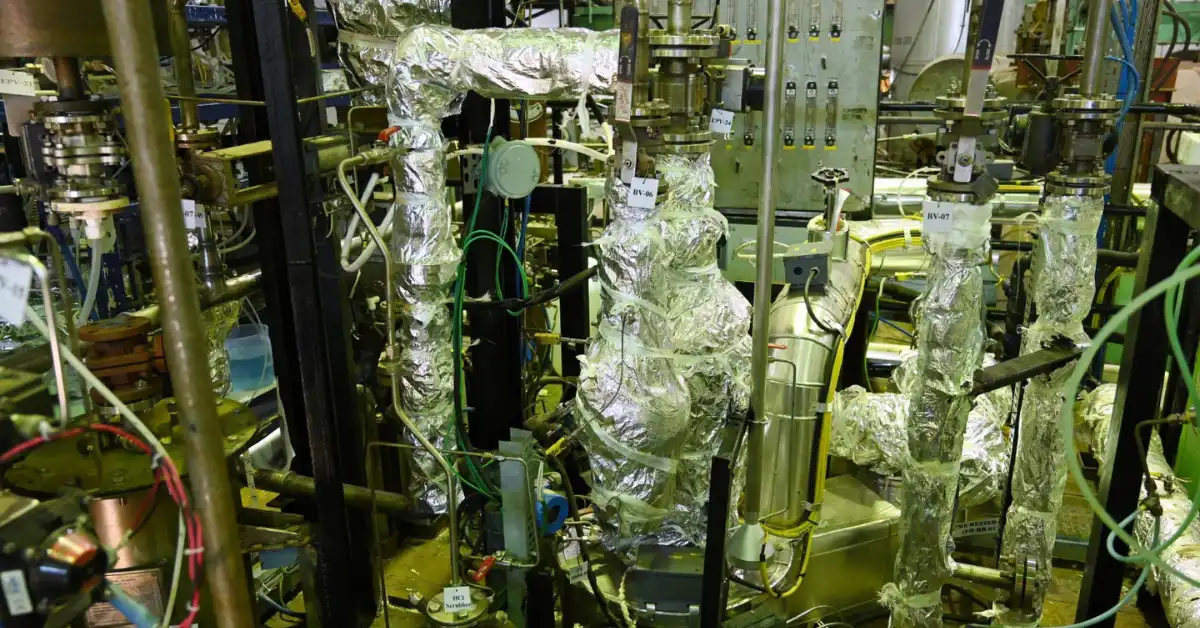
The facility has been set up at the Indira Gandhi Centre for Atomic Research in Kalpakkam, Tamil Nadu.
It uses process heat generated from the Fast Breeder Test Reactor to support hydrogen production through the Copper-Chlorine, or Cu-Cl, thermochemical process.
The facility was inaugurated by Dr Ajit Kumar Mohanty, Secretary, Department of Atomic Energy and Chairman of the Atomic Energy Commission, in the presence of IGCAR Director Sreekumar G Pillai.
According to a statement by the Department of Atomic Energy, the plant has been developed as a technology demonstrator.
Its main purpose is to validate hydrogen production using nuclear energy and to gather operational experience before larger-scale deployment is considered.
The technology behind the process has been developed indigenously by the Bhabha Atomic Research Centre, Mumbai, and has now been integrated with the nuclear heat capabilities available at IGCAR’s Fast Breeder Test Reactor.
Hydrogen is increasingly seen as an important energy carrier for the future, especially for sectors where direct electrification is difficult.
At present, much of the world’s hydrogen is produced using fossil fuels.
The use of nuclear heat for hydrogen production could offer a low-carbon route, as the process can reduce dependence on conventional fuel-based production methods.
The Copper-Chlorine thermochemical cycle is considered significant because it can operate at comparatively lower temperatures than several other thermochemical hydrogen production routes.
Read also : Government restores commercial LPG supplies as West Asia crisis pressure eases
DAE said the process also offers better thermodynamic efficiency, making it a promising area for future research and scale-up.
The development also gives India a broader role for nuclear energy beyond electricity generation.
While nuclear power has traditionally been linked with grid electricity, the Kalpakkam facility demonstrates how nuclear process heat can be used for industrial clean-energy applications.
IGCAR has played a central role in India’s fast breeder reactor programme for more than four decades.
The Fast Breeder Test Reactor has served as a platform for research in fuels, materials and sodium technologies, and has contributed to the development of India’s wider fast reactor programme.
The inauguration comes at a time when India is trying to expand its clean hydrogen ecosystem.
The country is also pursuing the National Green Hydrogen Mission, which aims to create large-scale hydrogen production capacity and reduce dependence on fossil fuel imports.
Officials said the facility will help researchers study plant operations, improve the Cu-Cl process and prepare the ground for future nuclear-assisted hydrogen production technologies.
However, the current facility is still a demonstration plant, and commercial-scale deployment will depend on further research, optimisation and scale-up.
DAE said the project reflects the convergence of nuclear energy and clean hydrogen technologies, and strengthens India’s push for indigenous innovation in low-carbon energy systems.