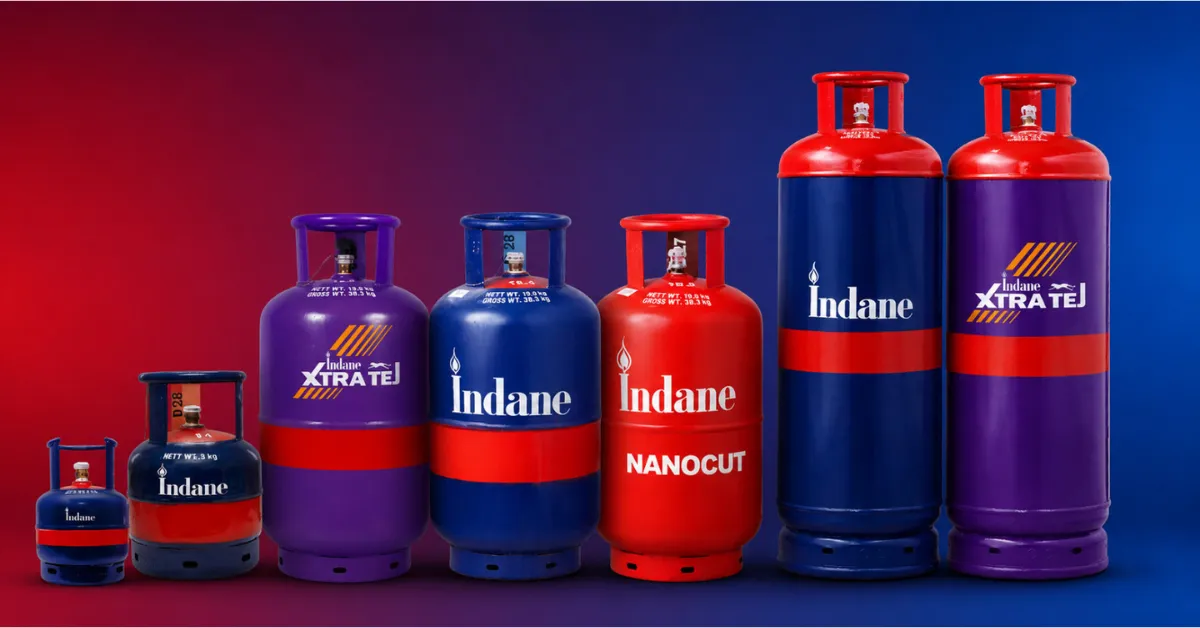
The Centre has restored non-domestic packed LPG supplies to pre-crisis levels, bringing relief to commercial and industrial consumers who had faced restrictions during the West Asia crisis.
In a statement on Thursday, 25 June, the Ministry of Petroleum and Natural Gas said all sectoral restrictions on the supply of non-domestic packed LPG have now been removed. The decision follows an improvement in the overall LPG supply situation.
The government has also relaxed bulk LPG supply by 50% of pre-crisis consumption levels.
Bulk LPG supply had been suspended at the beginning of the crisis as the Centre prioritised domestic cooking gas availability for households.
During the West Asia crisis, the government had taken emergency steps to protect household LPG supplies across the country.
Orders were issued under the Essential Commodities Act to ensure that C3 and C4 streams were used exclusively for LPG production instead of being diverted to petrochemical and other downstream uses.
C3 and C4 streams are important refinery and petrochemical feedstocks. They can be used for LPG production, but they are also required by several downstream industries.
Their diversion had helped protect domestic LPG availability, but it also created pressure on petrochemical and industrial users.
With indigenous LPG production improving and imported LPG cargoes likely to become available, the government has now decided to reduce the diversion of C3 and C4 streams to the LPG pool.
The ministry said the enhanced allocation of C3 and C4 streams for non-LPG uses will be implemented without affecting domestic LPG availability.
It has also directed that aggregate indigenous LPG production should be maintained at not less than 40 thousand metric tonnes per day.
The Centre of High Technology under the ministry has been asked to issue organisation-wise allocation of the enhanced C3 and C4 streams for petrochemical and other critical sectors. It will also submit regular reports to the ministry.
The decision is important for sectors such as hotels, restaurants, small businesses, manufacturing units, petrochemicals and other industrial consumers that depend on commercial LPG or related feedstock.
The government has also asked Oil Marketing Companies to continue maintaining detailed data on commercial and industrial LPG consumers.
A unified sectoral database will be maintained across OMCs to improve monitoring, planning and supply coordination.
At the same time, the Centre has said it will continue expanding piped natural gas connectivity.
Commercial and bulk consumers who have already shifted to PNG will remain on PNG.
Other eligible LPG consumers with access to the PNG network, or those in the process of shifting, will be progressively moved to PNG in coordination with city gas distribution companies.
The Petroleum Secretary has written to Chief Secretaries of all States and Union Territories for smooth implementation of the revised supply arrangements.