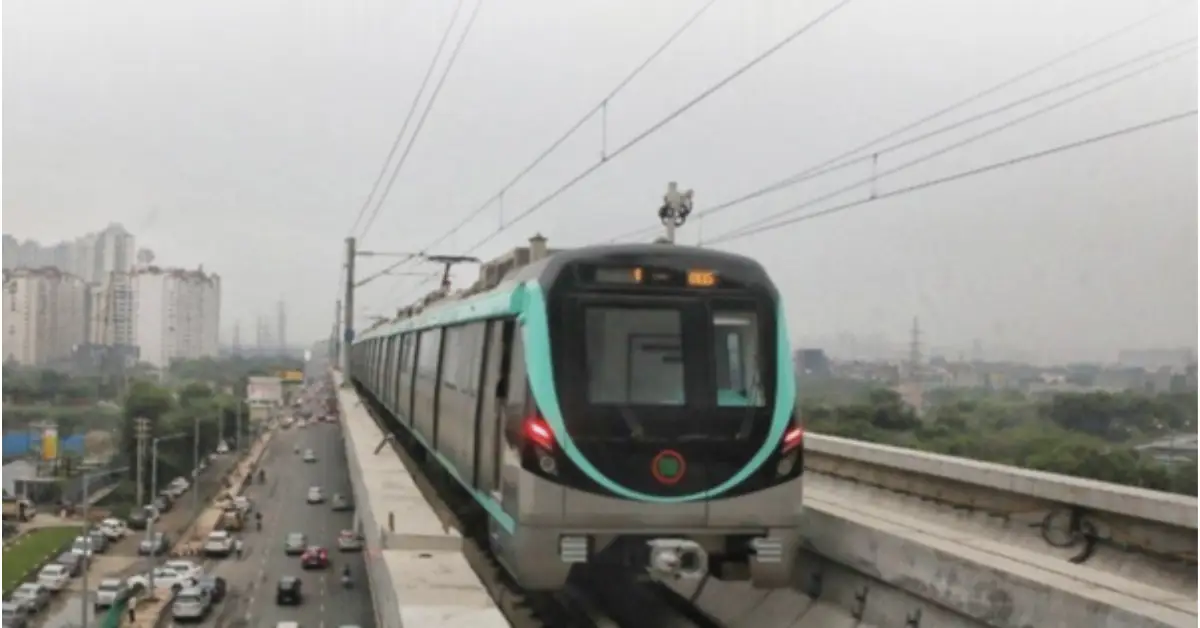
The Union Cabinet, chaired by Prime Minister Narendra Modi, has approved the extension corridor of the Noida Metro Rail Project from Noida Sector 142 to Botanical Garden for a length of 11.56 Km with 8 elevated stations.
With the operationalisation of this corridor, the combined active Metro rail network across Noida and Greater Noida is expected to reach 61.62 Km, marking a significant expansion of urban transit infrastructure in the region.
The new corridor will provide direct connectivity to high-demand routes, including interchanges at Botanical Garden with the Blue Line and Magenta Line, enabling smoother integration with Delhi’s wider metro network.
The project is designed to connect key economic and social hubs across the city.
These include commercial centres such as Advant Business Park in Sector 142, Skymark One Mall in Sector 98, and Mall of Noida in Sector 93.
Major corporate and IT establishments-including Microsoft, TCS, Havells, Infosys, Cognizant, Adobe, and Oracle-are also expected to benefit from improved access.
Educational institutions such as Amity University, Panchsheel Balak Inter College, and Mahamaya Balika Inter College, along with healthcare infrastructure like Max Super Specialty Hospital in Sector 128, will gain enhanced connectivity.
Tourist and recreational destinations, including the Botanical Garden and Sector 93 Park, are also set to be linked through the expanded network.
The metro extension is expected to ease urban mobility by offering an efficient alternative to road transport, thereby helping reduce traffic congestion, improving travel times, and strengthening overall road safety.
The expansion is also projected to deliver environmental benefits by lowering carbon emissions compared to fossil fuel-based transport.
Improved connectivity to major transportation hubs such as Delhi’s airport, railway stations, and bus depots is anticipated to enhance productivity and support business activity.
According to the government, the corridor is expected to stimulate local economic growth, attract investment in emerging areas, and provide more equitable access to public transportation for diverse socio-economic groups.