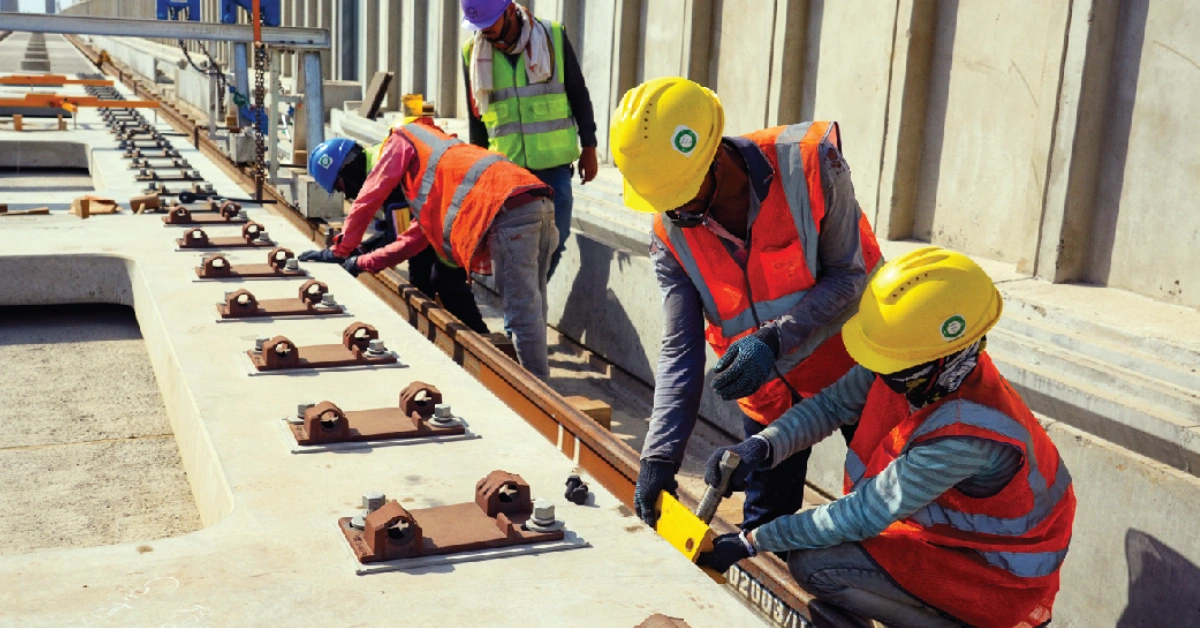
Mumbai-Ahmedabad Bullet Train: India’s first high-speed rail corridor advances across Gujarat and Maharashtra; track bed construction reaches 152 Km, OHE 121 Km as India’s first bullet train corridor is gathering pace, with the Mumbai-Ahmedabad High-Speed Rail (MAHSR) project recording substantial progress across both Gujarat and Maharashtra, as key civil works including foundations, piers and girder structures advance rapidly along the 508 Km route.
According to a written reply to a question in the Lok Sabha by Railways Minister Ashwini Vaishnaw, 426 Km foundation works, 417 Km pier works, 351 Km girder casting and 334 Km girder launching have been completed for the project.
The corridor will pass through Gujarat, the Union Territory of Dadra and Nagar Haveli, and Maharashtra with 12 stations planned at Mumbai, Thane, Virar, Boisar, Vapi, Bilimora, Surat, Bharuch, Vadodara, Anand, Ahmedabad, and Sabarmati.
The 508 Km MAHSR corridor spans 352 Km in Gujarat (348 Km) and Dadra and Nagar Haveli (4 Km), and 156 Km in Maharashtra.
According to the data shared by the minister, construction progress has been particularly strong in Gujarat, where foundation and pier works have each been completed over 352 Km, while girder casting has reached 342 Km and girder launching 331 Km.
Track bed construction has advanced to 152 Km, and Overhead Equipment (OHE) mast erection has covered 121 Km.
Earlier delays linked to land acquisition in Maharashtra affected the project timeline until 2021, but the process gathered pace in 2022 and the entire land required for the project was acquired.
In Maharashtra, foundation work has reached 74 Km and pier construction 65 Km. Girder casting stands at 9 Km, while launching has progressed to 3 Km, reflecting the comparatively later start of major civil works in the state.
Out of the total 12 stations planned on the corridor, foundation work has already been completed at eight locations – Vapi, Bilimora, Surat, Bharuch, Anand, Vadodara, Ahmedabad, and Sabarmati, all of them located in Gujarat.
In Maharashtra, foundation work is underway at Thane, Virar, and Boisar, while excavation at the Bandra Kurla Complex (BKC) station is nearing completion and casting of the base slab has begun.
Bridge construction has emerged as another major milestone.
Seventeen river bridges have already been completed for the project.
Work is in an advanced stage on four major river bridges – Narmada, Mahi, Tapti, and Sabarmati – in Gujarat, while construction is progressing on four river bridges in Maharashtra.
Depot works at Thane, Surat, and Sabarmati are also in full swing.
Civil works at the underground BKC station are progressing satisfactorily. Excavation has achieved about 91 per cent progress, and concreting is underway at multiple levels, including full completion of the basement slab at Level-4.
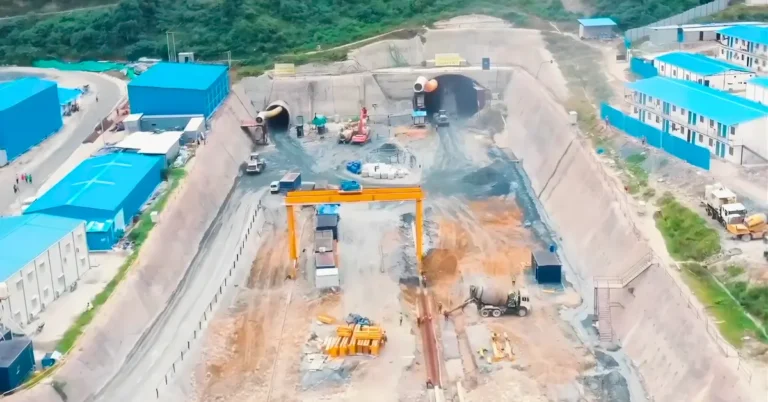
Meanwhile, work on the approximately 21 Km under-sea tunnel in Maharashtra section has commenced, with 4.8 Km between Ghansoli and Shilphata already completed.
The project is expected to significantly strengthen India’s domestic manufacturing capabilities and technical expertise in high-speed rail systems.
Experience gained in track construction, advanced signalling, rolling stock manufacturing and maintenance, and project management is projected to create a strong foundation for future high-speed rail corridors across the country.
Aligned with the Make in India and Aatmanirbhar Bharat initiatives, Indian Railways is promoting indigenous manufacturing of high-speed rail components to reduce import dependence.
Building on the success of Vande Bharat trains, the Integral Coach Factory, in collaboration with Bharat Earth Movers Limited (BEML), is designing and manufacturing high-speed train sets with a design speed of 280 Kmph, the minister informed.
He added that the MAHSR corridor is being designed for high-frequency operations with substantial passenger-carrying capacity.
Ticket pricing is proposed to remain competitive with existing rail and air travel options, the minister said.
Read also : Chennai Metro Phase 2 reaches key milestone with CMRS safety review of Poonamallee Bypass-Vadapalani stretch