A total of 185 Km of RC track bed has been laid on the Mumbai-Ahmedabad High-Speed Rail (bullet train) corridor, marking a key milestone in track installation works on the viaduct section of the project, according to a Ministry of Railways update.
The project is deploying a J-Slab ballastless track system, based on Japanese Shinkansen technology, which is being used in India for the first time.
This system comprises four key components: RC track bed, cement asphalt mortar (CAM), precast track slabs, and rails with fasteners.
Alongside the RC track bed progress, 188 Km of track slabs have been manufactured, while 70 Km of track slab laying and CAM injection has been completed, indicating parallel advancement across multiple stages of track construction.
To support this work, two dedicated track slab manufacturing facilities have been set up at Kim (near Surat) and Anand in Gujarat, ensuring a steady supply of high-precision precast slabs required for high-speed operations.
On-ground execution is being driven through 10 operational Track Construction Bases (TCBs), with four located between Surat-Bilimora-Vapi and six between Vadodara-Anand-Ahmedabad, acting as logistical hubs for materials, machinery, and viaduct-level operations.
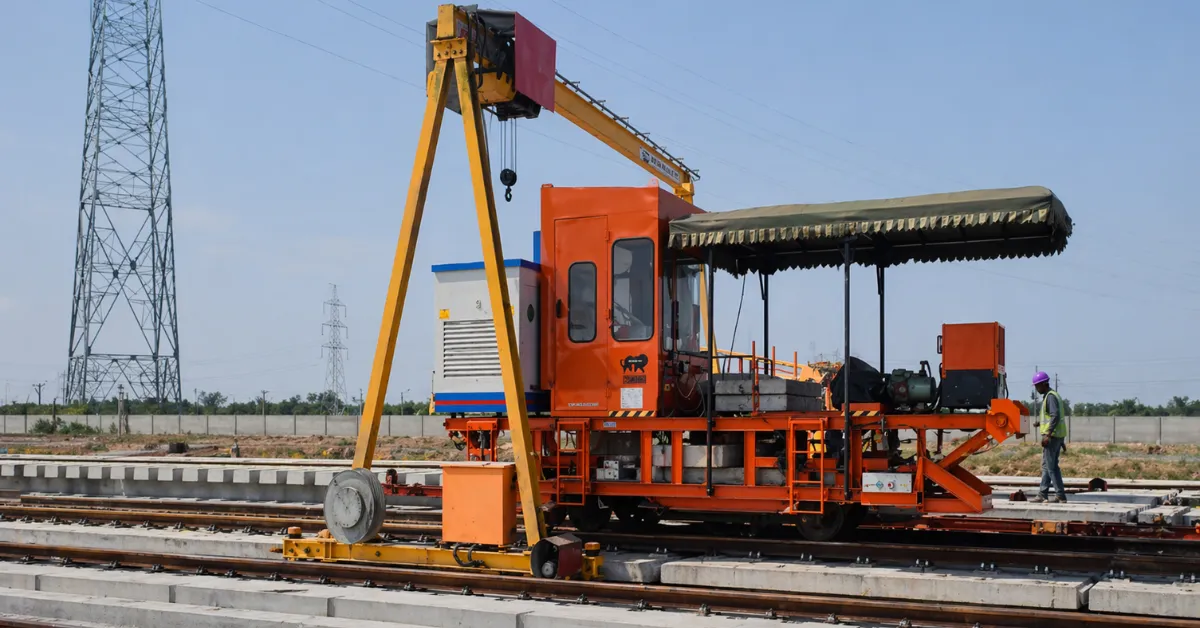
The track installation process is fully mechanised, using specialised equipment aligned with Japanese construction practices.
This includes Flash Butt Welding Machines that weld 25 metre rails into 200 metre panels suitable for high-speed operations up to 320 Kmph, along with Track Slab Laying Cars capable of positioning multiple slabs simultaneously on the viaduct.
Additional systems such as Rail Feeder Cars and Cement Asphalt Mortar Injection Cars are deployed to place rails and stabilise track alignment through precise CAM injection beneath slabs, ensuring the required geometry and safety standards for high-speed rail operations.
Read also : Indian Railways completes export of 10 BLW-built 3,300 HP locomotives to Mozambique