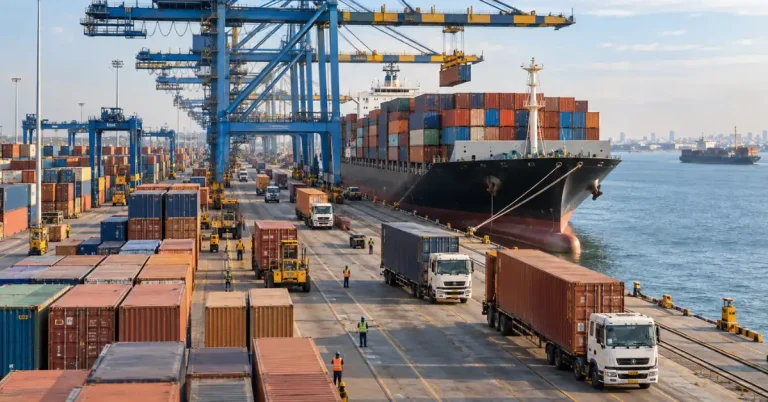
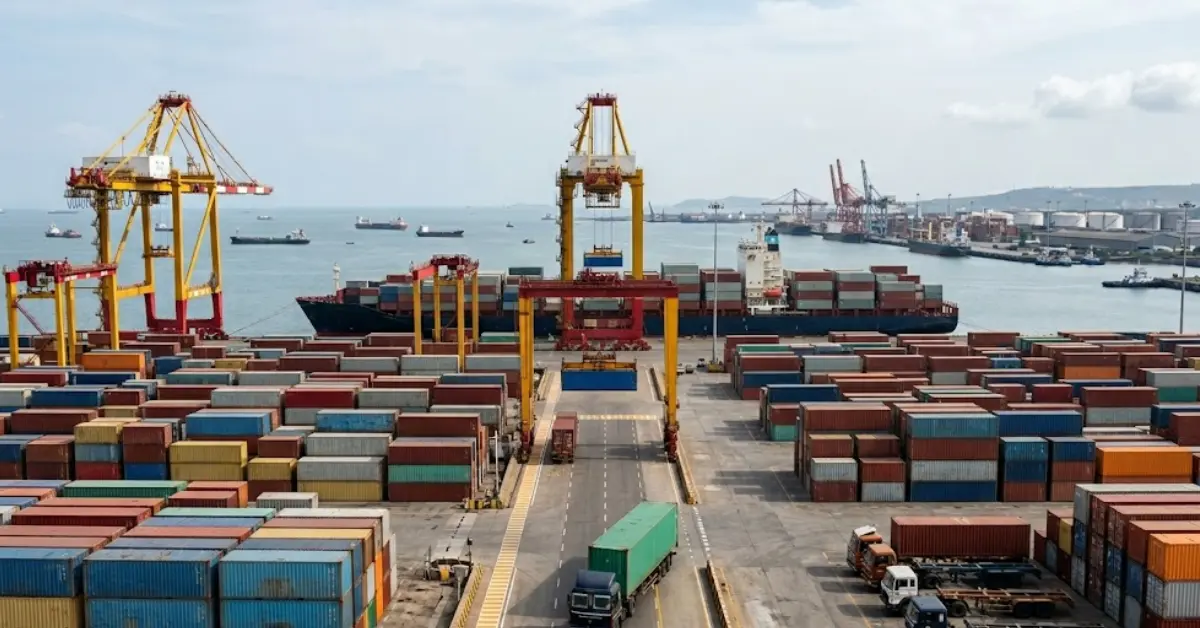
The India-Oman Comprehensive Economic Partnership Agreement (CEPA) came into force on Monday, 1 June, opening a new phase in trade and investment cooperation between the two countries.
The agreement was signed on 18 December 2025 in Muscat in the presence of Prime Minister Narendra Modi and Sultan Haitham bin Tarik Al Said.
After the completion of internal processes by both sides, the CEPA was operationalised on 1 June 2026, the Ministry of Commerce and Industry said in a statement.
Union Commerce and Industry Minister Piyush Goyal and Oman’s Ambassador to India Issa Saleh Al Shibani were present during the operationalisation of the agreement.
The first consignments availing preferential tariff benefits under the pact included agriculture and gems and jewellery exports from Mumbai, Kolkata and Chennai.
Under the CEPA, 99.38% of India’s exports to Oman by value will receive duty-free access.
The agreement covers 98.08% of Oman’s tariff lines and gives Indian exporters immediate zero-duty concessions.
Earlier, only 15.33% of India’s exports entered Oman duty-free under the Most Favoured Nation regime.
With the new agreement, Indian exporters are expected to gain stronger price competitiveness in Oman’s nearly $28 billion import market.
Oman is India’s second-largest trading partner in the Gulf region.
Bilateral trade between the two countries reached $11.18 billion in FY 2025-26, compared with $10.61 billion in FY 2024-25.
The agreement is expected to support labour-intensive sectors such as gems and jewellery, textiles, leather, footwear, marine products, engineering goods, processed foods and pharmaceuticals.
It also gives Indian exporters better access to Oman’s logistics hubs at Sohar, Duqm and Salalah, which connect to the wider GCC and East African markets.
India has offered tariff liberalisation on 77.79% of tariff lines, covering 94.81% of imports from Oman by value.
However, sensitive sectors such as dairy products, cereals, fruits, vegetables, edible oils, oilseeds, rubber, leather, spices and key agricultural products have been kept in the exclusion list.
The agreement also includes safeguards such as Tariff Rate Quotas and Minimum Import Price mechanisms for selected sensitive industrial and agricultural products to protect domestic industry, farmers and rural livelihoods.
Marine products, including shrimp, fish and cuttlefish, will receive immediate duty-free access, replacing earlier import duties of up to 5%.
Oman’s marine imports stood at $35.3 million in 2025, while India’s exports in the segment were $10 million.
In gems and jewellery, import duties of up to 5% have been removed from the first day.
Oman’s gems and jewellery import market is estimated at $1.07 billion annually, while India’s exports to Oman in the sector stood at $25.78 million in 2025.
The ministry said exports in this segment could rise six-fold to $150 million within three years.
The CEPA also provides zero-duty access for medicines, vaccines and pharmaceutical ingredients.
Pharmaceutical products approved by USFDA, EMA, UK MHRA and TGA will qualify for marketing authorisation in Oman within 90 days without prior inspection, while cases requiring inspection will have a 270-working-day target.
All engineering products will get zero-duty market access, replacing earlier MFN tariffs of up to 5%. India’s engineering exports to Oman stood at $875.83 million in FY 2025-26 and are projected to rise to $1.3-1.6 billion by 2030.
In services, Oman has made market access commitments across 127 services sub-sectors.
These include computer and related services, professional services, engineering, healthcare, education, financial services, construction, tourism and telecommunications.
The agreement also provides mobility pathways for Indian professionals. Business visitors may stay in Oman for up to 90 days, independent professionals for up to 180 days and intra-corporate transferees for up to 4 years.
Goyal said the CEPA would act as a “force multiplier” in the Gulf region and unlock new opportunities for Indian exporters and professionals. He said Oman is a trusted partner and a gateway to the Gulf and East Africa.
Commerce Secretary Rajesh Agrawal said the agreement goes beyond tariff liberalisation by improving market access, supporting service trade and giving greater predictability to businesses operating across both markets.