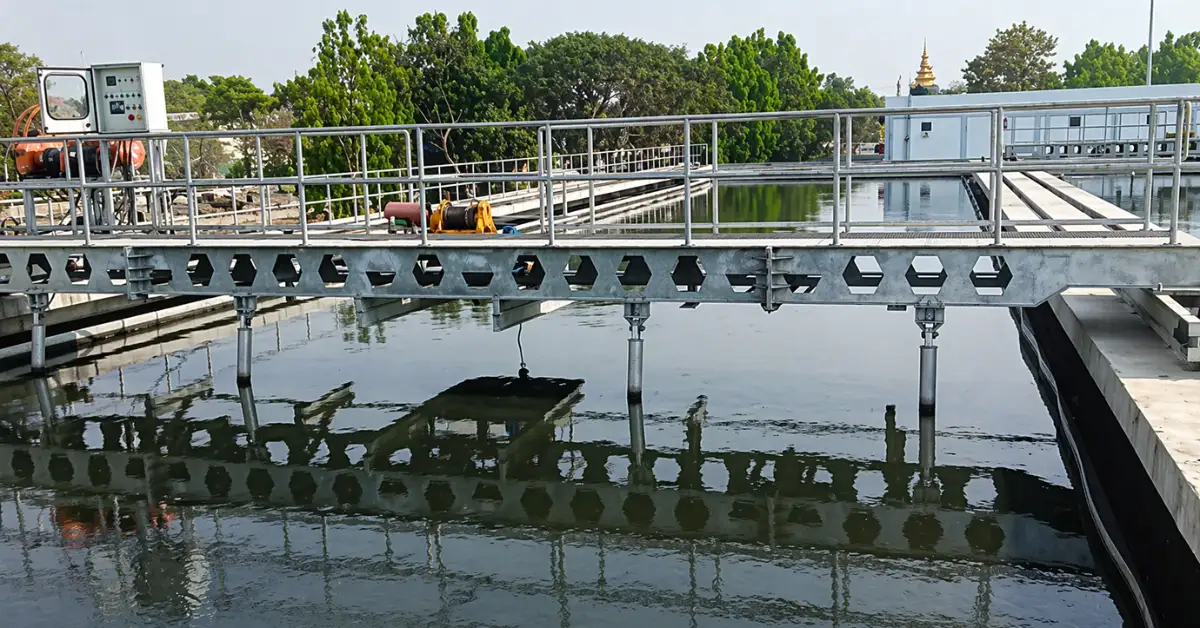
The National Mission for Clean Ganga (NMCG) added a cumulative sewage treatment capacity of 538.03 MLD during FY 2025-26 through 18 projects across five Ganga basin states, according to a Jal Shakti Ministry statement on Tuesday, 21 April.
During the year, 28 sewage treatment plants (STPs) were completed, compared to 22 in the previous year, with total investment of nearly ₹4700 crore directed towards pollution abatement and infrastructure creation along the Ganga and its tributaries.
Uttar Pradesh emerged as the largest contributor, with projects across cities including Varanasi, Prayagraj, Moradabad, Vrindavan and Agra.
The Assi-BHU project in Varanasi added the highest individual capacity of 55 MLD, while a major initiative in Prayagraj involving interception and diversion of 13 drains along with augmentation of the Salori STP created an additional 43 MLD capacity at a sanctioned cost of ₹331.75 crore.
Agra recorded one of the largest capacity additions at 166 MLD, while Moradabad and Shuklaganj added 25 MLD and 5 MLD respectively through sewage treatment and diversion works. Vrindavan further contributed 13 MLD under integrated I&D and STP projects.
In Uttarakhand, projects across Udham Singh Nagar, Dehradun, Haridwar and Muni ki Reti contributed to capacity expansion.
Udham Singh Nagar added 10.3 MLD by addressing multiple polluted stretches, while Dehradun’s Sapera Basti project added 15 MLD.
Muni ki Reti contributed 11 MLD, and decentralised interventions across locations such as Jagjeetpur and Sarai in Haridwar, along with Rishikesh, Srinagar and Devprayag, collectively added 0.23 MLD.
Jharkhand added 14 MLD capacity through the completion of the Phusro STP project at a cost of ₹61.05 crore, while West Bengal saw capacity additions across multiple projects, including 13 MLD at Jangipur (₹68.47 crore), 15 MLD at Chakdah (₹121.66 crore), 30 MLD at North Barrackpore, and 35 MLD at Maheshtala (₹286.97 crore), strengthening pollution abatement in the lower Ganga basin.
In Bihar, projects in Digha, Kankarbagh and Bhagalpur added 30 MLD, 35 MLD and 22.5 MLD respectively, addressing urban wastewater challenges and improving river water quality.
To strengthen monitoring, the Namami Gange programme introduced a Drain Dashboard to track drains discharging into the river and monitor diversion to STPs in real time.
A Ganga Pulse public portal has also been launched to display real-time data from STPs across five states, including parameters such as pH, BOD and TSS at inlet and outlet levels.
The Ministry said the progress reflects a strategic and regionally balanced implementation approach, with a strong pipeline of ongoing projects and continued emphasis on timely execution to advance towards a cleaner and healthier Ganga while addressing future demands arising from urban growth along the river basin.