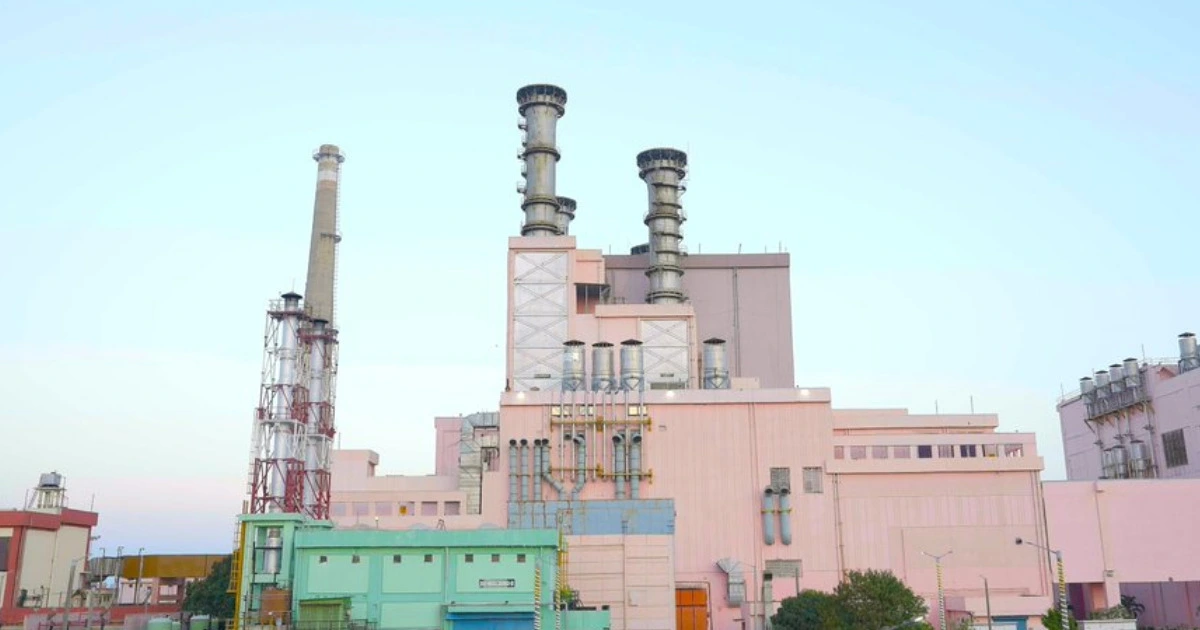
India’s 500 MWe Prototype Fast Breeder Reactor (PFBR) at Kalpakkam, Tamil Nadu, attained first criticality on 6 April 2026 at 08:25 PM, marking the start of a controlled nuclear fission chain reaction and a key milestone in the country’s nuclear energy programme.
The Department of Atomic Energy stated that the milestone was achieved after meeting all safety stipulations of the Atomic Energy Regulatory Board (AERB), which granted clearance following a detailed review of plant systems.
What First Criticality Means
First criticality refers to the point at which a nuclear reactor sustains a controlled chain reaction for the first time.
This stage precedes power generation and is a critical step in reactor commissioning, indicating that the core systems, fuel loading and control mechanisms are functioning as designed.
Read also: Government approves 500 MW renewable energy pilot under CfD model for non-solar hour supply
Project Details And Institutional Roles
The PFBR has been designed by the Indira Gandhi Centre for Atomic Research (IGCAR), an R&D centre under the Department of Atomic Energy.
It has been built and commissioned by Bharatiya Nabhikiya Vidyut Nigam Ltd (BHAVINI), a public sector enterprise under the Department of Atomic Energy.
The project reflects the deployment of predominantly indigenous technologies and components in advanced nuclear reactor design and construction.
How Fast Breeder Reactors Work
Fast breeder reactors differ from conventional thermal reactors in their ability to generate more fissile material than they consume.
The PFBR uses Uranium-Plutonium Mixed Oxide (MOX) fuel, with its core surrounded by a blanket of Uranium-238.
Fast neutrons convert Uranium-238 into Plutonium-239, enabling fuel regeneration within the reactor system.
The design also provides for future use of Thorium-232, which can be transmuted into Uranium-233 for use in advanced reactors.
Role In India’s Nuclear Power Strategy
The PFBR forms a key component of India’s three-stage nuclear power programme.
The first stage is based on pressurised heavy water reactors using natural uranium.
The second stage involves fast breeder reactors such as the PFBR, which utilise plutonium and generate additional fuel.
The third stage is designed around thorium-based reactors, leveraging India’s large thorium reserves.
Energy Security And Resource Utilisation
The fast breeder technology enhances the utilisation of nuclear fuel resources by extracting more energy from limited uranium reserves.
It also supports the long-term transition towards thorium-based nuclear energy, which is central to India’s energy security strategy.
Key Technologies And Safety Systems
The PFBR incorporates high-temperature liquid sodium coolant technology and advanced safety systems.
It also operates on a closed fuel cycle approach, allowing recycling of nuclear material, improving sustainability and reducing waste generation.
Strategic And Technological Significance
Beyond power generation, the PFBR programme contributes to capabilities in nuclear fuel cycle technologies, reactor physics, advanced materials and large-scale engineering.
The development of the reactor reflects the participation of scientists, engineers, technicians and industry partners across the nuclear ecosystem.
What Comes Next
Following first criticality, the reactor will move through further stages of commissioning before reaching full power generation.
The milestone positions fast breeder technology as a critical element in delivering reliable, low-carbon base-load power and advancing India’s long-term nuclear energy roadmap.