The Cabinet Committee on Economic Affairs (CCEA), chaired by Prime Minister Narendra Modi, has approved the construction of a four-lane corridor on the Badnawar-Petlawad-Thandla-Timarwani section of National Highway-752D in Madhya Pradesh at a cost of ₹3,839.42 crore.
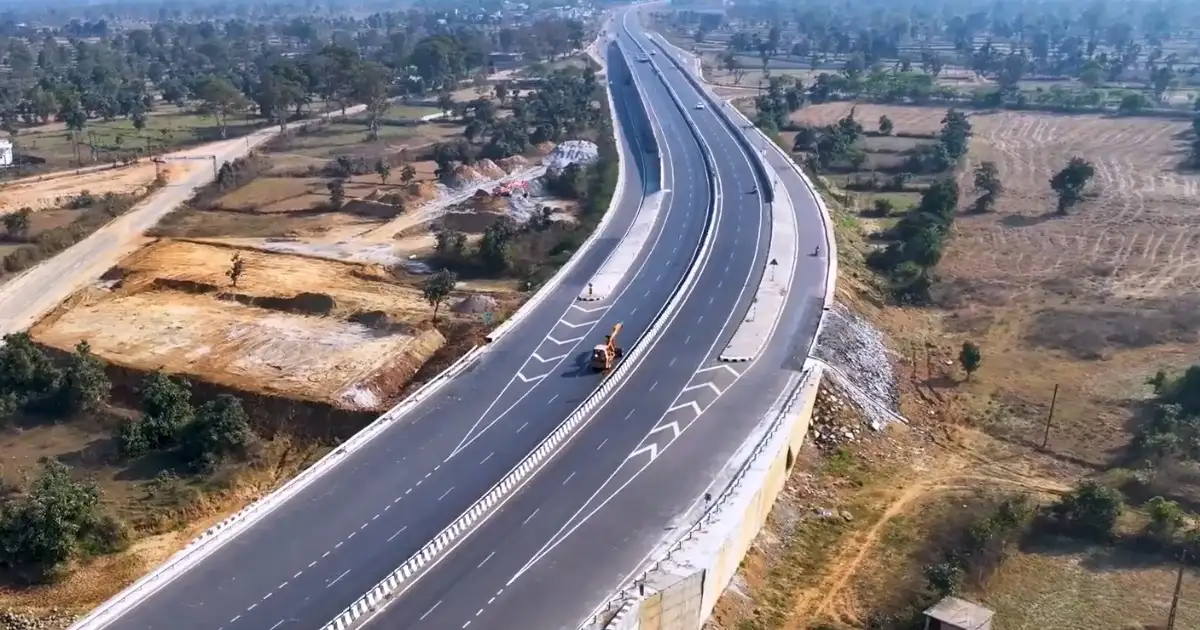
The project will cover a length of 80.45 Km and will provide connectivity between Ujjain and the Timrawani interchange of the Delhi-Mumbai Expressway (DME), strengthening the highway network in the region.
According to the Ministry of Road Transport and Highways, the primary purpose of the proposed four-lane project corridor is to improve travel efficiency and is expected to reduce travel time by approximately one hour.
The ministry said that the Ujjain-Badnawar section of 70.40 km length has been already upgraded from 2-lane to 4-lane.
However, the instant Badnawar-Timrawani stretch is an existing intermediate lane (5.5m) corridor with poor road geometry where vehicle speeds range between 20 Kmph and 50 Kmph.
Read also : NHAI and ISRO develop satellite-based index to measure green cover along highways
Upgrading the section to a four-lane highway designed for speeds of 80-100 Kmph will complete direct four-lane connectivity between Ujjain and the Delhi-Mumbai Expressway interchange.
The ministry said the Timarwani-Thandla-Petlawad-Badnawar-Ujjain corridor is the shortest route for traffic travelling from Gujarat and Maharashtra to Ujjain.
“Upgradation of the Timarwani-Badnawar section will strengthen inter-state connectivity and enable efficient movement of traffic and would also take care of surge in traffic during Simhastha Kumbh Mela in April-2028,” the ministry said.
The corridor also passes through tribal regions of Dhar and Jhabua districts in Madhya Pradesh, with parts of Dhar district covered under NITI Aayog’s Aspirational Blocks Programme.
Improved road infrastructure is expected to enhance regional accessibility and support economic activity in these districts.
The ministry noted that the upgraded corridor will provide faster access to the Delhi-Mumbai Expressway while facilitating smoother movement of goods and raw materials.
Industrial hubs and logistics nodes located in Indore, Pithampur, Ujjain and Dewas are expected to benefit from improved connectivity and reduced logistics costs.
Designed as a high-speed corridor with improved safety features, the project will include six major bridges, thirty-four minor bridges, one road under bridge, and multiple vehicle and light vehicle underpasses.
The project will be implemented on Hybrid Annuity Mode with a construction period of 24 months and a concession period of 17 years (2 years construction period + 15 years operations and maintenance).
Read also : NHAI expands women’s role in toll operations with 5,100+ staff deployed at 1,140 toll plazas