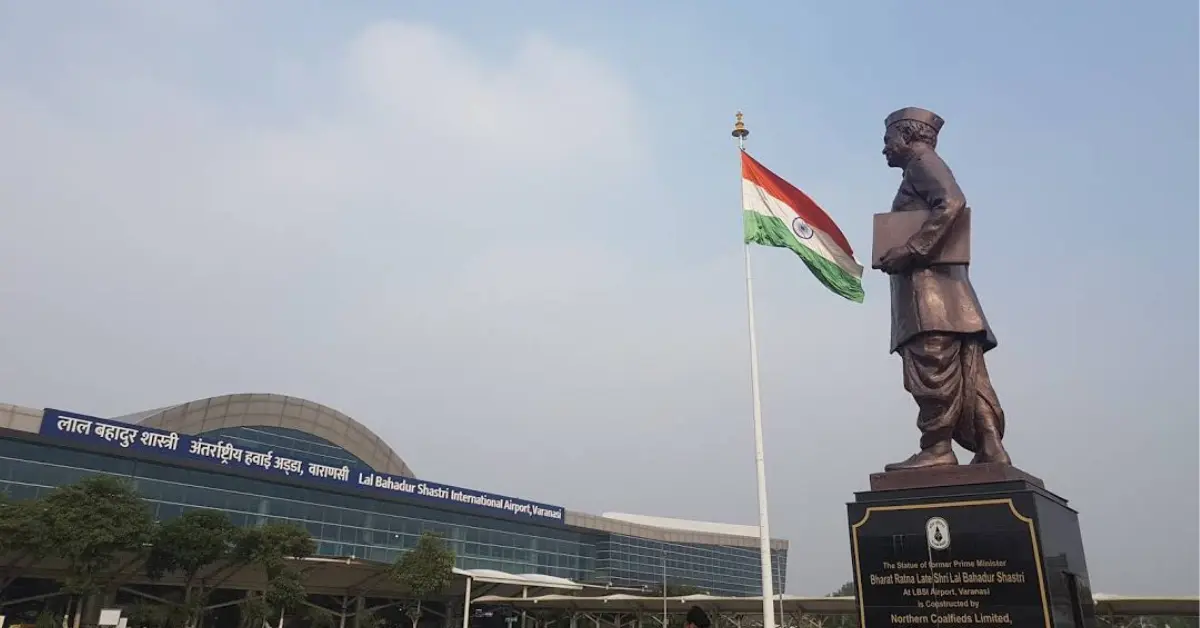
Union Civil Aviation Minister Ram Mohan Naidu Kinjarapu has launched India’s first ‘Easy Connect’ flight from Lal Bahadur Shastri International Airport in Varanasi, marking the rollout of the country’s new Hub-and-Spoke model for international air travel.
The service was launched on June 25 and is aimed at making international travel easier for passengers from Tier-II and Tier-III cities. Under the model, travellers can complete key international departure formalities such as check-in, immigration and customs at their origin airport itself, before flying to a major Indian hub such as Delhi for onward international travel.
Air India operated the inaugural Easy Connect service, AI1111, from Varanasi. The flight connected passengers through Delhi to several overseas destinations, including Dubai, Colombo, Jeddah, Riyadh, Kathmandu and Phuket.
The move is being seen as part of India’s broader effort to reduce dependence on a few major metro airports for international travel.
At present, many passengers from smaller cities first travel to hubs such as Delhi or Mumbai, where they have to complete international formalities before boarding their onward flight.
The new framework seeks to shift much of that process to the spoke airport itself.
According to the Ministry of Civil Aviation, the Hub-and-Spoke strategy is linked to India’s aim of becoming a preferred aviation hub for Indian passengers by 2030 and for global travellers by 2047.
The ministry has said that stronger aviation hubs could support trade, tourism, investment and regional economic development.
Speaking at the launch, Civil Aviation Minister Ram Mohon Naidu said the new model would allow citizens to begin their international journey from their home city and travel across the world with greater ease.
He described the initiative as a step towards making air travel more accessible and building a future-ready Indian aviation sector.
The ministry has also highlighted security and operational safeguards under the model. Both legs of the journey under Domestic-International operations are treated as international operations.
Separate physical boarding cards with identifiers for domestic and international passengers are issued to prevent passenger intermixing.
International passengers travelling under this framework will also not have access to customs declaration facilities at hub airports.
Senior officials from the Ministry of Civil Aviation, Airports Authority of India, Directorate General of Civil Aviation and Air India attended the launch event. Air India CEO and MD Campbell Wilson was also present.
The government has indicated that similar Hub-and-Spoke international operations may be extended to more Tier-II and Tier-III city airports in the coming period.
For passengers from cities such as Varanasi, the model could reduce travel friction and make international journeys more streamlined, provided coordination between airlines, airport operators and immigration authorities remains smooth.