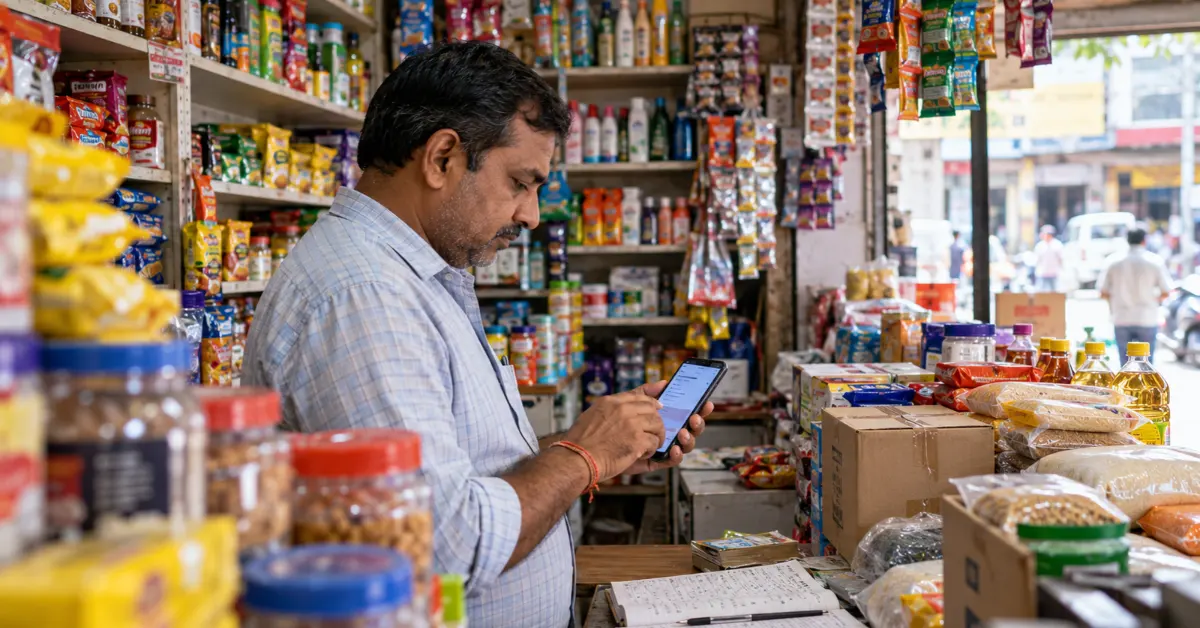
New Delhi, October 31, 2026: More than 21,000 kirana stores across Hyderabad, Jaipur and Mumbai have been connected with over 450 brands through ONDC’s DigiDukaan initiative, enabling small retailers to discover products, compare prices and place stock orders digitally through a common network.
The Ministry of Commerce and Industry disclosed the figures following the Bharat Commerce Chintan Shivir, chaired by Union Commerce and Industry Minister Piyush Goyal in New Delhi on October 30. More than 40 leaders from major fast-moving consumer goods (FMCG) companies participated in discussions on expanding digital purchasing among neighbourhood retailers.
Representatives from Hindustan Unilever, Coca-Cola India, ITC, Procter & Gamble, Marico, Britannia, Pidilite and Haldiram’s were among the participants.
DigiDukaan, developed under the Open Network for Digital Commerce (ONDC), enables small shopkeepers to access products from participating brands, distributors and wholesalers without relying exclusively on traditional ordering arrangements.
Retailers can use the network to discover available products, view prices and trade offers, and place orders with participating suppliers. The initiative is intended to strengthen existing distribution networks rather than replace distributors.
According to the ministry, the number of retailers connected to DigiDukaan increased from more than 12,000 in the previous quarter to over 21,000 by September 2026.
Hyderabad accounted for more than 16,000 onboarded retailers, with monthly repeat-ordering rates ranging from 73% to 78%. These figures relate specifically to Hyderabad and do not represent repeat-ordering rates across the entire DigiDukaan network.
An initial ONDC study also found that 40% of surveyed retailers reported holding less inventory for products purchased through DigiDukaan. The finding suggests that digital purchasing could help shopkeepers manage stock more efficiently and reduce the amount of working capital tied up in inventory.
However, the study does not establish that all participating retailers have achieved similar savings.
During the industry meeting, participants discussed introducing a common digital identity for kirana stores, developing shared delivery and warehousing facilities, and improving access to formal credit linked to retailers’ digital purchasing activity.
Other proposals included simplifying technology integration between retailers and distributors, standardising product catalogues and introducing commercial incentives to encourage wider participation.
Goyal called for greater collaboration among FMCG companies, distributors and digital commerce participants to make procurement easier and more transparent for small retailers.
The ministry also highlighted the wider growth of ONDC, which has facilitated more than 500 million transactions across its digital commerce network. This figure covers ONDC’s broader activities and should not be interpreted as DigiDukaan’s transaction volume.
The October 30 meeting focused on expanding the adoption of DigiDukaan and improving digital procurement for neighbourhood stores. It did not announce a mandatory nationwide rollout, a fixed implementation deadline or a new direct government subsidy for participating retailers.
For kirana shopkeepers, the initiative offers another way to compare products and purchase inventory from participating suppliers. However, the practical benefits will depend on product availability, pricing, delivery services and continued retailer participation.
Read also: The Employees’ State Insurance Corporation (ESIC) extends deadline to December 31 for employers to settle old ESI disputes with penalty relief