New Delhi, October 29, 2026: India and Mexico have formally begun negotiations for a Preferential Trade Agreement (PTA) that could create new business opportunities for automobile manufacturers, pharmaceutical exporters, electronics companies and other industries in both countries. The proposed agreement aims to improve market access and strengthen bilateral trade, although no tariff reductions or trade concessions have been finalised.
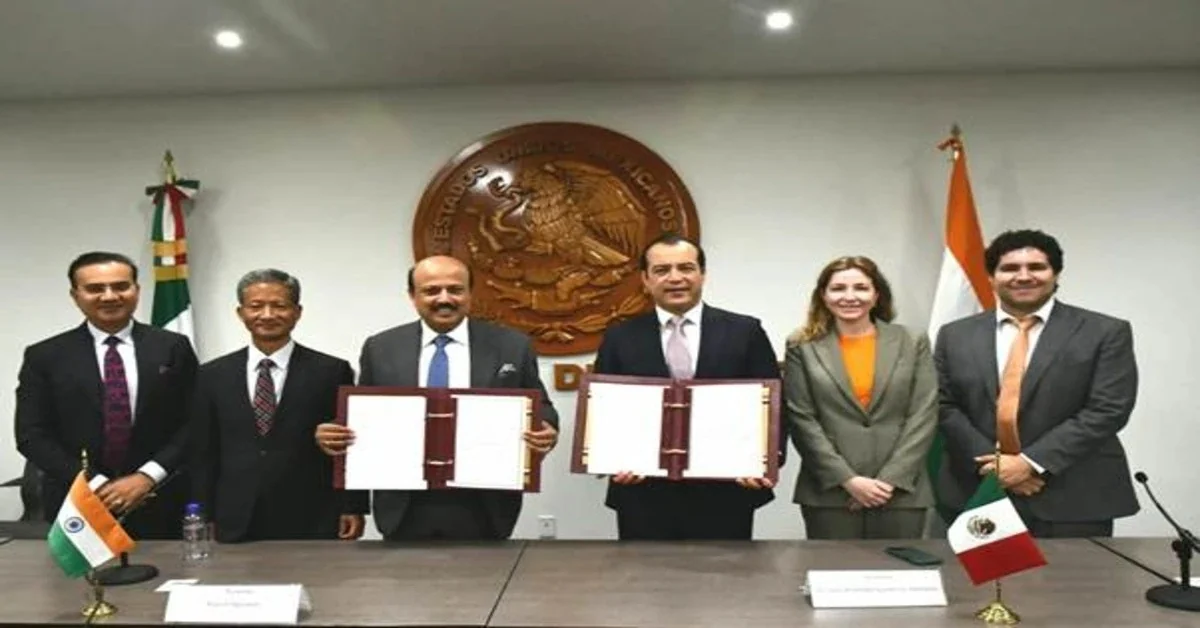
The Ministry of Commerce and Industry announced on October 28 that the two countries had signed the Terms of Reference for the proposed agreement, establishing the scope, framework and roadmap for negotiations.
The signing marks the formal launch of trade talks, not the conclusion of a trade agreement. Both governments will need to negotiate which products qualify for preferential treatment, the applicable tariffs and other conditions before any trade benefits can take effect.
A Preferential Trade Agreement generally allows participating countries to offer reduced import duties or other agreed trade preferences on selected products. If negotiations succeed, Indian exporters could gain better access to the Mexican market, while Mexican businesses could benefit from improved opportunities in India.
The development follows discussions between Prime Minister Narendra Modi and Mexican President Claudia Sheinbaum on the sidelines of the G7 Summit in Canada in June 2025, when the two leaders agreed to strengthen economic cooperation.
During his visit to Mexico, India’s Commerce Secretary Rajesh Agrawal held discussions with Mexico’s Undersecretary of Foreign Trade, Luis Rosendo Gutiérrez Romano, who represented Secretary of Economy Marcelo Ebrard Casaubon.
The discussions focused on expanding bilateral trade, improving market access and identifying new opportunities for investment and business cooperation.
According to the ministry, the Terms of Reference cover several areas, including market access for goods, rules of origin, customs procedures, trade facilitation and dispute settlement.
The negotiations will also address sanitary and phytosanitary measures, technical barriers to trade and trade remedies. These areas concern matters such as food safety requirements, product standards and measures used to address certain unfair trading practices.
Both countries have identified opportunities for cooperation across industries such as automobiles, pharmaceuticals, electronics, chemicals, agriculture and food products, energy, critical minerals, medical devices and advanced manufacturing.
However, these sectors have been identified as areas of potential cooperation. The government has not confirmed which products will receive preferential tariff treatment under a future agreement.
For Indian automobile and electronics manufacturers, closer trade ties could create opportunities to expand sales in Mexico and develop business relationships with companies operating in international manufacturing supply chains.
Indian pharmaceutical and chemical exporters could also benefit if the eventual agreement improves market access for their products. Any such benefits would depend on the tariff concessions and regulatory provisions agreed upon during negotiations.
The proposed agreement could similarly help Mexican manufacturers, exporters and investors explore opportunities in the Indian market.
The two sides also discussed the possibility of organising a visit by a Mexican business delegation to India during the first quarter of 2027.
Such a visit, if confirmed, could provide companies from both countries with opportunities to discuss investment proposals, develop commercial partnerships and explore new markets. However, the ministry has not announced a confirmed schedule for the proposed delegation.
The government has not specified a deadline for concluding the PTA negotiations, disclosed a list of products proposed for tariff concessions or announced the extent of any potential import-duty reductions.
The signing of the Terms of Reference therefore represents an initial step towards a possible trade agreement rather than an immediate change in trading conditions.
If successfully concluded, the agreement could expand commercial opportunities for businesses in India and Mexico, particularly in manufacturing, pharmaceuticals, electronics and other sectors identified for cooperation. The actual benefits will depend on the final terms negotiated by the two governments.
Read also: Government adds 83 projects to infrastructure monitoring as total pipeline reaches ₹37.56 lakh crore