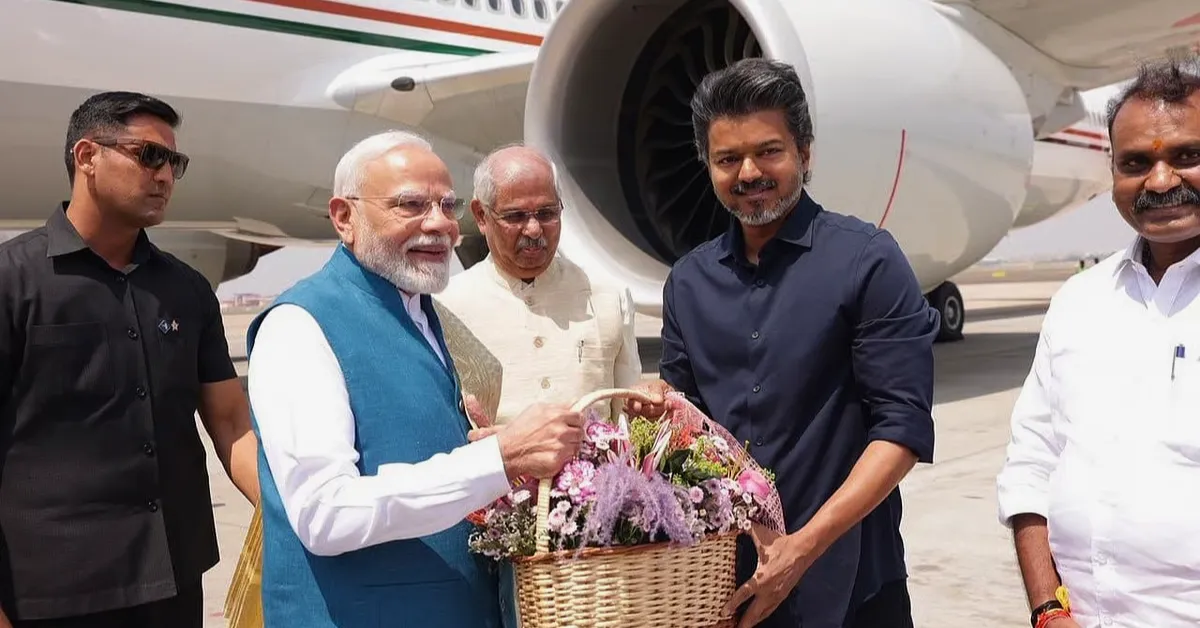
Chennai, October 12, 2026: Prime Minister Narendra Modi inaugurated the ₹4,900-crore Poonamallee–Vadapalani stretch of Chennai Metro Phase II as part of a wider programme of development projects worth more than ₹13,000 crore during his visit to Tamil Nadu on October 11. The programme covered highways, railways, ports, petroleum and research infrastructure, with the Metro expansion expected to reduce commuting times between Chennai’s growing western suburbs and the city centre.
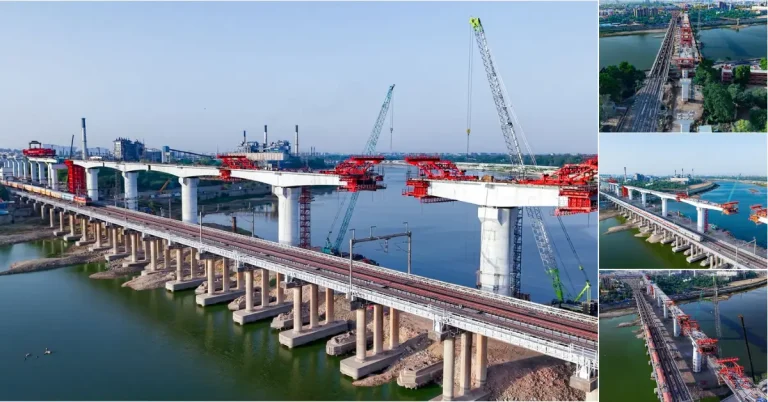
The newly inaugurated 14.64-km Metro corridor features a 3.7-km double-decker structure and advanced signalling systems designed to support driverless train operations. According to the Prime Minister’s Office, the stretch is expected to improve connectivity between western Chennai and the city centre. Passenger services began on October 11, with regular operations commencing on October 12. Eleven of the corridor’s 17 stations opened initially, while six intermediate stations remain closed. Although the signalling systems support driverless operations, trains are initially operating with onboard personnel rather than in fully unattended mode.
The programme included the inauguration of completed infrastructure, the dedication of projects to the nation and the laying of foundation stones for new developments. Addressing a gathering in Chennai, Modi said the investments were intended to improve commuting, strengthen industrial activity and create employment opportunities.
During his address, the Prime Minister highlighted the expansion of India’s Metro network, saying services had expanded from five cities in 2014 to 25 cities. He also said the country’s Metro network had grown from approximately 250 km in 2014 to more than 1,100 km.
National highway projects worth around ₹3,700 crore formed another major part of the programme. These included the 36-km, four-lane Vadugapatti–Therkuvenganallur section of National Highway 744 and the 30-km, four-lane Madurai Ring Road section of National Highway 744A, both listed for inauguration in the government’s project announcement. The projects are expected to improve regional connectivity, facilitate the movement of goods and reduce traffic congestion.
The programme also included the laying of the foundation stone for the four-lane Thiruvarur Bypass on the Nagapattinam–Thanjavur section of National Highway 83. The proposed bypass is intended to provide an alternative route around Thiruvarur and ease traffic congestion in the town.
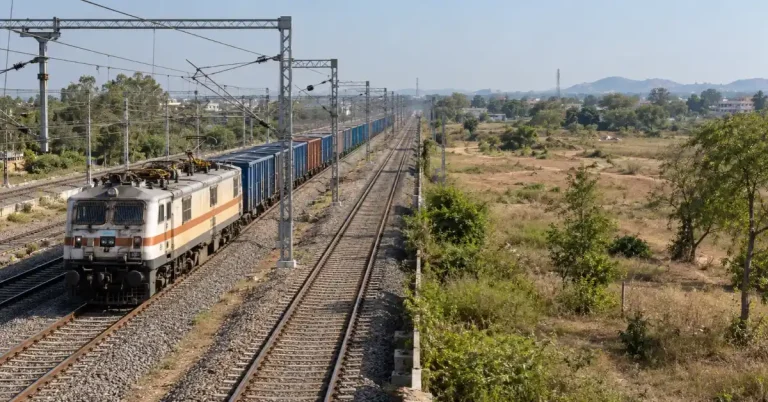
Railway infrastructure projects worth more than ₹750 crore were also included. The government’s programme listed the Karaikal–Peralam railway line and three rail flyovers in and around Coimbatore for dedication to the nation. The flyovers are intended to ease congestion at busy level crossings, reduce waiting times and improve road safety.
Five redeveloped railway stations at Palani, Vellore Cantonment, Ambasamudram, Paramakkudi and Namakkal were listed for inauguration under the Amrit Bharat Station Scheme, which focuses on improving passenger facilities and station infrastructure.
Several port infrastructure projects at Chennai Port, Kamarajar Port and V.O. Chidambaranar Port were also part of the development programme, covering cargo handling, storage facilities, maritime logistics and passenger services.
At Chennai Port, the projects listed for inauguration included a paved storage yard, four export-import warehouses, an upgraded cruise terminal and a Seafarers Club. These facilities are intended to improve cargo storage and handling, expand warehouse capacity and provide better services for cruise passengers and maritime personnel.
At V.O. Chidambaranar Port, the programme included inaugurations and foundation-stone ceremonies for eight development projects aimed at expanding cargo and container-handling capacity, improving logistics and supporting cleaner maritime energy infrastructure.
At Kamarajar Port, the scheduled works included the inauguration of Coal Berth-3 and the laying of the foundation stone for capital dredging works associated with the expansion of a container terminal.
During his address, Modi also referred to a recent decision involving an investment of around ₹17,000 crore to develop V.O. Chidambaranar Port in Thoothukudi into a major container and green energy hub. This was a separate development and was not part of the ₹13,000-crore programme announced for the Chennai visit.
The programme also included the laying of the foundation stone for a ₹1,620-crore lubricating oil base stock project at Chennai Petroleum Corporation Limited’s Manali Refinery. The proposed facility will have an annual production capacity of 270,000 metric tonnes and is intended to manufacture higher-grade base oils used in premium lubricants. Modi said the project would support domestic manufacturing and reduce dependence on imports.
In the research sector, the Prime Minister dedicated the Sudha Gopalakrishnan Brain Centre at the Indian Institute of Technology Madras to the nation. The programme also included the launch of a scientific mission to create detailed three-dimensional maps of more than 100 human brains at cellular resolution, covering stages of life from the foetal period to old age.
The initiative is intended to help scientists study the structure of the human brain in greater detail. The programme also included the release of C-STROKE, an atlas containing more than 1,000 annotated microscopic sections from a brain affected by an ischaemic stroke, which occurs when blood flow to part of the brain is blocked. The atlas is intended to support research into potential treatments.
Modi also participated in the golden jubilee celebrations of Jaigopal Garodia Hindu Vidyalaya Matriculation Higher Secondary School in Chennai, where he addressed students and spoke about their role in India’s future development.
During the development-project programme, the Prime Minister emphasised the importance of improved road, rail and port connectivity for manufacturing and trade. He said stronger transport infrastructure would help Tamil Nadu’s industries move goods more efficiently and support economic opportunities across related sectors.
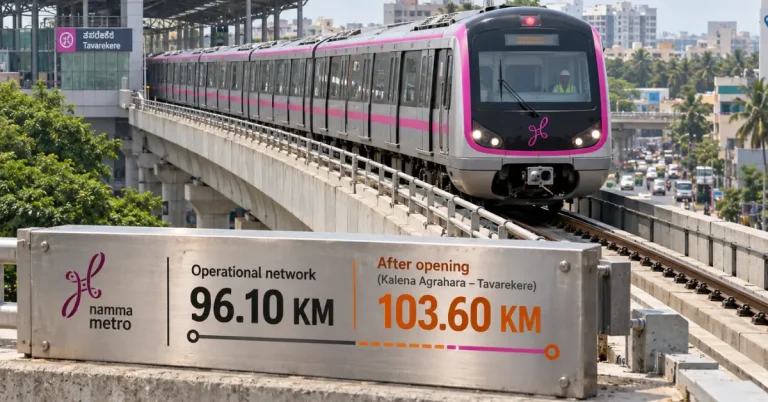
Read also: Safety inspection completed on Bengaluru Metro’s 7.5-km Pink Line stretch; opening approval pending