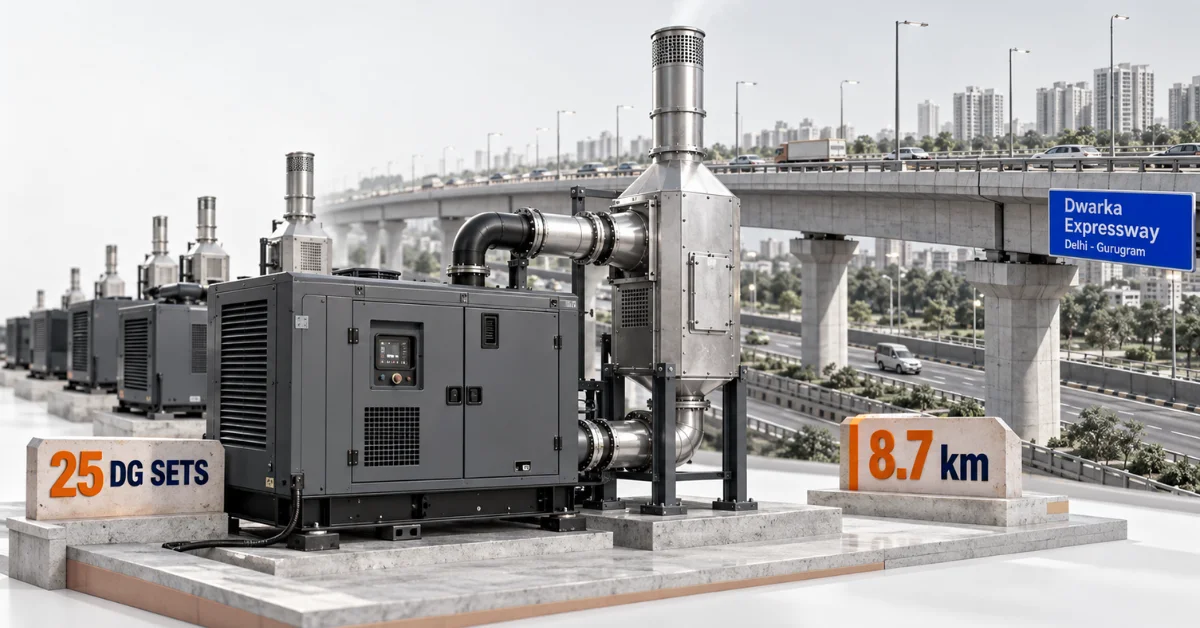
New Delhi, October 10, 2026: The National Highways Authority of India (NHAI) plans to install pollution-control devices on 25 diesel generators along the Dwarka Expressway to reduce emissions from equipment used for road lighting and other operations. The initiative comes as Delhi-NCR prepares for the winter months, when air pollution typically worsens.
The devices are planned for the 8.7-km Package-IV section of the expressway, stretching from Basai to the Kherki Dhaula interchange with the Delhi-Gurugram Expressway. According to the Ministry of Road Transport and Highways, the initiative aims to bring diesel generators operating along this stretch into compliance with air-quality regulations.
The equipment, known as Retrofit Emission Control Devices (RECDs), is designed to control harmful emissions from diesel generators already deployed along the expressway. These devices can be fitted to existing generators to reduce the pollutants released during operation.
The installation follows directions issued by the Commission for Air Quality Management (CAQM), the authority responsible for coordinating measures to improve air quality in Delhi-NCR and adjoining areas. The commission has prescribed emission-control requirements for diesel generators operating in the region as part of wider efforts to tackle air pollution.
Delhi-NCR frequently experiences severe air pollution during the colder months. The Graded Response Action Plan (GRAP) is a system of pollution-control measures implemented according to prevailing air-quality conditions. The proposed installation is intended to support compliance with applicable pollution-control requirements.
The generators covered by the project are used for expressway lighting and associated operations. NHAI said the work would include installing, testing and commissioning the emission-control devices, along with comprehensive maintenance support.
To document compliance, NHAI will maintain GPS-tagged photographs of the devices installed at each generator location. These records will be used for verification and compliance purposes.
The authority said the initiative forms part of its broader efforts to incorporate environmental safeguards into the construction and operation of national highways, particularly in Delhi-NCR, where infrastructure projects must comply with applicable air-quality requirements.
The ministry did not specify a completion deadline for installing the 25 devices or provide an estimate of the expected reduction in emissions.
Read also: India advances wildlife-sensitive highway planning as NHAI outlines new conservation measures
Read also: Gadkari Calls for Global Infrastructure Rulebook, Proposes ‘Bank of Ideas’ to Share New Technologies and Research