The Uttar Pradesh government’s Public Works Departent (PWD) has partnered with CSIR-Central Road Research Institute (CSIR-CRRI) and the School of Planning and Architecture (SPA), New Delhi, to implement a framework aimed at reducing road dust pollution and improving urban road infrastructure across the state’s National Capital Region (NCR) districts.
The three organisations signed a Memorandum of Agreement (MoA) on Tuesday, 10 June, for implementation of the Commission for Air Quality Management’s (CAQM) standard framework for paving and greening urban roads in Uttar Pradesh’s NCR region.
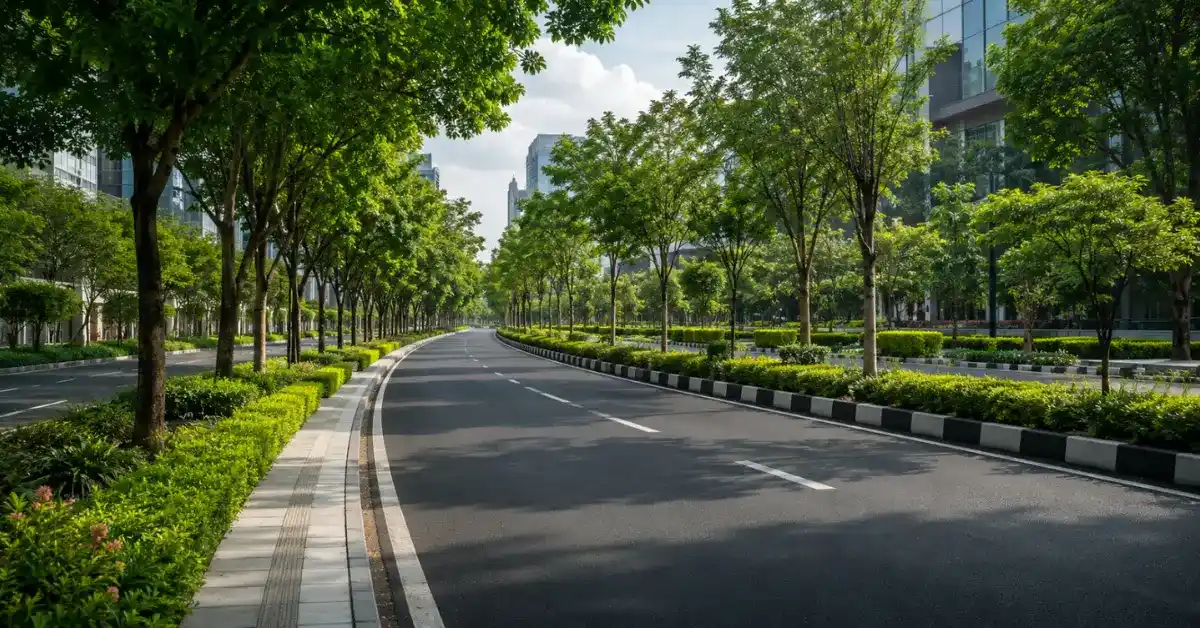
The project seeks to translate CAQM’s road dust mitigation guidelines into on-ground interventions, focusing on improving road design, maintenance practices and roadside green cover.
Road dust is considered one of the major contributors to particulate pollution in NCR cities.
Under the initiative, CSIR-CRRI and SPA New Delhi will jointly work on four key areas: development of space standards and road cross-sections, mitigation of road dust through greening measures within the right-of-way, implementation of Road Asset Management Systems (RAMS) for improved maintenance practices, and promotion of innovative technologies for road construction.
The framework being implemented was issued by the Commission for Air Quality Management in January 2025 as part of its strategy to address dust pollution from urban roads and associated infrastructure.
The collaboration is expected to provide a scientific model for road development and environmental management in urban areas while supporting cleaner and more resilient cities in the NCR region.