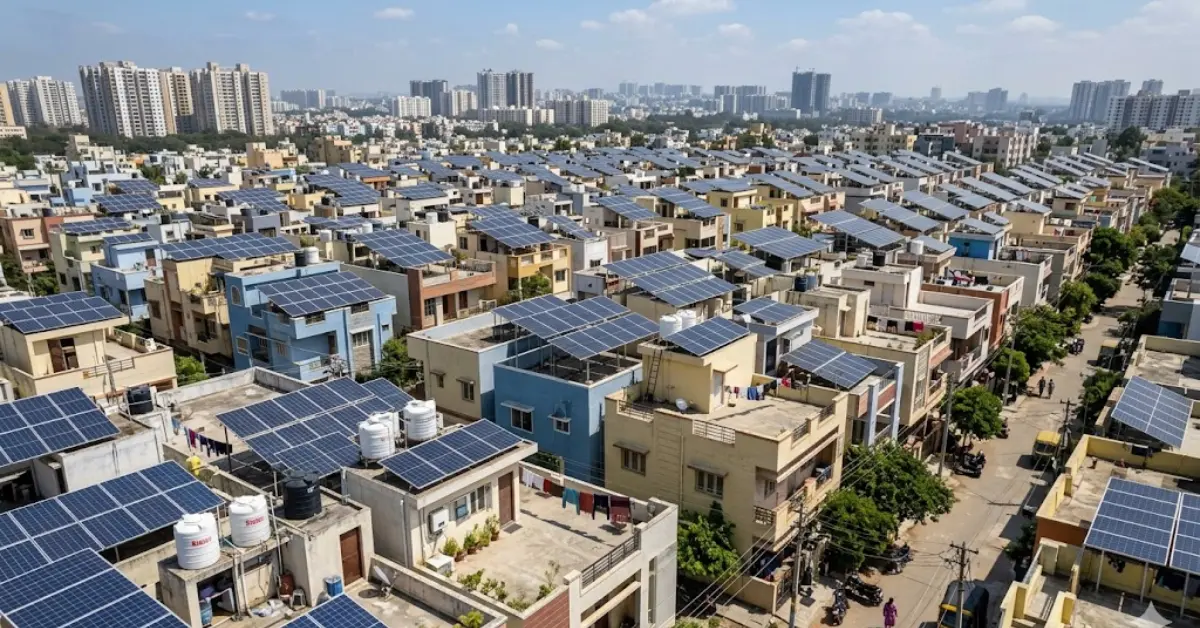
PM Surya Ghar: Muft Bijli Yojana recorded its strongest month since launch in May 2026, with 3.16 lakh rooftop solar installations completed in a single month, Union New and Renewable Energy Minister Pralhad Joshi said on Thursday, 4 June.
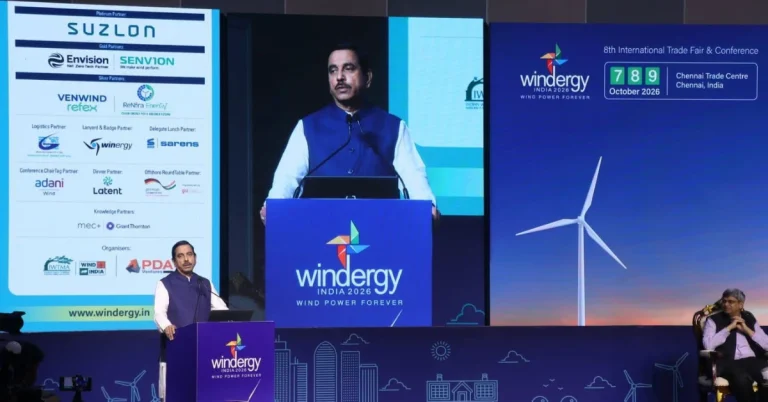
Joshi was participating in a fireside chat programme organised during ‘Two years of PM Suryaghar Muft Bijli Yojana: Scaling the solar home to 1 crore rooftops’ event here today.
The minister said 15,000 households were added under the scheme in just one day during the month.
Rooftop solar installations have increased from about 7,000 per month before the scheme to over 3 lakh per month now.
Joshi said the pace of adoption has improved sharply, with the time taken to add one lakh households falling from 118 days earlier to less than eight days now.
The scheme has crossed 40 lakh beneficiary households within two years.
Joshi said the government expects to cross 75 lakh households by December 2026.
More than 65 lakh applications are already in the pipeline, indicating continued demand for rooftop solar installations under the scheme.
The minister said more than ₹22,750 crore in subsidies has been disbursed under the scheme so far, including ₹2,743 crore in May 2026 alone.
Launched on 13 February 2024 with an outlay of ₹75,021 crore, PM Surya Ghar: Muft Bijli Yojana has become the world’s largest domestic rooftop solar programme, the ministry said.
Read also: India plans 5,000 FFV-ready fuel retail outlets by 2027 under flex-fuel roadmap
According to the ministry, more than 1 crore households have registered on the National Portal, with over 33 lakh rooftop systems installed as of May 2026, adding more than 12 GW capacity.
The scheme has also helped more than 17 lakh households achieve zero electricity bills, demonstrating direct savings for families.
Joshi said the Utility-Linked Aggregation model has been introduced to accelerate implementation, especially among underserved households.
Under the model, around 30 lakh rooftop solar installations have already been planned across states, with utilities playing a key role in faster adoption and execution.
The minister said the initiative will particularly benefit households consuming between 1 kW and 3 kW of electricity and help expand access to affordable clean energy.
India’s solar capacity growth has also accelerated.
Joshi said the first 50 GW of solar capacity took 96 months, the next 50 GW took 36 months, and the increase from 100 GW to 150 GW took only 14 months.
The minister also launched the PM Surya Ghar logo and WhatsApp bot during the event.
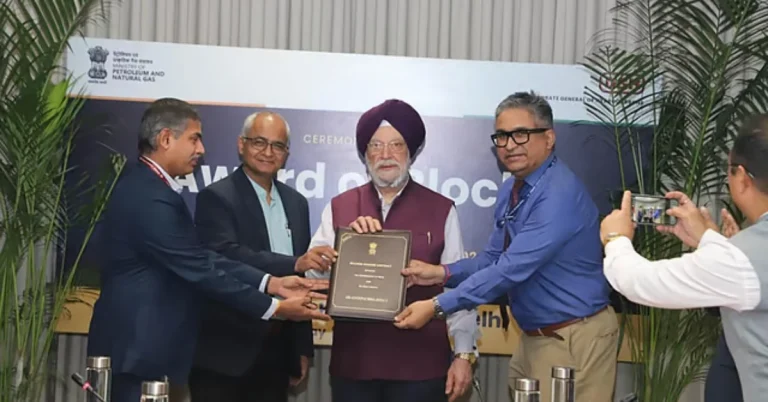
Awards were presented to top-performing states, Union Territories, DISCOMs, banks, vendors and other stakeholders, including outstanding performers during the the “Month of Solar” campaign in May 2026.
Two reports by the Council on Energy, Environment and Water were also released during the event.
The reports focused on rooftop solar installation decisions in Indian homes and the need for a stronger operation and maintenance ecosystem, with the ministry noting the potential to generate over 3.3 lakh jobs annually as deployment scales.