Delhi’s Bhalswa landfill, one of the capital’s largest garbage dumpsites, has seen its waste volume reduced by nearly 50 lakh metric tonnes since 2022, with around 43 acres of land already reclaimed through large-scale biomining and remediation operations.
In a statement on Thursday, 28 May, the Ministry of Housing and Urban Affairs (MoHUA) said the Bhalswa Dumpsite originally contained around 73 lakh metric tonnes of legacy waste in June 2022.
As of 26 May 2026, the remaining waste quantity, including both legacy and fresh waste, had reduced to around 23.17 lakh metric tonnes.
The remediation work is being carried out by the Municipal Corporation of Delhi (MCD) under the Centre’s Dumpsite Remediation and Action Plan (DRAP) initiative launched under Swachh Bharat Mission-U 2.0.
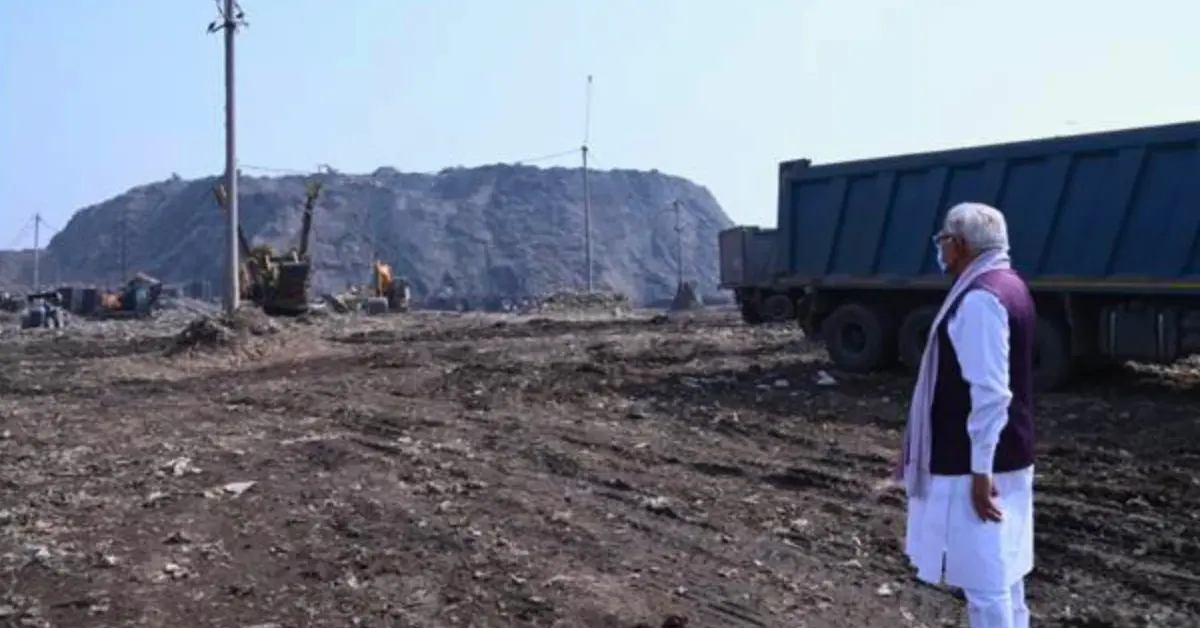
Union Housing and Urban Affairs Minister Manohar Lal visited the Bhalswa landfill site on Thursday to review the progress of the ongoing remediation work.
This was his second on-site inspection of the project after formally adopting the Bhalswa dumpsite under the DRAP initiative in September 2025.
According to the ministry, biomining operations have been running continuously in mission mode since July 2022, with around 15,000 metric tonnes of waste being processed daily.
The ministry said the sustained remediation effort has helped reclaim nearly 43 acres out of the total dumpsite area of around 70 acres.
During the review meeting, the minister assessed biomining operations, environmental safeguards, leachate management systems, fire prevention measures and the roadmap for complete remediation of the landfill.
He directed authorities to complete the remediation of the Bhalswa landfill site by September.
The minister also instructed officials to ensure that fresh waste generated daily is processed immediately to prevent further accumulation and stressed that no new legacy waste should be created.
The minister further said the reclaimed land should be utilised carefully for public use and community welfare after the remediation process is completed.
The Bhalswa landfill in north Delhi has long been one of the city’s biggest environmental concerns due to recurring fires, methane emissions, groundwater contamination risks and air pollution linked to decomposing waste.
Delhi has three major legacy garbage mountains at Bhalswa, Ghazipur and Okhla, all of which have been undergoing biomining and waste processing operations in recent years under court-monitored and government-backed remediation programmes.
Biomining involves excavation and segregation of old waste to recover recyclable material, compost-like fractions and inert material, while reducing landfill height and reclaiming urban land.
The Centre’s DRAP initiative aims to achieve “Lakshya Zero Dumpsites” through scientific remediation, environmental restoration and reuse of reclaimed urban land.
Read also : GMDA demolishes over 15 illegal shops along Multi Utility Corridor in Gurugram’s Sector 90