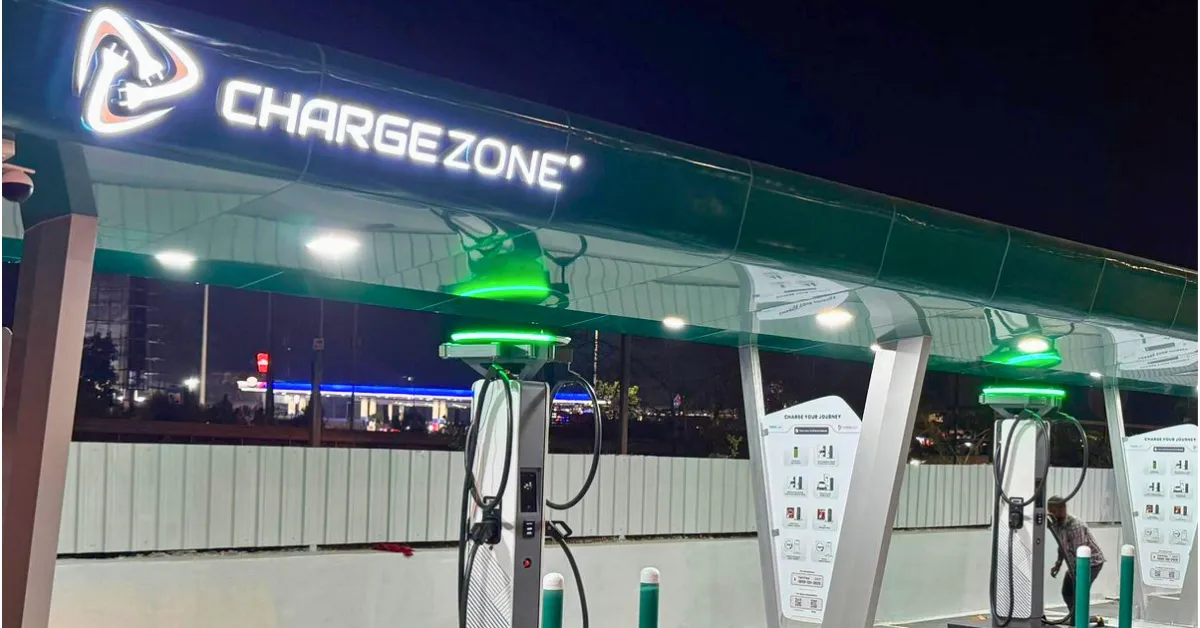
Karnataka will get 1,243 electric vehicle chargers under the PM E-DRIVE Scheme, with proposals involving a financial outlay of ₹123.26 crore approved for the state.
Union Minister for Heavy Industries and Steel H.D. Kumaraswamy announced the approvals at the Conference on Enabling Nationwide EV Charging Infrastructure under the PM E-DRIVE Scheme in Bengaluru on Tuesday.
In a statement, the Ministry of Heavy Industries said the announcement positions Karnataka among the leading States driving India’s transition towards electric mobility.
Addressing the conference, Kumaraswamy said Bengaluru has emerged as one of India’s leading EV charging hubs and urged other states to participate actively in the nationwide transition towards electric mobility.
The minister said proposals worth ₹503.86 crore have so far been approved for the installation of 4,874 EV chargers across various states and Central Public Sector Enterprises.
The approved proposals include major Central Public Sector Enterprises such as Hindustan Petroleum Corporation Limited, Indian Oil Corporation Limited and Bharat Petroleum Corporation Limited.
They also cover states including Rajasthan, Andhra Pradesh, Uttar Pradesh, Gujarat, Kerala, Telangana, Karnataka and Tamil Nadu.
Kumaraswamy said India is moving towards the goals of Viksit Bharat 2047 and Net Zero emissions by 2070, with clean mobility and sustainable transport forming a key part of the transition.
The minister said India’s automotive sector contributes over 7% to the country’s GDP, accounts for nearly half of manufacturing GDP and supports close to 30 million livelihoods.
The minister highlighted several schemes being implemented by the Ministry of Heavy Industries to strengthen India’s future mobility ecosystem.
These include the ₹18,100 crore Production Linked Incentive Scheme for Advanced Chemistry Cell battery manufacturing, the ₹25,938 crore Production Linked Incentive Auto Scheme for cleaner vehicles including electric and hydrogen-powered vehicles, and the ₹7,280 crore Rare Earth Permanent Magnet Scheme.
Kumaraswamy described the ₹10,900 crore PM E-DRIVE Scheme as a key programme for accelerating the adoption of electric two-wheelers, three-wheelers, buses and trucks, along with the development of public charging infrastructure.
The ministry has earmarked ₹2,000 crore specifically for EV public charging infrastructure deployment across the country.
The minister also referred to the role of oil marketing companies in expanding charging infrastructure.
Under the FAME-II scheme, oil marketing companies have installed 8,932 EV chargers across the country with subsidy support of ₹873.5 crore from the Ministry of Heavy Industries.
Read also : India has 60 days of crude oil and gas stock, 45 days of LPG rolling stock: Govt
Of these, 721 EV chargers have been installed in Karnataka.
Kumaraswamy also acknowledged the role of charge point operators and industry players, including Tata Power, ChargeZone and Mahindra & Mahindra, in supporting India’s EV charging ecosystem.
The ministry is also working on the National Unified EV Charging App, named Unified Bharat e-Charge.
The platform is planned as a single interface through which EV users can discover, access and pay across charging networks operated by different companies.
Kumaraswamy said the app could strengthen India’s EV charging system in a manner similar to the way UPI transformed digital payments.
The minister said the Ministry of Heavy Industries, in coordination with the Ministry of Power, state governments and industry stakeholders, is working on grid readiness, standardisation and digital integration to support the growth of electric mobility.
According to the minister, India’s EV charging infrastructure strategy will be guided by three principles: accessibility, affordability and reliability.
Kumaraswamy said the aim is to ensure that charging facilities are available, affordable and dependable across both urban and rural India.
He said the EV transition is not only about creating infrastructure but also about reducing dependence on fossil fuels, strengthening energy security and building a sustainable transport future.