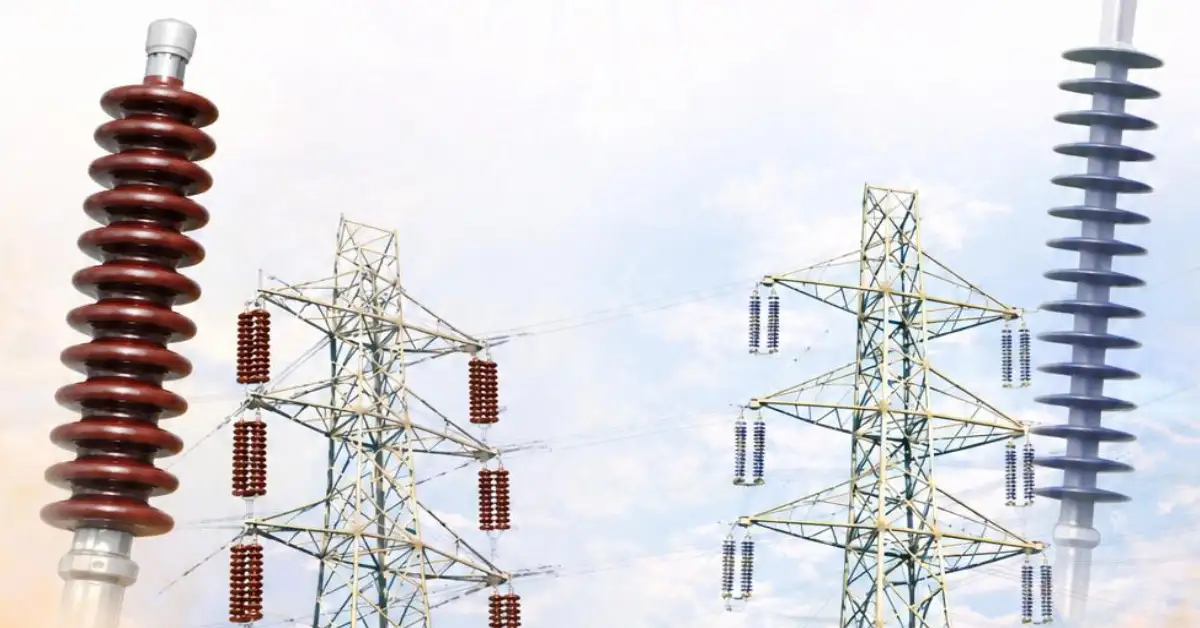
India’s transmission network is facing a systemic insulator reliability challenge, with a Central Electricity Authority (CEA) committee linking a large number of 2025 line outages to preventable gaps in design, quality assurance, field implementation, storage, handling and maintenance practices.
The findings are part of the May 2026 “Report of the Committee on Addressing Insulator Failures on Transmission Lines”, prepared by Technical Committee (TC-Insulators) constituted under the Chairmanship of Member (Power System), CEA, and comprising representatives from CEA, Grid-India, Power Utilities and OEMs.
The committee was set up after Grid-India flagged “a significant number of transmission line outages across various regions in 2025 due to insulator failures”, including the tripping of major 400 kV lines feeding Mumbai on 30-31 July 2025 because of widespread polymer insulator failures.
According to the report, insulator failures are “not sporadic but systemic”, with a rising trend in failure modes such as brittle fracture, flashover, tracking and erosion, flash-under, FRP decay and shed damage.
The committee said these failures are worsened by environmental factors including pollution, heavy rainfall, lightning, coastal conditions and fog.
The report underlines the critical role of insulators in high-voltage overhead transmission lines.
Insulator strings provide electrical insulation and mechanical support by holding conductors away from metal towers and preventing short circuits to ground.
Their failure can reduce grid reliability and often requires line outages for replacement and repair.
Failure data submitted by Grid-India, Power Grid Corporation of India Limited (PGCIL) and state transmission utilities show the scale of the issue.
Grid-India analysed 68 incidents reported during 2025 in the networks of IndiGrid and Adani.
Of these, 58 incidents, or 85%, involved 765 kV lines, while 10 incidents, or 15%, involved 400 kV lines. Around 42 incidents, or 62%, occurred during the monsoon period.
PGCIL reported 79 line outages in its inter-state transmission system during 2025 due to insulator failure.
Of these, 16 incidents, or 20%, involved 765 kV lines, 59 incidents, or 75%, involved 400 kV lines, and 4 incidents, or 5%, involved 220 kV lines. The report said 65 incidents, or 82%, were reported during the rainy season.
Read also : India to support commercial production of indigenous Type-IV CNG cylinders for clean mobility
Madhya Pradesh Power Transmission Company Limited (MPPTCL) reported 155 line outages in 2025, including 7 incidents on 400 kV lines, 49 on 220 kV lines and 99 on 132 kV lines.
The utility reported 86 porcelain insulator incidents and 69 composite insulator incidents. Of the total, 109 incidents, or 70%, occurred during the monsoon season.
Maharashtra State Electricity Transmission Company Limited (MSETCL) reported 241 line outages caused by insulator failure, with 180 incidents on 220 kV lines and 45 incidents on 400 kV lines.
It reported 213 porcelain insulator failures, 30 composite insulator failures and 1 glass insulator-related incident. The report said 137 incidents, or 56%, occurred during the monsoon or rainy season.
Gujarat Energy Transmission Corporation Limited (GETCO) reported the highest number among the listed utilities, with 274 line outages due to insulator failure in 2025. Of these, 233 incidents, or 85%, involved 220 kV lines and 37 incidents, or 14%, involved 400 kV lines.
The utility reported 250 composite insulator incidents and 24 porcelain insulator incidents, while 189 incidents, or 77%, occurred during the monsoon or rainy season.
The committee identified different failure reasons for composite and porcelain insulators.
For composite or polymer insulators, the report lists raw material and manufacturing defects, improper design for climatic conditions, loss of hydrophobicity of silicone housing, decay-like fracture, electric field stress, hardware-insulator incompatibility, flash-under, rod break, stress corrosion cracking, end-fitting pullout, pollution, moisture, storage issues and installation or handling errors.
For porcelain insulators, the report lists insulator disc flashover, failure of insulator strings, manufacturing defects, de-capping, bird-related faults and ageing effects.
The committee observed that “most of the failures are associated with identifiable and preventable causes linked to specification gaps or deviations in implementation.”
It further noted that failures are mainly linked to improper material selection, non-adherence to standard operating procedures and inadequate systems and procedures.
A key recommendation is the creation of a standard format for reporting insulator failures across transmission utilities.
The report says there is currently no standard format that captures all required failure details.
A uniform format, it said, would help record location, insulator type, environmental conditions and failure mode, enabling better root-cause analysis and creation of a centralised database.
The report also calls for improvements in technical specifications for composite and porcelain insulators, stronger quality assurance plans, better use of corona rings and grading rings, model guidelines for storage and handling, and improved operation and maintenance practices.
It said the implementation of these measures is expected to reduce transmission line outages, improve grid stability under adverse environmental conditions, optimise operation and maintenance costs and enhance safety of personnel and assets.
Overall, the report frames insulator failures as a grid-reliability issue rather than a routine equipment problem, and calls for a systematic national approach to insulator selection, testing, quality control, monitoring and lifecycle management.
Read also : India, EU launch ₹169 crore EV battery recycling initiative under TTC green energy framework