Indian Railways on Saturday approved infrastructure and capacity augmentation projects worth ₹895.30 crore, covering metro power system upgrades in Kolkata and bridge infrastructure strengthening in Jharkhand-West Bengal region.
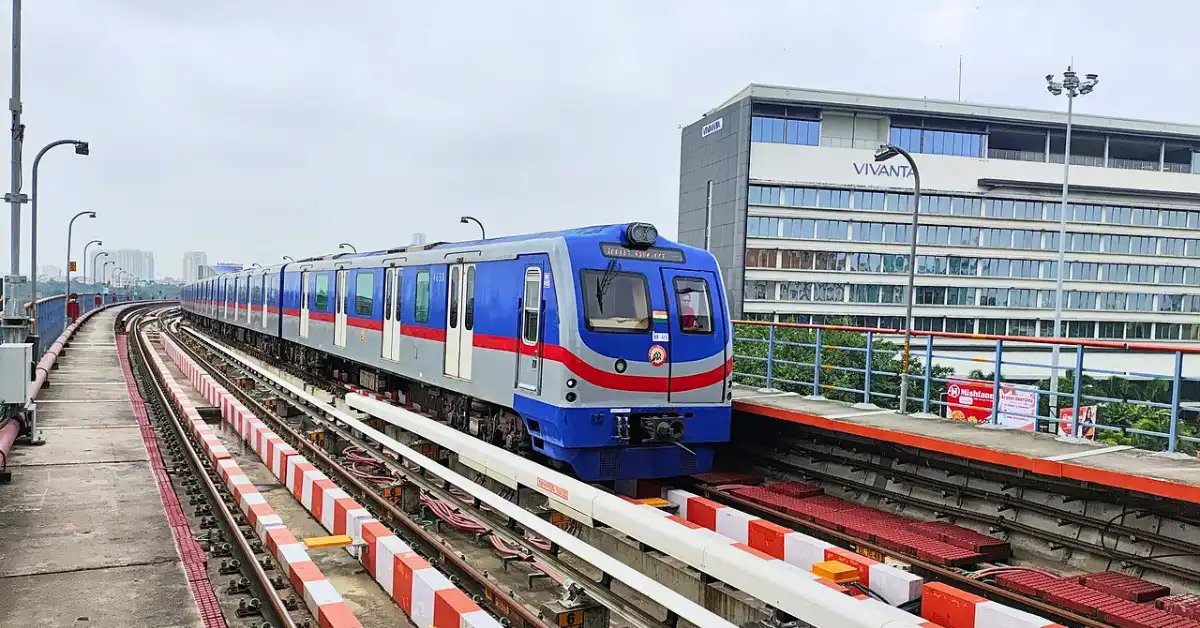
According to the Ministry of Railways, ₹671.72 crore has been sanctioned for the upgradation of the North-South Corridor of Kolkata Metro.
The works include installation of 7 new traction substations (₹291.06 crore) and augmentation and upgradation of Auxiliary Substation (ASS) and Traction Substation (TSS) systems from Esplanade (KESP) to Kavi Subhash-New Garia (KMUK) at a cost of ₹380.66 crore.
This includes enhancement of the power system from 11 KV to 33 KV and augmentation of power supply in elevated sections from Netaji Metro Station (KNTJ) to Kavi Subhash (KKVS).
The Kolkata Metro, designed in the 1980s for operations at around 5-minute frequency, will be enabled to operate at a 2.5-minute headway after the upgrade, increasing line capacity to meet rising passenger demand.
Read also : Mumbai-Ahmedabad bullet train: 480-metre Sabarmati River bridge advances with 3 spans complete
“The existing substations and equipment are reaching capacity limits and face maintenance challenges due to non-availability of spare parts,” the ministry noted, adding that the approved upgradation will “ensure reliable power supply, support higher train frequency, and improve overall passenger service”.
Separately, a ₹223.58 crore bridge project has been approved in the Adra Division under South Eastern Railway.
The project includes construction of substructure for Bridge No. 520 UP and 520 DN between Madhukunda and Damodar, along with yard remodelling and track works in the bridge approaches.
The existing Damodar Bridge, built in 1965 (UP line) and 1903 (DN line), has shown structural distress, necessitating reconstruction of its foundation and substructure.
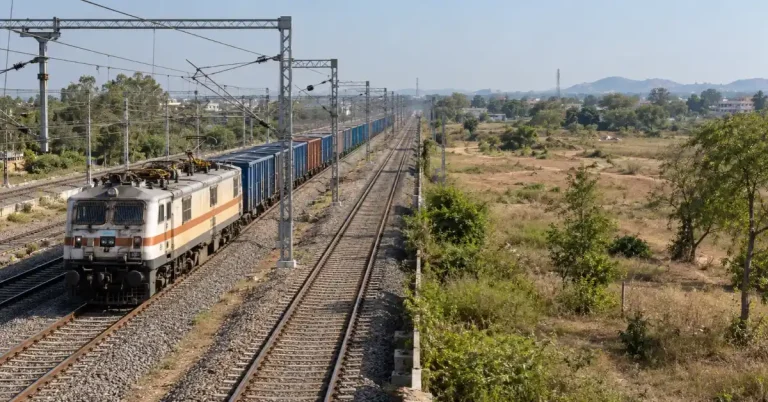
The section forms a key rail link between Asansol and Tatanagar and is part of a Dedicated Freight Corridor feeder route as well as the Sini-Purulia-Asansol coal corridor, handling traffic density of 67 GMT.
The ministry stated that the project will improve safety, reliability and operational efficiency, while strengthening connectivity for industries in the Durgapur-Asansol belt, including IISCO, ACC and thermal power plants.