India’s push towards renewable energy is increasingly being shaped not just by capacity addition, but by the need for reliable, round-the-clock power.
Hydro power, unlike solar and wind, provides firm electricity supply along with operational flexibility, helping maintain grid stability as renewable energy share rises.
Against this backdrop, the Union Cabinet has approved a ₹2,584.60 crore Small Hydro Power (SHP) Development Scheme aimed at adding around 1,500 MW capacity between FY 2026-27 and FY 2030-31.
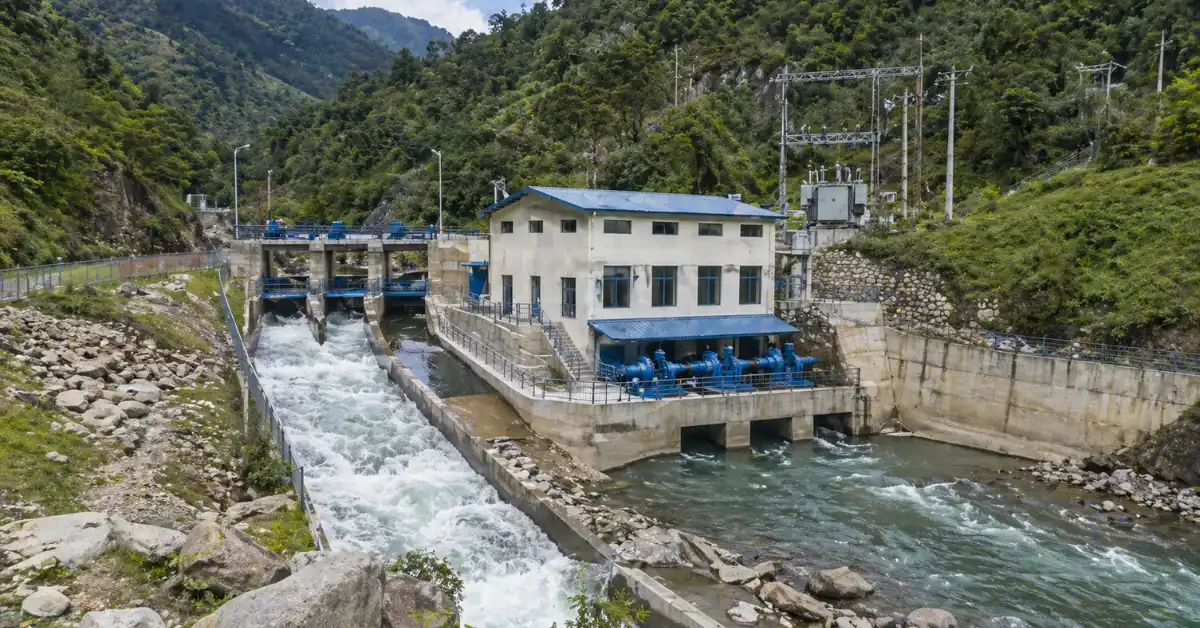
Small hydro projects, defined as those with capacity between 1 MW and 25 MW, form a key component of decentralised energy generation, particularly in regions with challenging terrain.
The scheme places specific focus on hilly and North Eastern states, where small hydro projects can generate power close to demand centres.
This reduces transmission losses and improves electricity reliability in remote and difficult-to-access areas.
India has an estimated small hydro potential of 21,133.61 MW across 7,133 identified sites.
However, only around 5,171 MW has been developed so far, indicating significant headroom for expansion.
To improve project viability, the scheme introduces a tiered financial support structure.
North Eastern states and international border districts will receive assistance of ₹3.6 crore per MW or 30 per cent of project cost, whichever is lower, subject to a cap of ₹30 crore per project.
For other regions, financial assistance is set at ₹2.4 crore per MW or 20 per cent of project cost, with a ceiling of ₹20 crore per project.
In addition, ₹30 crore has been allocated for preparing Detailed Project Reports (DPRs) for at least 200 projects to build a pipeline for future capacity addition.
The initiative is expected to attract investments of around ₹15,000 crore into the sector, while promoting the use of indigenous plant and machinery.
The construction phase is projected to generate approximately 51 lakh person-days of employment, with further opportunities in operation and maintenance, particularly in rural and remote regions.
Small hydro projects require relatively limited land, have low ecological impact, and offer long operational life, making them a stable component within the renewable energy mix.
As India expands its renewable capacity, the role of small hydro lies in complementing intermittent sources by providing continuous power supply and supporting overall grid reliability.
Read also : India records highest-ever wind capacity addition of 6.1 GW in FY26, total installed capacity crosses 56 GW